
For those starting a new life in Japan, renting a property can be a major headache. It
is especially worrying for those who want to live with their pets.
So, what is the pet situation like in Japanese rental real estate? In this article, we will
introduce it in a story format.
Summary
- Pet-friendly properties in Japan are scarce and highly competitive.
- Reasons why pets are often not allowed: Noise (barking), soiling, and causing damage.
- Even “pet-friendly” properties have various restrictions.
- Repair costs may occur if a pet soils or damages the room.
- Characters
- Pet Ownership in Japanese Rental Properties
- Why are there so few pet-friendly properties?
- Even “Pet-Friendly” Means Restrictions
- What happens if a pet soils or scratches the room?
- Why pets are avoided: An interior perspective
- From Personal Experience
- I Tried Searching for Rental Properties Myself
- Conclusion
Characters
- Mike: A 12-year-old American boy interested in Japan.
- John: Mike’s father. He frequently visits Japan for business.
- Kelly: Mike’s mother. She is good at cooking.
- Nobu: A Japanese international student.
Pet Ownership in Japanese Rental Properties
Points:
- There are very few pet-friendly properties in Japan.
- Competition for pet-friendly properties is high.
Kelly: “I heard an old friend of mine is moving to Japan. I wonder what’s the first
thing they should do?”
John: “I don’t know the details, but I suppose it would be renting an apartment,
wouldn’t it?”
Mike: “Didn’t that friend have a dog?”
Kelly: “That’s right. But a dog should be fine. The flight might be tough, but I don’t
think there will be any problems once they arrive.”
Nobu: “Hello everyone.”
Kelly: “Hi Nobu. We were just talking about Japanese rental real estate. A friend is
planning to take their dog with them.”
Nobu: “A dog? …That might be a problem.”
Kelly: “Why? They’re just keeping a dog.”
Nobu: “That requires a bit of explanation.”
Pet-friendly properties are extremely rare in Japan
Nobu: “To put it simply, the vast majority of Japanese rental properties prohibit
keeping pets.”
Kelly: “Does that mean they can’t take the pet?”
Nobu: “Another thing is that competition for pet-friendly properties is very high.”
Kelly: “I can imagine that. For pet owners, a pet is a member of the family.”
Nobu: “Yes, so when choosing real estate, ‘whether pets can be kept’ is often the
primary criteria. By the way, this is the same for Japanese people. While it might
seem easier for Japanese people because the ‘foreigner-friendly’ condition is
removed, properties that allow pets are still scarce. Even Japanese people struggle to
keep pets in rental properties.”
Kelly: “I see, how difficult.”
Why are there so few pet-friendly properties?
Point:
The reasons for the lack of pet-friendly properties include noise, soiling, damage,
and “restoration to original condition” issues.
Kelly: “By the way, why are there so few pet-friendly properties? Having a pet is so
much fun.”
Nobu: “True. Let’s list the reasons why pets aren’t allowed.”
Noise Issues
Nobu: “First is the issue of noise. Pet barks and cries carry, and if they reach the
neighbors, it causes a nuisance.”
John: “I see, the barking. Certainly, if a dog barks at night, it interferes with sleep.”
Nobu: “In fact, many Japanese people are very sensitive to noise issues. In some
cases, it can develop into troublesome disputes.”
John: “Meaning?”
Nobu: “The conflict isn’t just with the person in the next room. In densely populated
residential areas, complaints can come from neighboring houses as well. Especially
when windows are open, the cries echo outside.”
John: “I see, that’s troublesome.”
Soiling Issues
Nobu: “Pets carry the risk of soiling the room—for example, with urine or feces. This
is another reason landlords refuse contracts.”
Kelly: “True, whether it’s a dog or a cat, there are issues with waste.”
Nobu: “And it’s not just the stain; there’s the problem of odor. Even when repairing
after a tenant moves out, dealing with the smell is difficult.”
John: “If it goes as far as odors, that’s definitely tough.”
Nobu: “Landlords need to rent the room to someone else after you move out, so they
particularly dislike stains and dirt.”
Damage Issues
Nobu: “There’s also the issue of causing damage. A good example is keeping cats.
Cats have a habit of sharpening their claws, so there’s a risk of scratching walls and
floors. Also, cats jump around unexpectedly and leave scratches in various places.”
Kelly: “I see, the claw problem.”
Nobu: “If the wallpaper gets torn up, those sections must be replaced. Naturally, this
work incurs high costs. Landlords want to avoid this.”
Kelly: “How big are these repair projects usually?”
Nobu: “It’s entirely case-by-case. The price varies depending on where the damage is
and how deep it is. If a pet scratches a section using high-end materials, the repair
cost will be expensive.”
Restoration to Original Condition
Nobu: “In Japanese rental real estate, you must repair the property back to its
original state when you return it, but this point often causes trouble when pets are
involved.”
Mike: “Why is that?”
Nobu: “Because if there are stains or scratches, it’s hard to tell if the pet did it, and if
there’s a language barrier, it’s difficult to discuss. If such trouble is anticipated,
landlords think it’s easier to just refuse pets from the start.”
Mike: “I see.”
Even “Pet-Friendly” Means Restrictions

Point:
Even if a property is “pet-friendly,” there are often restrictions. You must
consult closely with the real estate agent about the feasibility of keeping specific
pets.
Nobu: “By the way, this is a common misunderstanding even among Japanese
people, but even in pet-friendly properties, there are often restrictions on keeping
them.”
Mike: “Can’t you keep any pet you want?”
Nobu: “No, rental real estate is ultimately a contract with the landlord. So, you must
keep them within the scope allowed by the landlord.”
John: “I see. That makes sense.”
Mike: “So, what kind of restrictions are there? Tell us a few.”
Nobu: “Sure. I’ll list some representative cases.”
Small dogs are okay, but large dogs are not
Nobu: “The first pattern is ‘Small dogs are fine, but large dogs are no good’.”
Kelly: “They are both dogs, so why are large dogs not allowed?”
Nobu: “Because some people are afraid of large dogs. For example, some small
children might be scared. Regardless, large dogs are often refused.”
Dogs are okay, but cats are not
Nobu: “Also, there are cases where dogs are fine, but cats are not allowed.”
Mike: “Eh? Why are cats not allowed?”
Nobu: “Because cats scratch the interior with their claws and the smell of their urine
is strong.”
Nobu: “Furthermore, with active cats jumping around, you never know where they
might leave a scratch.”
Multiple pets are not allowed
Nobu: “And there are cases where ‘multi-pet ownership’ (keeping several pets) is
prohibited.”
Kelly: “I see. If there are many, there’s a risk of noise.”
Nobu: “Exactly. Also, they might cause even more damage.”
Reptiles may have conditions
Nobu: “Also, reptiles might have specific conditions—like large lizards or snakes.”
Kelly: “True, if someone had a snake in an apartment I owned, it might feel
unpleasant.”
Nobu: “When people say ‘pets,’ they usually assume dogs or cats. Lizards and snakes
are considered niche. Therefore, reptiles often come with specific conditions.”
What happens if a pet soils or scratches the room?
Point:
In rental real estate, you must restore the property to its original condition
when moving out. Generally, dirt and scratches from normal use are the landlord’s
responsibility, but damage caused by tenant negligence is the tenant’s responsibility.
Damage from pets is usually considered the tenant’s responsibility.
Nobu: “As I mentioned earlier, Japanese rental properties must be returned to their
original state upon moving out.”
John: “But if you live there for years, some parts will naturally fade or break down.”
Nobu: “That’s a key point. ‘Dirt and scratches from normal use are the landlord’s cost,
while damage from tenant negligence is the tenant’s cost’.”
Nobu: “For example, carpets fade due to sunlight. Since this is natural deterioration,
the repair cost is considered included in the rent and is the landlord’s responsibility.”
John: “Then, what about pets?”
Nobu: “In the case of pets, it is often viewed as a failure of management
responsibility by the tenant, so dirt and scratches caused by pets are usually the
tenant’s cost.”
Nobu: “Moreover, if the scope of damage is large, the repair work becomes extensive,
and the costs swell accordingly.”
End
Why pets are avoided: An interior perspective
Let’s look at common apartment interiors to clarify why pets are difficult. First, the
issues of dirt and odor. Most Japanese apartments use vinyl wallpaper for walls, and
floors are made of wood, tatami mats, or carpets—all of which are vulnerable to
stains. Especially if a cat urinates on tatami, replacement may be necessary.Let’s look at common apartment interiors to clarify why pets are difficult. First, the
issues of dirt and odor. Most Japanese apartments use vinyl wallpaper for walls, and
floors are made of wood, tatami mats, or carpets—all of which are vulnerable to
stains. Especially if a cat urinates on tatami, replacement may be necessary.
Vinyl wallpaper is weak against scratching and easily damaged. A cat sharpening its
claws can shred it. There are also screen doors; if a cat plays with them, they can
easily tear.
In any case, repairs are necessary, and even after repairs, the marks may remain
noticeable. This makes it harder to rent to the next person. Additionally, for
foreigners, language barriers can lead to disputes, which is why landlords tend to
avoid these risks.
From Personal Experience
When I was looking for an apartment in Tokyo, I noticed that pet-prohibited
properties were extremely common. Rather, there was an atmosphere where “No
Pets” was the ‘premise’ and ‘common sense’ for rental apartments. In fact, there are
standard rental contracts, and the one I signed also stated ‘No Pets’. While petfriendly properties are increasing with the times, they are still a minority. It must be
tough for people who want to live with pets.
I Tried Searching for Rental Properties Myself
At this point, I’d like to show you how I actually searched for rental properties in Japan that are both foreigner-friendly and pet-friendly. I’ve included screenshots so you can see the process for yourself.
First, here’s the website I used. It is called the “Foreigner-Friendly Real Estate Information Website” in Japanese. The website can be found at https://wagaya-japan.com/jp/.
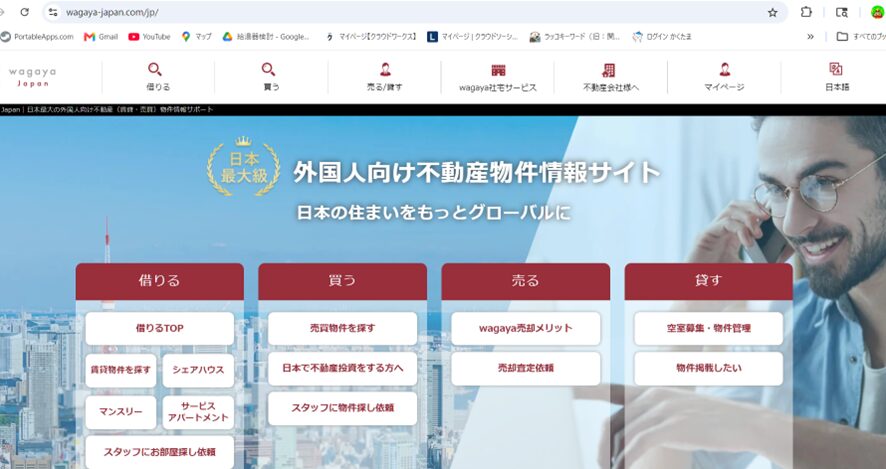
The website is also available in multiple languages, making it convenient for people who do not speak Japanese.

Now, let’s try searching for a pet-friendly rental property.
(For this example, I will be using the desktop version of the website.)
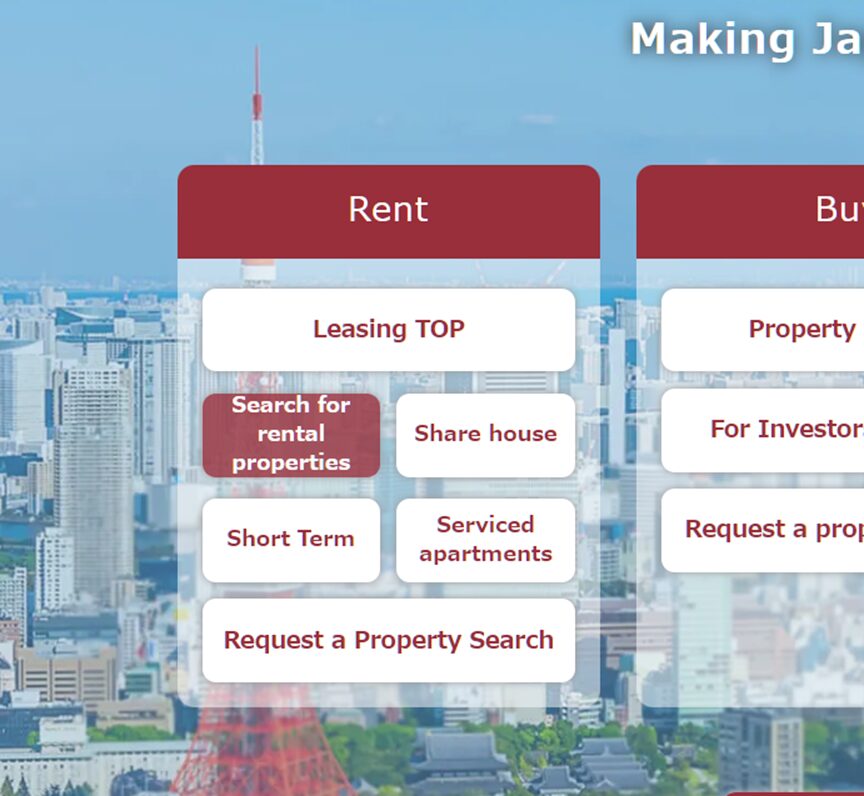
The first step is to change the language setting. In this example, I selected English. After that, click on “Rental Properties” to begin your search.
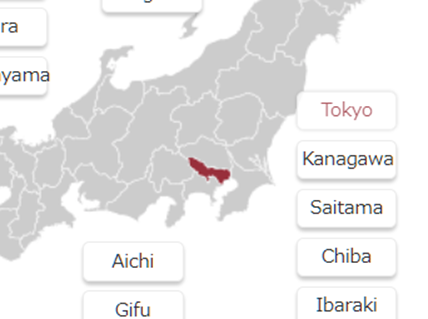
A map will appear on the screen. For this example, I selected Tokyo as the search area.
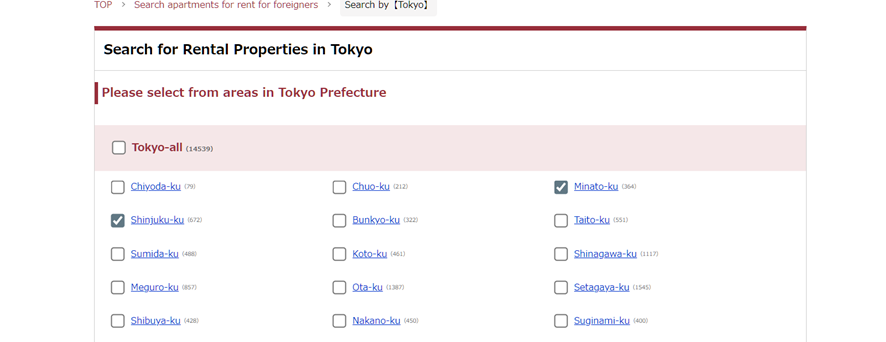
Next, narrow down the search area within Tokyo. For this example, I selected Shibuya Ward and Shinjuku Ward.
Once you have narrowed down the area, the next step is to look for pet-friendly properties.
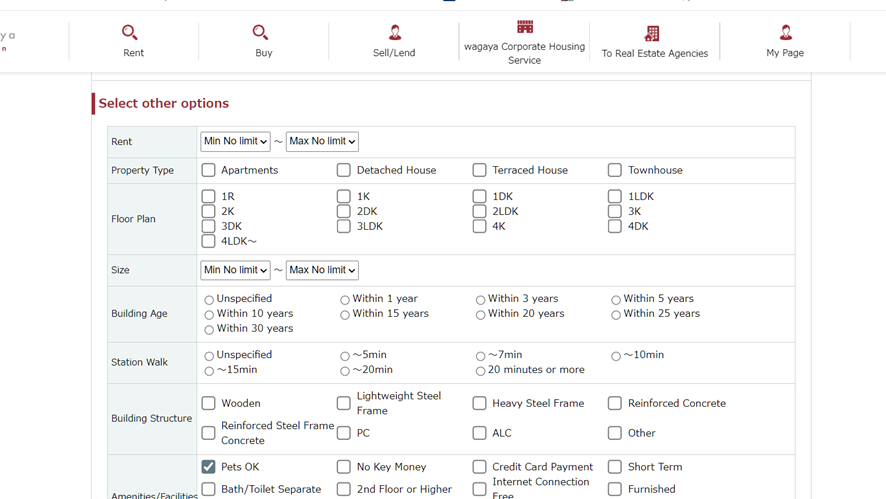
On the next screen, I found an option labeled “Pets OK” near the bottom of the page. I checked that box and then started the search.
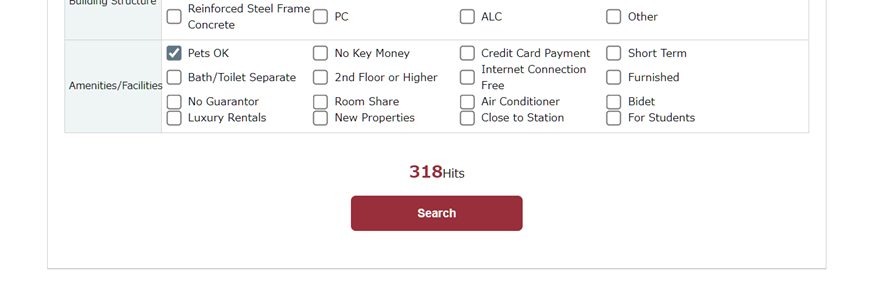
The search results showed that there were 318 pet-friendly properties available. By clicking the “Search” button, you can view the rental listings that match these criteria.
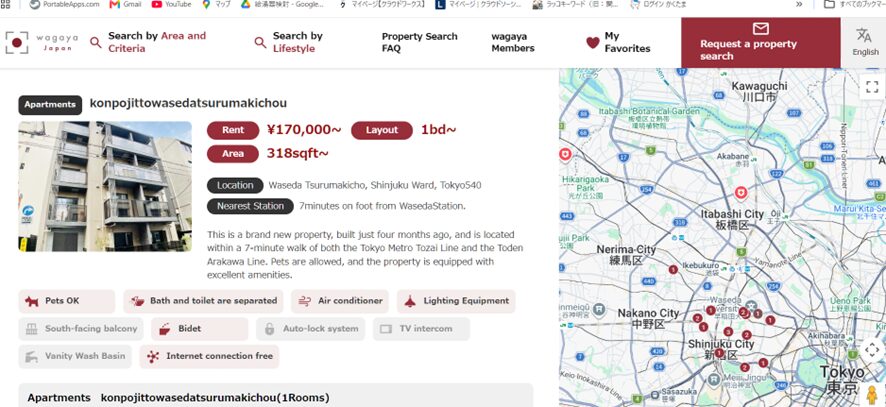
This is the results page from my search. As you can see, it was quite easy to find pet-friendly rental properties.
For comparison, this is the number of pet-friendly rental properties available to Japanese residents. The website used for this search was SUUMO, one of Japan’s largest real estate listing websites (https://suumo.jp/).
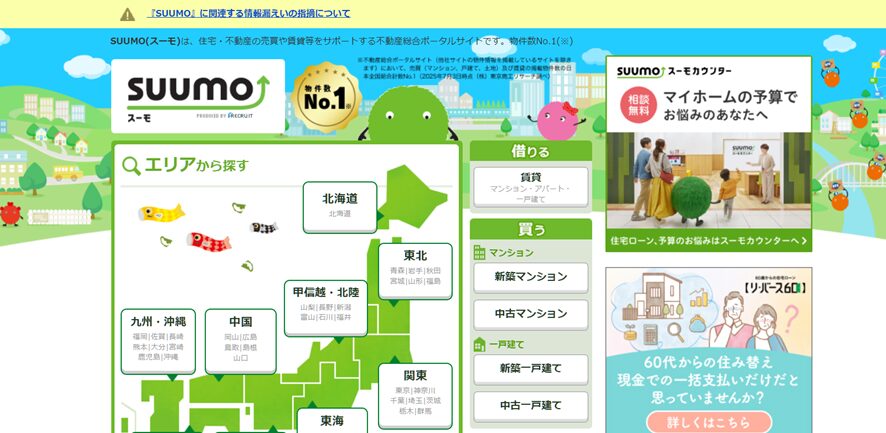
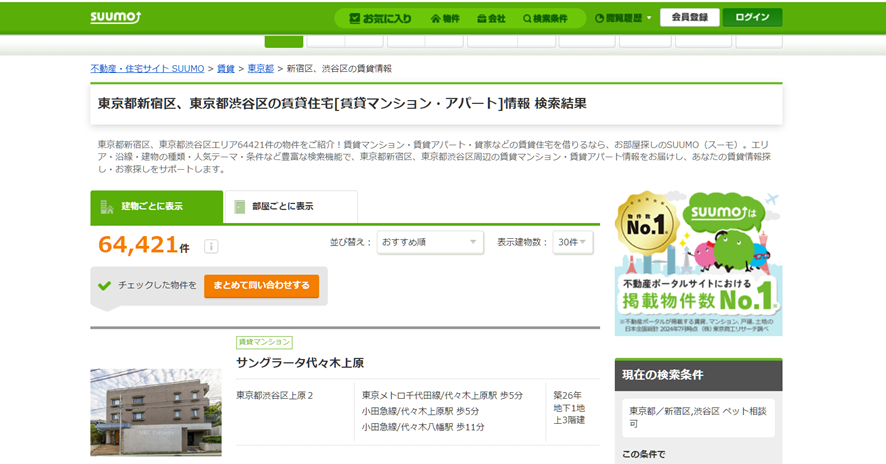
Since the website is only available in Japanese, the search results may be difficult for some readers to understand. However, the search returned an astonishing 64,421 pet-friendly rental properties.
This comparison made me realize once again how challenging it can be for foreigners to find pet-friendly housing in Japan. Seeing such a large difference in the number of available properties was disappointing, as it highlighted some of the difficulties that foreign residents may face when looking for a place to live.
Conclusion
We’ve looked at pet ownership in Japanese rental real estate. Some might be
surprised at how difficult it is. Some might even reconsider their life in Japan.
For foreigners, Japanese real estate contracts can feel like a high hurdle, and finding
a pet-friendly property is even harder. However, the possibility is not zero. It requires
patience, but please don’t give up on your search.