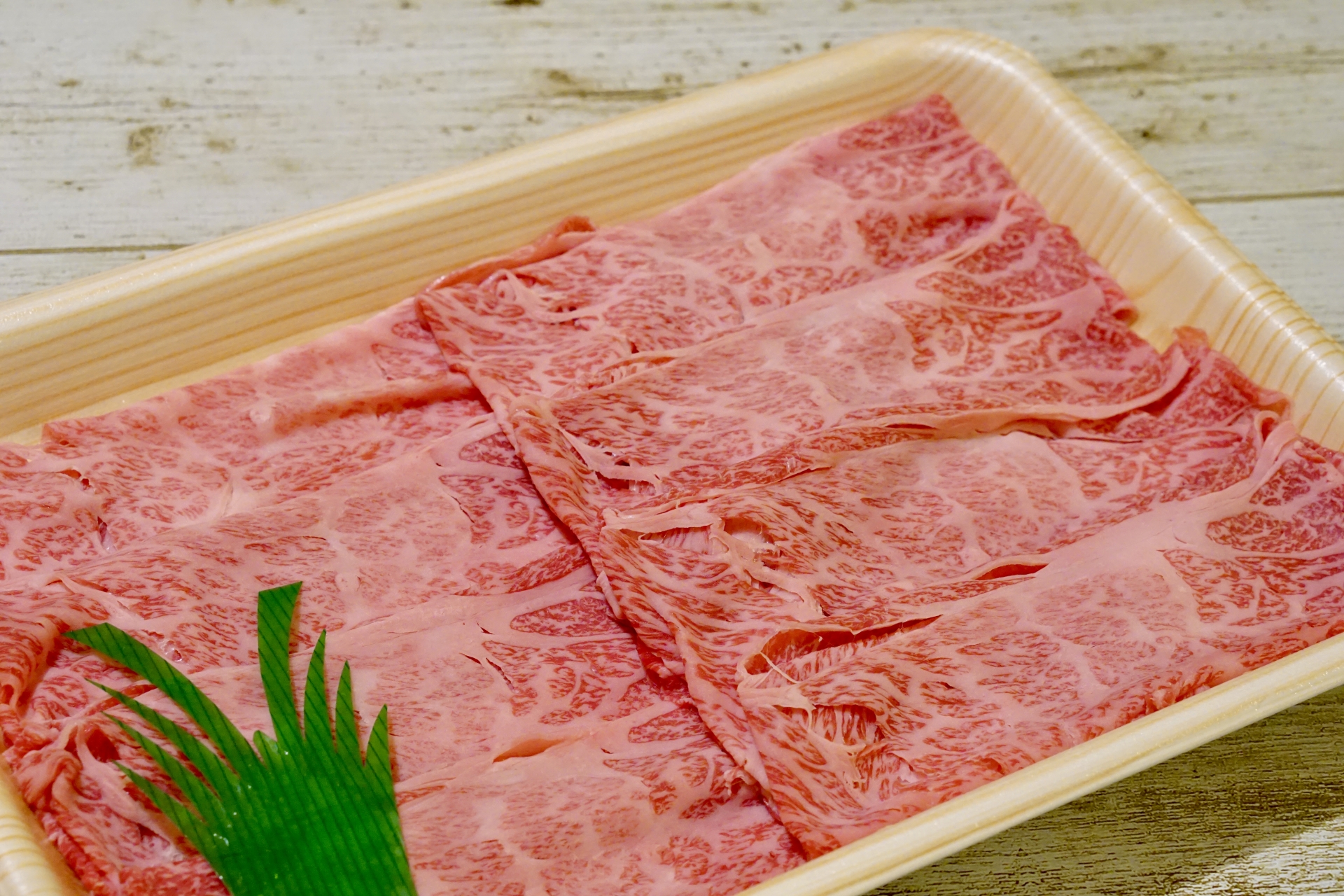
I remember watching a video by a YouTuber who moved to Switzerland, and they mentioned, “You just can’t find thinly sliced meat anywhere over here.” That really made me realize the cultural gap. In fact, it made me wonder: Is Japan actually the unusual one for having so much thinly sliced meat in its supermarkets?
So, what is the story behind Japan’s obsession with thinly sliced meat?
Summary
- In Japan, thinly sliced meat is much more common than thick cuts.
- The historical roots trace back to the Meiji era, valued for how quickly it cooks and how well it absorbs flavors.
- Thinly sliced meat is also incredibly easy for elderly people to eat.
The Characters
- Mike: A 12-year-old American boy interested in Japan.
- John: Mike’s father. He frequently visits Japan for business.
- Kelly: Mike’s mother. She is good at cooking.
- Nobu: A Japanese international student.(This character represents and speaks for the author’s personal experiences and opinions)
Prologue
Japanese and Western meat cultures are surprisingly different. Perhaps the most striking difference is how dominant “thinly sliced meat” is in Japan.
To look at it from another perspective, when Westerners walk into a Japanese butcher shop or supermarket, they often wonder, “Why is all the meat sliced so thin?”
In this article, we’ll explore the fascinating cultural and historical background of Japan’s meat culture through a short story.
Thinly Sliced Meat is King in Japan
Kelly: “Whenever I try to cook authentic Japanese dishes at home, I always run into a really frustrating roadblock.”
John: “Oh really? What kind of roadblock?”
Kelly: “Well, when you look at Japanese recipes, they call for meat, but it’s always sliced incredibly thin—nothing like the thick cuts we have here.”
John: “Ah, the thickness of the meat! I’ve never thought about it much, but you’re right. I mean, I can’t exactly imagine making Sukiyaki with a massive block of beef.”
Kelly: “Exactly! I’ll have to ask Nobu about it next time he visits.”
(Knock at the door)
Nobu: “Hello, everyone!”
Kelly: “Nobu! You came at the perfect time. I was hoping you could teach me a bit about Japanese meat culture.”
Nobu: “Sure! What’s on your mind?”
It Completely Dominates Supermarket Shelves
Kelly: “I noticed while trying to cook Japanese food that thinly sliced meat is everywhere. Recipes always tell you how much meat to use, but they don’t really explain how to slice it.”
Nobu: “Ah, that makes sense. Yes, in Japan, thinly sliced meat is the absolute standard. If you go to a Japanese supermarket, most of the meat section is filled with paper-thin slices. Thick cuts are usually reserved specifically for steaks or pork chops, and you rarely see large blocks of meat.”
Kelly: “I tried buying a block of meat here and slicing it thin myself, but it is so much work!”
Nobu: “I can imagine! It’s not just about cutting it thin; keeping the thickness perfectly uniform across all the slices by hand is incredibly difficult.”
Kelly: “So, the supermarkets in Japan sell them perfectly uniform?”
Nobu: “There might be slight variations, but for the most part, yes, they are very precisely sliced.”
The Precision of Thickness
Nobu: “Fun fact—I’ve heard that major Japanese Gyudon (beef bowl) chains have spent years doing thorough research just to perfect the exact thickness of their beef. The thickness of the meat actually matters a lot.”
Kelly: “Wow, really? Why is that?”
Nobu: “There are a few reasons, but the main one is texture. To achieve the perfect balance of a satisfying bite and effortless chewiness, the thickness has to fall within a very narrow range. Plus, they have to consider customers of all ages, including the elderly. To make it easy for everyone to eat, the margin for the ideal thickness becomes very small.”
Kelly: “Does it affect the flavor as well?”
Nobu: “Absolutely. If the meat isn’t sliced evenly, the seasoning won’t absorb uniformly. You’d end up with some parts being too salty and others too bland, which ruins the consistency of the dish.”
Kelly: “Ah, so keeping the thickness uniform ensures that the flavor is perfectly balanced and the texture is just right every single time.”
Nobu: “Exactly! That’s exactly how it works.”
How Thinly Sliced Meat Became the Standard
John: “But Japan couldn’t have started out with thinly sliced meat from the very beginning, right?”
Nobu: “You’re right. Historically, the Japanese population didn’t eat much meat for a long time. Eating meat on a regular basis is actually a relatively modern habit in Japan, so it developed through a unique set of circumstances.”
John: “What kind of circumstances?”
Born from Meiji-Era Culinary Culture
Nobu: “The biggest factor comes from the food culture that developed during the Meiji era (starting in the late 19th century). When people first started eating beef, it was primarily enjoyed in hot pot dishes, like Gyunabe (the predecessor to Sukiyaki). In a hot pot style, you cook and eat as you go right at the table, so you want the meat to cook as fast as possible. Thin slices are perfect for throwing into boiling broth and eating immediately.”
John: “I see! So it all stems from the history of how meat dishes were introduced.”
Nobu: “Yes, exactly.”
It Cooks Fast
Nobu: “While thin meat was initially great for hot pots, its quick-cooking property turned out to be a massive advantage for everyday cooking in general. I think that’s why it spread so widely.”
Kelly: “What other kinds of dishes?”
Nobu: “Aside from Gyudon, dishes like Nikujaga (Japanese meat and potato stew) are much easier to make with thin slices. It’s also incredibly convenient for stir-fries.”
Kelly: “What kind of stir-fries do you make?”
Nobu: “If you go to a traditional Japanese diner, you’ll almost always see ‘Yasai Itame’ (vegetable stir-fry) on the menu, and it always includes thinly sliced meat. Because it’s thin, it cooks at the exact same speed as the vegetables. If you used thick meat, the vegetables would get soggy before the meat cooked through, ruining the dish.”
Kelly: “That makes a lot of sense!”
It Absorbs Flavor Beautifully
Nobu: “As we mentioned earlier, flavor absorption is another huge perk. Japanese cuisine involves a lot of simmering. When you add meat to simmered dishes, thin slices soak up the savory, sweet dashi broth incredibly fast.”
Kelly: “It sounds like there are so many dishes that only work because the meat is thin.”
Nobu: “Definitely! Another perfect example is Tonjiru (pork and vegetable miso soup). It’s a hearty soup packed with pork, tofu, root vegetables, and burdock root, and the pork is always sliced paper-thin. Because it’s thin, it cooks instantly and absorbs all the rich miso flavor.”
Thinly Sliced Meat and Japan’s Aging Society
Nobu: “Lately, I’ve also realized that meat thickness has a surprising impact on the dietary habits of elderly people.”
Mike: “Why specifically older people?”
Nobu: “The keyword here is ‘ease of eating’—or chewability.”
Mike: “Can you explain a bit more?”
Japan’s Super-Aging Society
Nobu: “First, it’s important to know that Japan is a ‘super-aging society.’ The population is aging at a very serious rate, and it’s a trend that isn’t stopping anytime soon. Because of this, eldercare facilities and specialized food services have been growing rapidly.”
Mike: “So there are just a lot more elderly people around?”
Nobu: “Exactly. And in a society like that, it’s crucial to make sure that seniors can enjoy their meals comfortably and without strain. After all, older family members want to eat the same delicious food as everyone else.”
Mike: “Yeah, that makes sense.”
Thin Slices Mean Anyone Can Dig In
Nobu: “Think about it: if the younger family members are happily biting into thick, juicy steaks while the grandparents are stuck sitting in the corner chewing on bland, mushy minced meat, it can make them feel isolated. But with thinly sliced meat, the entire family can enjoy the exact same meal together. I think that’s a beautifully understated part of Japanese food culture.”
Mike: “Wow, you’re right. Sharing the same menu keeps everyone connected.”
End
From Personal Experience
In my own household, I live with my elderly parents, and we eat all of our meals together. As they’ve gotten older, they’ve found it increasingly difficult to chew tough foods, and sometimes eating meat can be a real struggle for them.
However, we never run into this issue when we have dishes made with thinly sliced meat. In fact, one of their absolute favorites is Shabu-shabu—where the beef or pork is sliced so thin it cooks in seconds. It’s a wonderful way for them to comfortably get their nutrients, eat plenty of vegetables, and enjoy a delicious meal.
On a side note, whenever my parents go out for the day, our dinner menu at home instantly shifts to something like spare ribs. Spare ribs are incredibly delicious, but they are far too tough for my parents’ teeth. It’s the ultimate ‘secret menu’ that we only hide and eat when they are away!
By the way, here are some photos of the thinly sliced meat packages you’ll find in Japanese supermarkets. To give you a clear comparison, I’ve also included a picture of a thick-cut piece of meat so you can easily see just how thin it really is!


The photo on the left shows a package of thinly sliced pork sold at a typical supermarket. On the right is “Nikujaga,” one of the many popular dishes made with this thin meat. It’s a comforting Japanese stew primarily made with potatoes and thinly sliced meat, simmered together in a savory, sweet sauce.

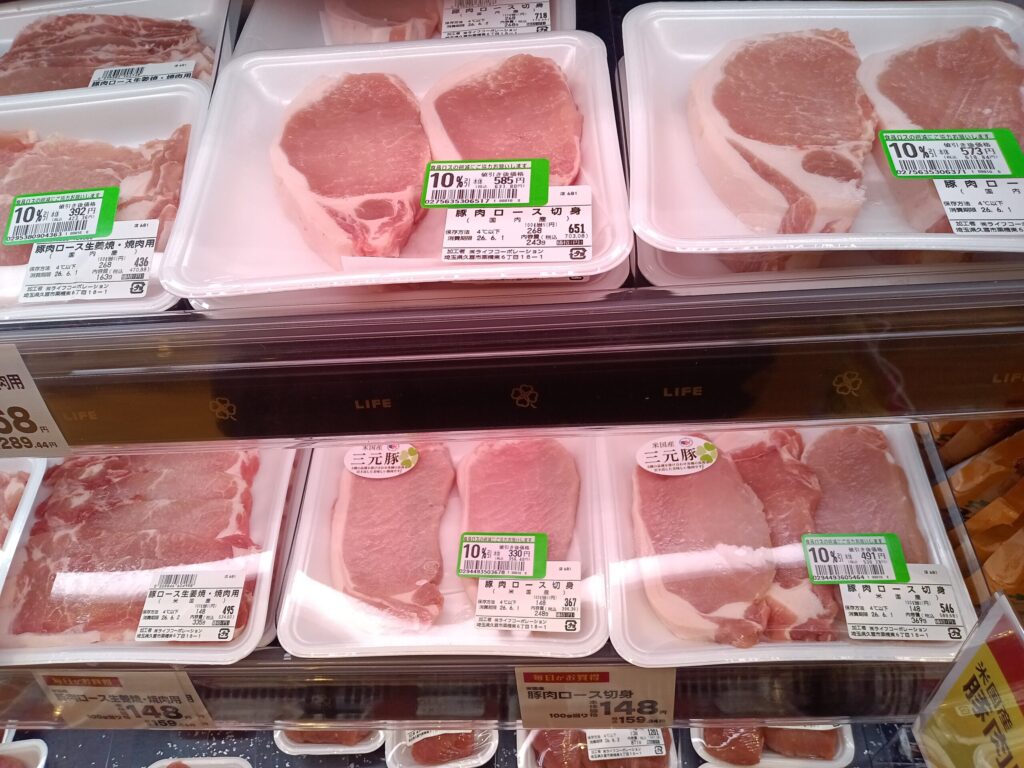
For comparison, the photos below show the thick-cut meat sold at supermarkets. The one on the left is a cut of beef for steak, and the one on the right is pork commonly used for dishes like pork sauté.
Conclusion
Japan’s thinly sliced meat culture is rooted in a rich blend of history, convenience, and family care. It’s fascinating to think that a simple supermarket staple can trace its origins all the way back to the Meiji era.
If you ever travel to Japan, I highly recommend skipping the standard tourist spots for an hour and just wandering into a local supermarket. Taking a look at the meat section is a fantastic, ‘geeky’ way to truly see and feel the unique differences in food culture!