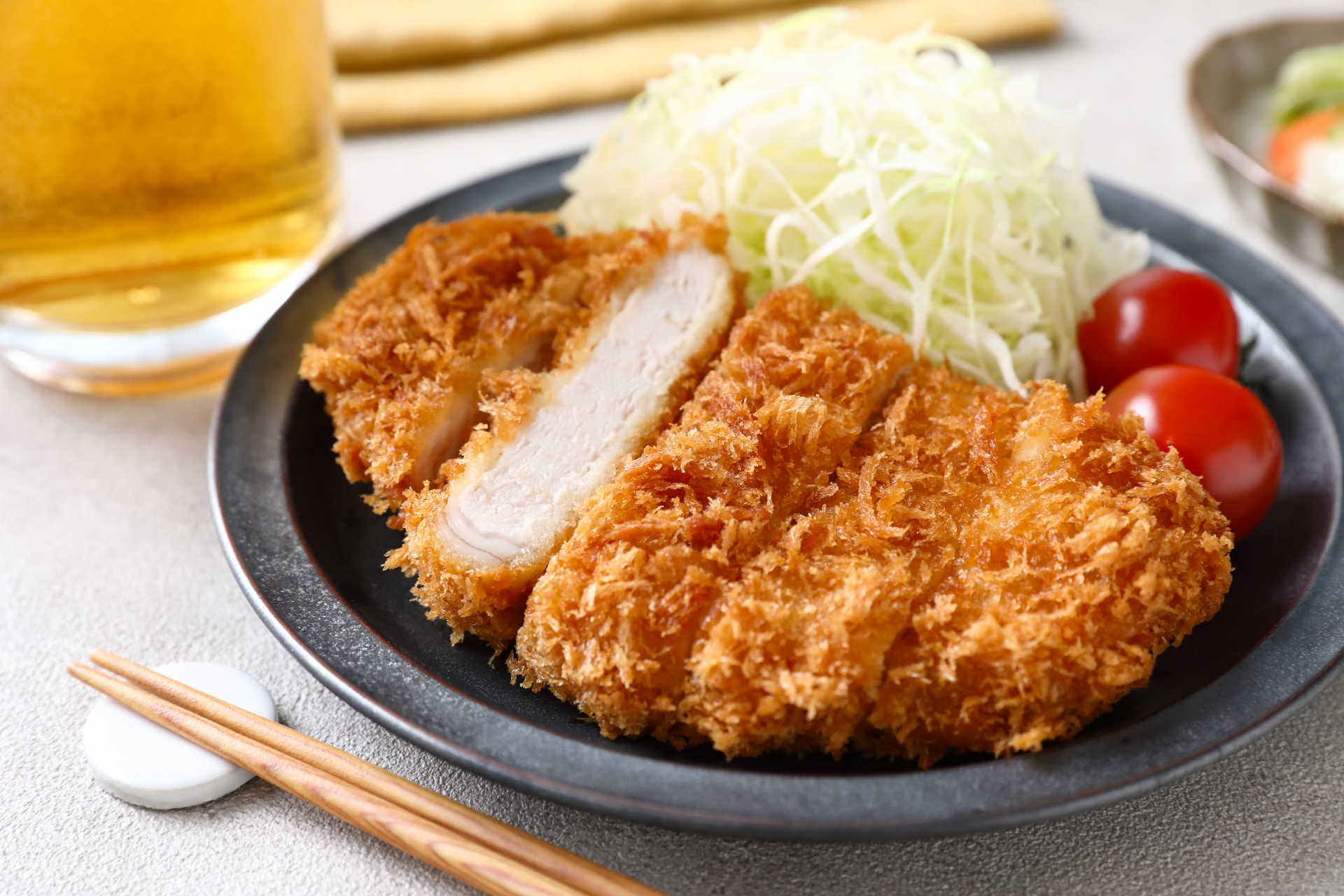
Tonkatsu is becoming a familiar dish among Japanese cuisine. However, the “meaning” of Tonkatsu for Japanese people, the different types of Katsu, and the variety of dishes that use Tonkatsu might not be well known.
In this article, we will introduce Japanese Tonkatsu culture through a story format.
Summary
- The “Katsu” in “Tonkatsu” means “Victory” (katsu) in Japanese. Therefore, many people eat it before an important match or event for good luck.
- Types of Katsu: Rosu-katsu (Loin), Hire-katsu (Fillet), Chicken-katsu, Beef-katsu, Menchi-katsu (Minced Meat), and Mille-feuille-katsu.
- Dishes using Tonkatsu: Katsu-don, Katsu-curry, and Katsu-sand (Sandwich).
Characters
- Mike: A 12-year-old American boy interested in Japan.
- John: Mike’s father. He frequently visits Japan for business.
- Kelly: Mike’s mother. She is good at cooking.
- Nobu: A Japanese international student.
The Meaning of “Katsu” in Tonkatsu
Point:
The “Katsu” in Tonkatsu means “Victory”.
John: “I was surprised to find that Japanese people are unexpectedly superstitious. They are sensitive to words, and it’s interesting how the meaning of a word can change their feelings”.
Mike: “Superstitious? Like what, for example?”
John: “Apparently, Tonkatsu is one of those things”.
Nobu: “Hello everyone”.
John: “Hi Nobu. We were just talking about how Japanese people believe in good luck charms and Tonkatsu”.
Nobu: “I see. Tonkatsu, right? It might be fading a bit now, but in the past, people often used Tonkatsu to pray for good luck”.
John: “How so?”
Nobu: “The word ‘Katsu’ in Tonkatsu means ‘Victory’ in Japanese. That’s why many Japanese people have stories about eating Tonkatsu the day before an entrance exam or a sports tournament”.
John: “I see, ‘Victory.’ That makes sense”.
Main Types of Japanese Katsu
Point:
Types of Katsu: Rosu-katsu, Hire-katsu, Chicken-katsu, Beef-katsu, Menchi-katsu, and Mille-feuille-katsu.
Kelly: “By the way, I heard there are different types of Katsu in Japan. I wonder how many varieties there are?”
Nobu: “Well, there are quite a lot. Each region and restaurant comes up with their own creative variations”.
Kelly: “I see, then there must be many”.
Nobu: “But I can introduce the main ones to you”.
Rosu-katsu (Pork Loin Cutlet)
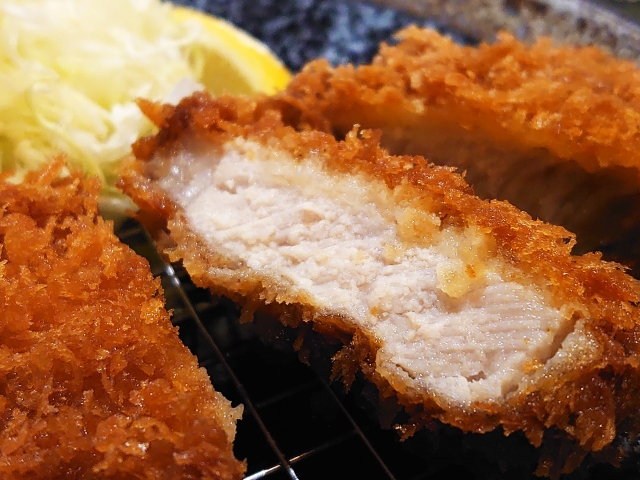
Nobu: “First is Rosu-katsu. When people say ‘Tonkatsu,’ this is the standard. It’s made by slicing pork loin a bit thick, breading it, and deep-frying it”.
Kelly: “So, the breading is crispy and the meat is juicy?”
Nobu: “Exactly. The secret to its deliciousness is the collaboration between the crispy breading and the flavor of the meat. Some Tonkatsu restaurants manage not only the quality of the meat but even the length of the breadcrumbs (panko) they use”.
Hire-katsu (Pork Fillet Cutlet)
Nobu: “Next is Hire-katsu, made using pork fillet. Although it’s also pork, it’s distinguished from Rosu-katsu. Its characteristic is that it’s leaner and lighter”.
Kelly: “That sounds good for people who don’t like greasy food”.
Nobu: “Yes. Rosu-katsu is great for young people who need energy, while Hire-katsu might be better for those who prefer to avoid grease or for older people”.
Chicken-katsu
Nobu: “Next is Chicken-katsu. It’s a cutlet made with chicken”.
Mike: “Is this different from fried chicken?”
Nobu: “Yes, it’s a completely different dish. First, the breading is different, and the meat is too. Fried chicken sometimes has bones, but Chicken-katsu is always boneless”.
Beef-katsu (Bifu-katsu)
Nobu: “Next is Beef-katsu, made with beef. This dish is often seen in Western Japan”.
John: “Why Western Japan?”
Nobu: “The meat culture differs between Eastern and Western Japan. In Eastern Japan, people eat pork, chicken, and beef equally, but Western Japan has a very strong beef culture. For some, the word ‘meat’ (niku) immediately brings to mind beef rather than pork”.
Menchi-katsu (Minced Meat Cutlet)
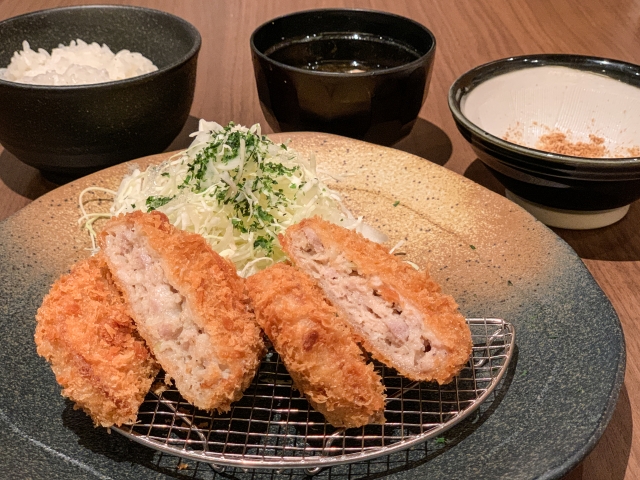
Nobu: “Next is Menchi-katsu. This is made from minced meat. Imagine a hamburger patty that has been breaded and fried like a cutlet”.
Kelly: “I wonder why they don’t just eat it as a hamburger?”
Nobu: “A big point is that it ‘tastes good even when cold.’ For example, when putting it in a bento (lunch box), it’s assumed it will get cold. Menchi-katsu was preferred because it stays delicious”.
Mille-feuille-katsu
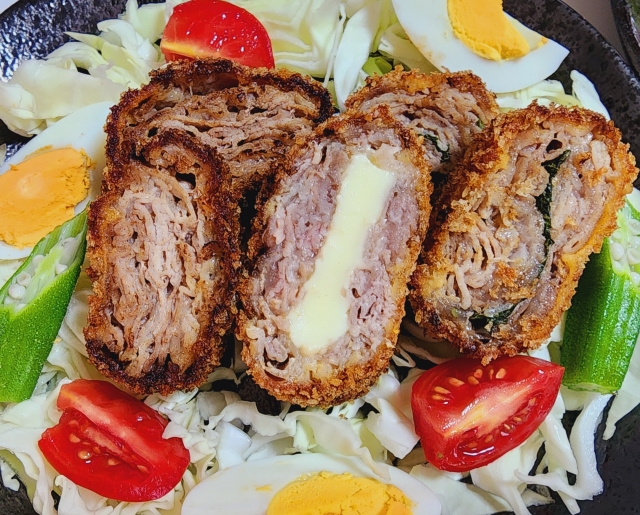
Nobu: “Mille-feuille-katsu is made by layering thin slices of meat and then frying it. Since the inside consists of thin layers, even people with weak teeth can enjoy it easily. It’s like the image of a Mille-feuille cake”.
Nobu: “Japan is facing an aging society, so this social background might be why Mille-feuille-katsu became popular”.
Examples of Dishes Using Tonkatsu
Point:
Examples of Tonkatsu dishes… Katsu-don, Katsu-curry, Katsu-sand.
Nobu: “Now, let me introduce some dishes that use Tonkatsu.”
Katsu-don
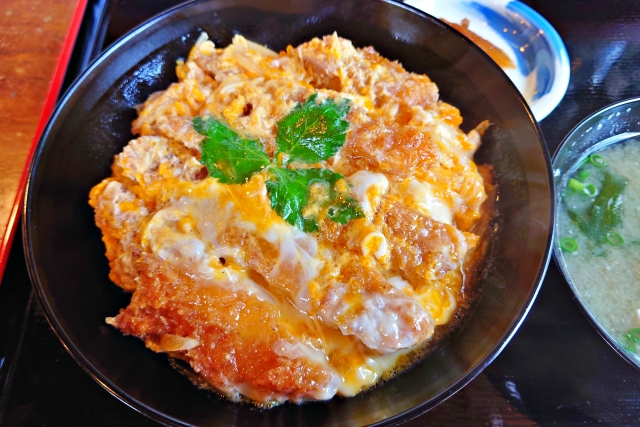
Nobu: “First is Katsu-don. It’s a dish where Tonkatsu is simmered with egg and placed on top of a bowl of rice. It’s becoming popular worldwide, isn’t it?”
Mike: “I’ve seen it in anime!”
Nobu: “There’s a theory that a university student came up with Katsu-don. A certain soba shop was struggling with leftover Tonkatsu, and a student suggested simmering it with egg. It became a huge hit”.
Katsu-curry
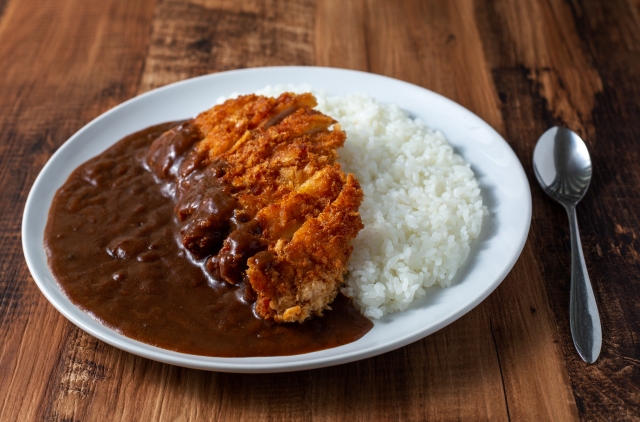
Nobu: “Next is Katsu-curry. It’s a very filling dish where Tonkatsu is placed on rice and covered with curry. It’s very popular among young people”.
Nobu: “There is also an interesting story here. It’s said that a professional athlete thought of it. He wanted to eat Tonkatsu on his curry for good luck to get a ‘Victory’ (Katsu)”.
Katsu-sand (Tonkatsu Sandwich)
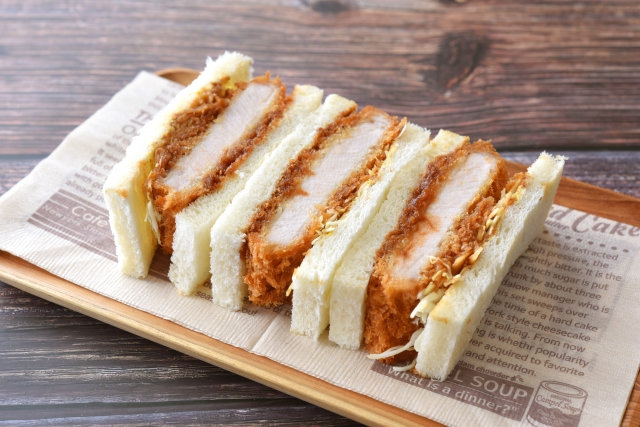
Nobu: “Finally, Katsu-sand. It’s like making a sandwich using Tonkatsu”.
Kelly: “This seems perfect for a bento”.
Nobu: “Exactly. It’s great for outings like Cherry Blossom viewing (Hanami)”.
End
From Personal Experience
I used to visit Tonkatsu restaurants often myself. There was a Tonkatsu chain on my way to work where I could enjoy cheap and delicious meals.
One thing that surprised me was the staff. They didn’t look like master chefs, but rather typical part-time workers you’d see in any fast-food industry. I didn’t expect a high-level taste, but the Tonkatsu served was actually crispy and juicy. An announcement in the shop explained their secret: “We use chilled pork with strict temperature control and breadcrumbs of a specific length…”. Because the quality control of ingredients and the cooking procedures were so thorough, even someone who isn’t a professional chef can produce a high-level taste.
Unfortunately, my visits have decreased recently because prices have gone up since the pandemic. I’m not sure if prices will drop, but I plan to go back when I have a little extra in my wallet.
Conclusion
We have explored the world of Tonkatsu. I hope you have deepened your knowledge about the meaning of “Katsu,” the different types, and the various dishes. Tonkatsu is a dish I highly recommend to people from overseas. When you come to Japan, please give it a try!