Does the type of fire really change the taste of Japanese Yakitori (grilled chicken) and Yakiniku (Japanese BBQ)? The answer is “Yes.” But why does the taste change? And how does it change? Here, we introduce Japan’s culinary “fire” culture through a story format.
Summary
・The Science: Why charcoal makes food crispier and juicier.
・Premium Quality: The story of Japan’s high-grade “Bincho-tan.”
・The Menu: Why Yakitori, Fish, and Eel must be grilled over fire.
・Pro Tip: Why “Sumibi-yaki” signs are a mark of a great restaurant.
・Check out why “Sumibi-yaki” is a sign of quality you shouldn’t miss!
Characters
- Mike: A 12-year-old American boy interested in Japanese culture.
- John: Mike’s father, who frequently visits Japan for work.
- Kelly: Mike’s mother, who is a skilled cook.
- Nobu: A Japanese international student.
Prologue
Broadly speaking, there are several ways to heat food: grilling with a flame like a gas stove, heating in a confined space like an oven, using electromagnetic waves like a microwave, and using far-infrared radiation like charcoal. Among these, charcoal is the medium that has been favored in Japan since ancient times. Charcoal fires are still preferred today, and it is common to see signs that say “Sumibiyaki” (Charcoal-Grilled) at Yakitori and Yakiniku restaurants. So, how does charcoal change the ingredients?
Taste That Changes with Fire
Point:
Most Japanese people prefer charcoal-grilled food and consider it delicious.
Kelly: “I see videos of Yakitori and Yakiniku in Japan, and it looks like they use different types of fire.”
John: “That’s right. In Japanese Yakitori and Yakiniku restaurants, you often see them changing the fire. When it comes to fire, gas stoves are used at home, but many shops insist on using charcoal.”
Kelly: “Charcoal, you say?”
John: “Yes, charcoal. Some shops even place a tool called a ‘Shichirin’ (a small charcoal grill) on the table so you can grill the food yourself.”
Kelly: “But isn’t charcoal difficult to handle? It seems like it would take a lot of effort to light and extinguish. If it’s a fire that can’t be used as easily as a gas stove, I would be fed up with it.”
John: “In terms of convenience, that’s certainly true. But I wonder why Japanese people are so particular about charcoal?”
Nobu: “Hello.”
Kelly: “Hello. You’ve come at a good time. We were just talking about Japanese charcoal fires.”
Nobu: “Oh, charcoal? Using that makes the food taste better.”
Kelly: “Even Nobu says that? …Wait, I don’t understand. It’s all fire; why is it different?”
Nobu: “Well, heating with charcoal is done via far-infrared radiation. This heat is very intense and sears the surface quickly. At the same time, the heat penetrates the inside thoroughly, so it grills the outside to a crisp without letting the umami (flavor) escape.”
John: “I see, so charcoal fire has those characteristics.”
Nobu: “Yes. In contrast, a gas stove grills the whole thing with flames, making it easier for the umami of the ingredients to escape compared to charcoal. That’s why charcoal is preferred over gas stoves.”
Kelly: “I see.”
Nobu: “There’s also the ‘aroma.’ Charcoal has a unique scent, and as you heat the food, that scent is transferred to it. Many people like that, which is why they say ‘charcoal-grilled is delicious.'”
Kelly: “Wow, even the aroma? I’m surprised.”
Nobu: “However, I think very few general households use charcoal. It’s hard to light and extinguish. That’s especially true in places like apartments.”
John: “I see, residential circumstances.”
Nobu: “That’s exactly why people go to restaurants to eat charcoal-grilled food.”
The Culture of Being Particular Even About Japanese “Charcoal”
Point:
Different types of charcoal exist, and connoisseurs have their preferences. Wakayama’s Binchotan is famous as a premium variety.
Nobu: “What’s more, some Japanese people are even particular about the production area of the charcoal.”
John: “Wait a minute. Isn’t charcoal just something made by burning wood? If so, it should be the same no matter where it’s made.”
Kelly: “That’s true. Whether it’s a stove in a house or a stove in a restaurant, fire should just be fire.”
Nobu: “No, there are different qualities of charcoal. In fact, there are several charcoal-producing regions in Japan, and some charcoal is considered high-grade. When people think of high-grade charcoal, ‘Bincho-tan’ made in Wakayama Prefecture comes to mind.”
John: “A production area for charcoal?”
Nobu: “Yes. Charcoal production areas include Wakayama, Miyazaki in Kyushu, and Iwate Prefecture in the Tohoku region, but Wakayama’s Bincho-tan is considered the most high-grade. It is made by burning Ubame-gashi (Holm oak) at high temperatures of over 1,000°C. It has great thermal power and lasts a long time, and its name is known worldwide.”
Kelly: “I see, thermal power and longevity. If the heat is weak, the surface won’t turn out crispy.”
Nobu: “Exactly. By the way, some Yakiniku restaurants in Japan even have signs saying ‘Bincho-tan Used.'”
John: “I see.”
Nobu: “I believe the long-lasting nature of the fire was very important for Japanese life beyond just cooking.”
John: “How so?”
Nobu: “For example, heating. In the past, Japanese people used devices like ‘Hibachi’ to keep warm, and charcoal was used in them. Charcoal was preferred because it produced little smoke and lasted a long time. Also, since Japanese houses were made of wood, they probably couldn’t use open flames like a fireplace.”
John: “True, fireplaces burn raw wood but absolutely require a chimney.”
Nobu: “However, things change when you go to rural farming villages. Farmhouses have an ‘Irori’ (sunken hearth) where they build a fire and use pots to cook. But the culture of the Irori is a different story, so let’s talk about that another time.”
What Dishes Change with Fire?
Mike: “But what kind of dishes change because of the fire?”
Nobu: “Right. There are many, but let me introduce some representative ones.”
Yakitori
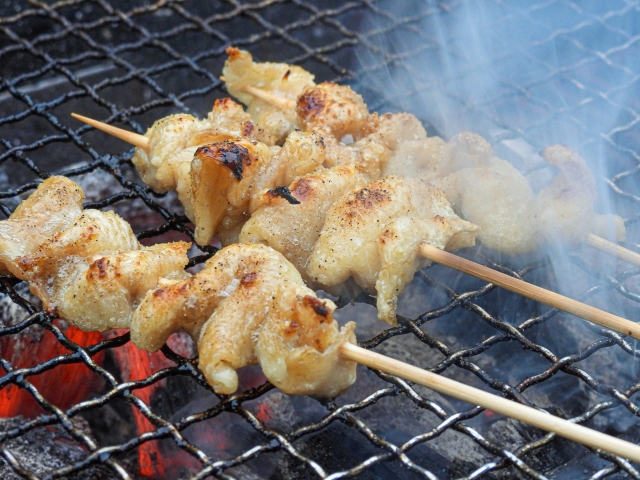
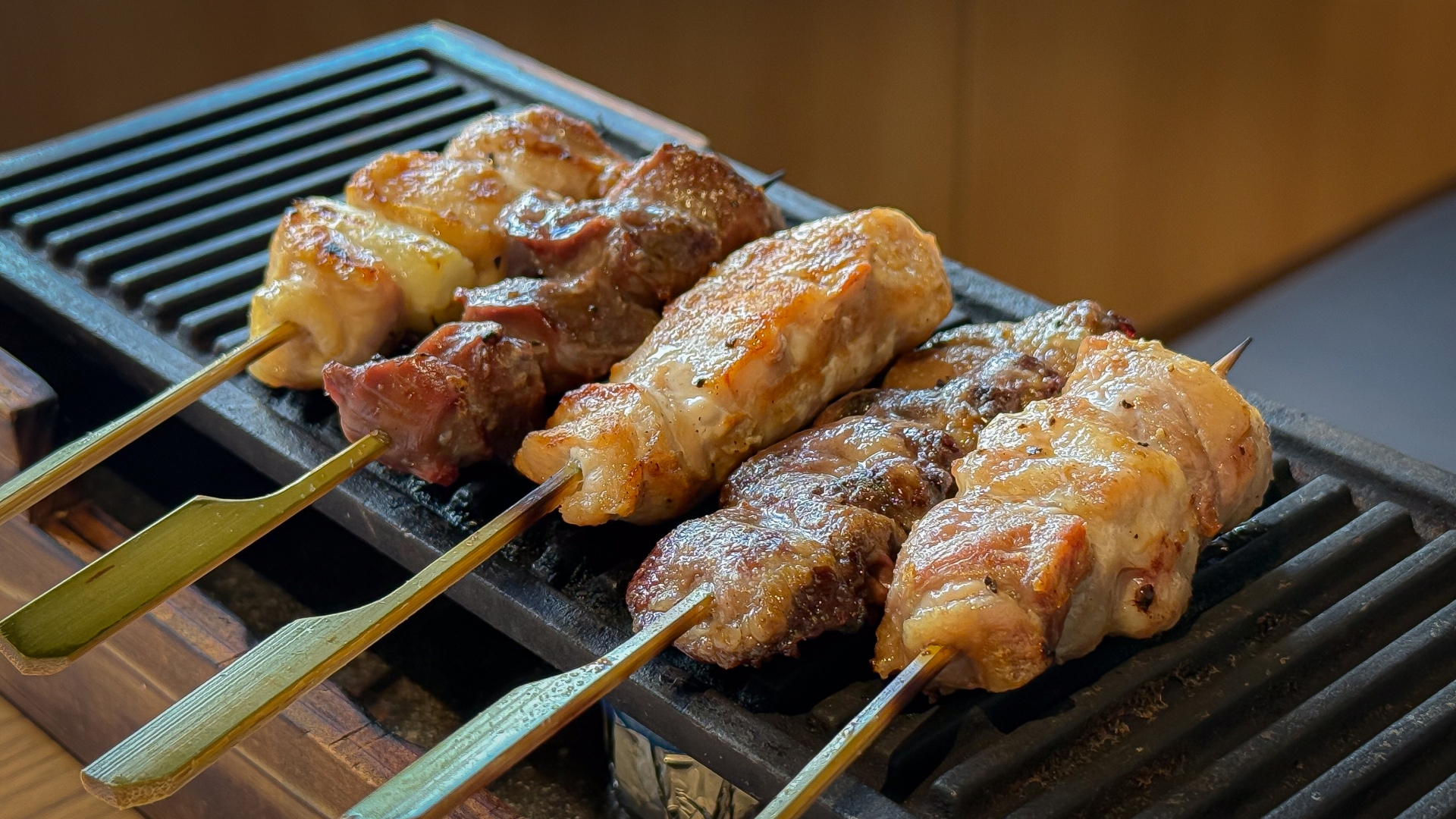
Nobu: “First is Yakitori. Since the seasoning for Yakitori is simple, I think the key is not to let the flavor of the ingredients escape. That’s why it’s important to grill the surface to a crisp and cook the inside slowly. This is why charcoal is preferred.”
Kelly: “That’s what we discussed earlier. It makes sense because it’s ‘simple.'”
Nobu: “By the way, some shops grill Yakitori on gas stoves. However, even if it’s a gas stove, it doesn’t mean it tastes bad. Charcoal is just one type of cooking tool; even with a stove, a skilled craftsman can produce a great taste.”
Mike: “So in the end, you won’t know until you try it?”
Nobu: “Well, maybe so. …I’m not sure myself.”
Yakiniku
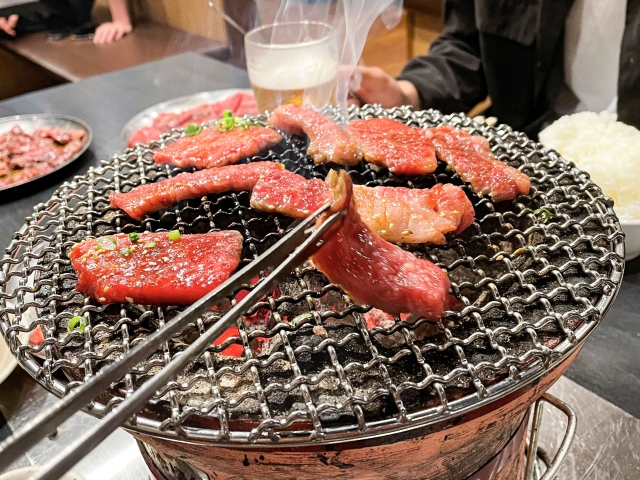
Nobu: “Yakiniku is the same. Since some Yakiniku is also simple, the point is to grill it without letting the umami escape.”
Kelly: “Especially when heating thick ingredients, I think the taste is different. If you lock the umami inside, the taste changes considerably. It turns out crispy on the outside and juicy on the inside.”
Mike: “Wow, just hearing that makes my mouth water.”
Yakisaka (Grilled Fish)
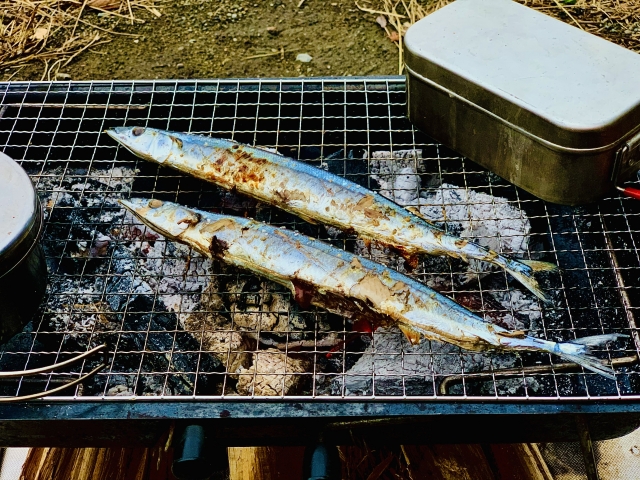
Nobu: “Grilled fish is also different. I think Sanma (Pacific saury) is probably quite different.”
Mike: “Fish is different too?”
Nobu: “Sanma is a very fatty fish. If you heat it poorly, the delicious fat escapes. That’s why you need a cooking method that doesn’t let the umami escape, and charcoal is suitable for that.”
Kelly: “Sanma. Is that a popular fish in Japan?”
Nobu: “That’s right. So, I think… charcoal is also suitable for grilling salmon. Seasonal salmon is fatty, so it should be delicious.”
Mike: “I know about grilling salmon over charcoal. It’s delicious, isn’t it?”
Nobu: “Oh, you already knew that. You should go and rediscover the deliciousness of charcoal-grilling.”
Unagi no Kabayaki (Grilled Eel)
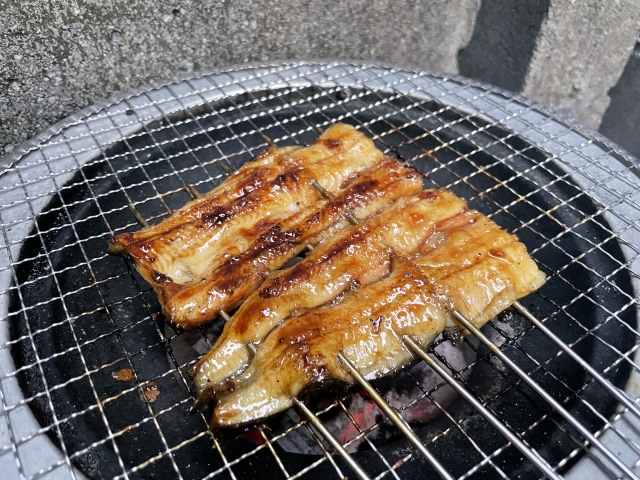
Nobu: “Do you know about Unagi no Kabayaki?”
Mike: “Is Unagi that long fish?”
Nobu: “Yes, that long fish. Japanese people love that fish very much. It’s split open, grilled, and seasoned, and charcoal is preferred for that heating process.”
Kelly: “Charcoal is used for that too?”
Nobu: “Yes. Since it’s bad for eel to let the umami of the inside escape, charcoal is preferred.”
Charcoal Also Has Disadvantages
John: “I understand why Japanese people are particular about charcoal, but are there no disadvantages to it?”
Nobu: “Charcoal has disadvantages too. For example, as we mentioned earlier, it’s a hassle to light and extinguish. With gas, you can turn it off easily, but not with charcoal. Also, finding a place to store the fuel is difficult. Transporting it is hard, and the price is higher.”
John: “That’s true.”
Nobu: “For example, when you go to a Yakiniku restaurant, you might see charcoal piled up in an inconspicuous part of the shop. Yakiniku restaurants have limited space and don’t usually have dedicated warehouses, so they probably struggle with storage.”
Kelly: “I see.”
End.
From My Personal Experience of Shichirin
I occasionally visit charcoal-grilled yakiniku restaurants. At these places, they provide a traditional cooking stove called a “Shichirin,” which you use to grill the meat right at your table. Grilling meat over an open charcoal flame gives it a unique, smoky aroma and makes it incredibly delicious.
However, I do feel there are some downsides to using charcoal. The biggest challenge is that it’s difficult to adjust the heat. Also, if the fire gets weak, you have to add more charcoal. This usually means having to call over a staff member each time. Since restaurant staff are often very busy, I sometimes feel a bit hesitant or guilty about interrupting them just to manage my fire.
That being said, charcoal-grilled yakiniku is simply exceptional. Once I have a little extra room in my budget, I’ll definitely be heading back for more!
You may be wondering what it is actually like to cook over a traditional Japanese shichirin charcoal grill.
To find out for myself, I recently visited a yakiniku restaurant that uses shichirin grills at each table. During my visit, I took several photos so that you can see how this traditional style of charcoal cooking works in practice.
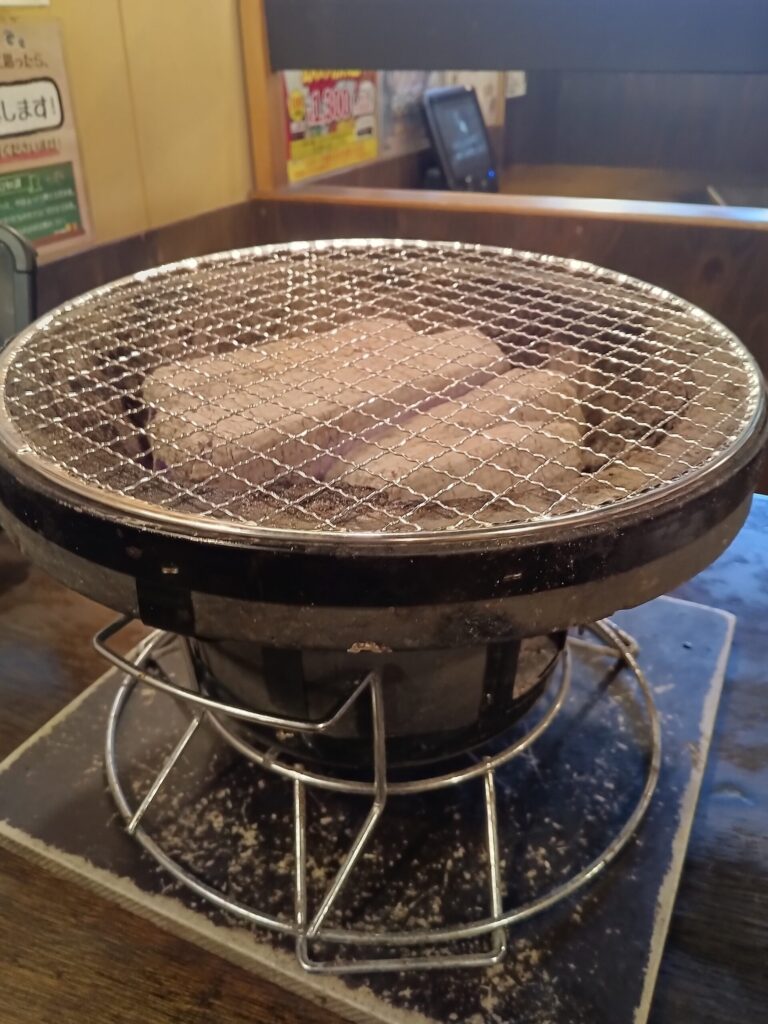
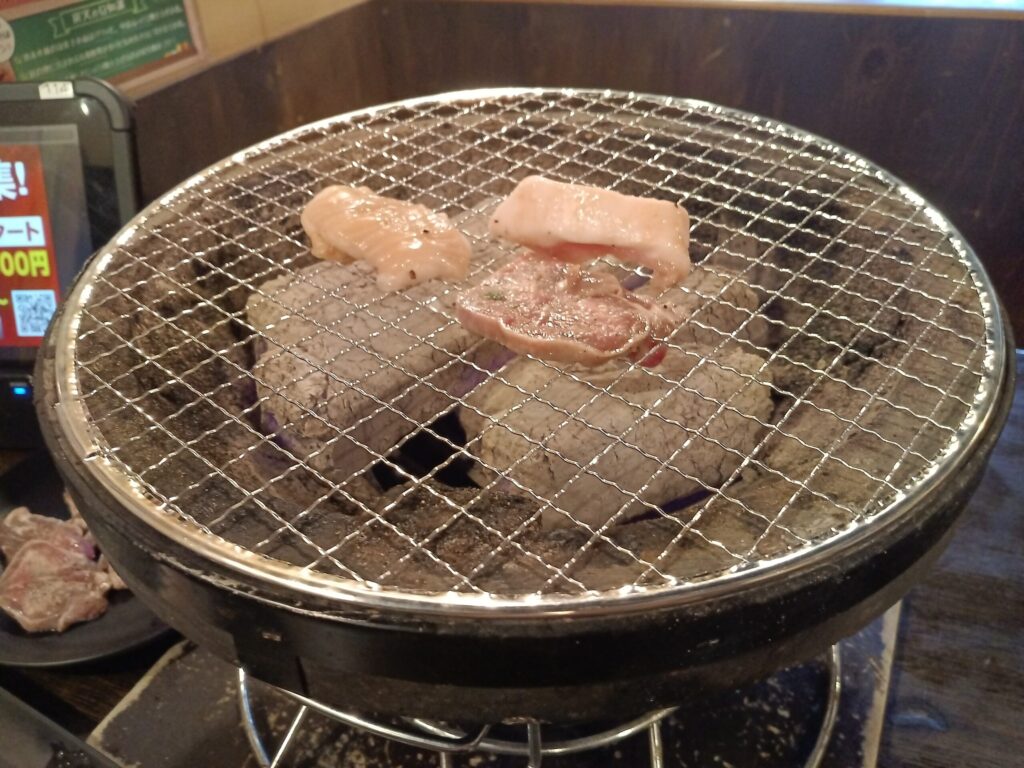
The photo on the left shows a shichirin before any meat was placed on the grill. You can see the charcoal burning in the center, ready for cooking.
The photo on the right shows the grilling process in action. In a typical yakiniku restaurant, customers cook the meat themselves at the table and eat it as it comes off the grill.
Incidentally, this is one of the major differences between yakiniku and yakitori. Even when charcoal is used, yakitori is usually grilled by the restaurant staff in the kitchen and served ready to eat.
Conclusion
The title was “Does the Type of Fire Change the Taste of Japanese Yakitori and Yakiniku?” and I think you now understand the meaning. Many of you may have also become interested in Japan’s charcoal-grilling culture.
There are various ways to heat ingredients, but it is no exaggeration to say that the culture of using charcoal stands apart from other cooking methods. In terms of “eating more deliciously,” it can be called a remarkable culture.
In any case, Japanese charcoal-grilling is exceptional. When looking for a Yakitori or Yakiniku restaurant in Japan, it might be interesting to look for a sign that says “Sumibiyaki” (Charcoal-Grilled). It’s highly recommended.
Recommended Articles
In this article, we discussed how the type of fire changes the flavor of yakitori and yakiniku. However, since their names sound so similar, many people often confuse the two. In the next article, we will explain the key differences between them.
What’s the Difference Between Yakiniku and Yakitori?