When it comes to enjoying food, the most important point is to value the natural deliciousness of the ingredients. So, how exactly should Japanese condiments be used?
Summary
- Condiments are used in various ways: “Tsukeru” (dipping), “Kakeru” (pouring), “Nuru” (spreading), and “Hitasu” (soaking).
- Dishes to “dip” (Tsukeru): Sashimi, Sushi, etc.
- Dishes to “pour” (Kakeru): Fried eggs, Tonkatsu (pork cutlet), etc.
- Dishes to “spread” (Nuru): Okonomiyaki, Teriyaki, etc.
- Dishes to “soak” (Hitasu): Zaru-soba, Tempura, etc.
Characters
- Mike: A 12-year-old American boy interested in Japan.
- John: Mike’s father. He frequently visits Japan for business.
- Kelly: Mike’s mother. She is good at cooking.
- Nobu: A Japanese international student.
Prologue
Cooking is not just about cutting ingredients and heating them. Proper seasoning is essential to make the food taste good. If you use condiments blindly, even a great dish can become unpalatable. Choosing the right condiment and knowing how to use it are crucial for a delicious meal.
Japanese food has a very strong tendency toward this. For example, soy sauce is a representative Japanese condiment, but it is never used blindly. The way it is used changes depending on the dish being served.
So, how are these condiments used? Here, we will introduce the various ways through a story format.
There Are Specific Ways to Use Soy Sauce and Other Sauces
Mike: “Do you know how to eat Japanese sashimi?”
John: “Yes, you eat it by dipping it in soy sauce. I was taught that when I went to Japan.”
Mike: “Then, how do you eat things like Tonkatsu?”
John: “In many cases, you pour sauce over it. Depending on the shop, the sauce might be served in a separate small bowl, but basically, you eat it by pouring it over.”
Mike: “It seems like the way a condiment is used differs depending on the condiment and the dish.”
John: “That’s right. It’s not just a matter of ‘as long as it’s on there.'”
Nobu: “Hello everyone.”
John: “Hi Nobu. We were just talking about how Japanese condiments are used. For instance, there’s a specific way to apply soy sauce, right?”
Nobu: “Yes, there is. While everyone might have their own way, I wouldn’t recommend using them in a way that ignores the basic ‘theory’.”
John: “Are there really that many rules?”
Nobu: “I wouldn’t call them strict rules, but the usage is often determined by tradition and custom. If you are careless with soy sauce, sauce, or tare (glaze), the food won’t taste as good.”
Kelly: “How to use condiments… I’m interested. Please tell me more.”
Tsukeru (Dipping)
Nobu: “First is the ‘Tsukeru’ (dipping) method. Depending on the dish, you pour a small amount of the condiment into a small plate and dip the food into it when eating. The key is often to dip just a little bit.”
Kelly: “Does the amount matter that much?”
Nobu: “Yes, you should be careful. If you aren’t, the flavor might be too light or far too strong.”
Sashimi
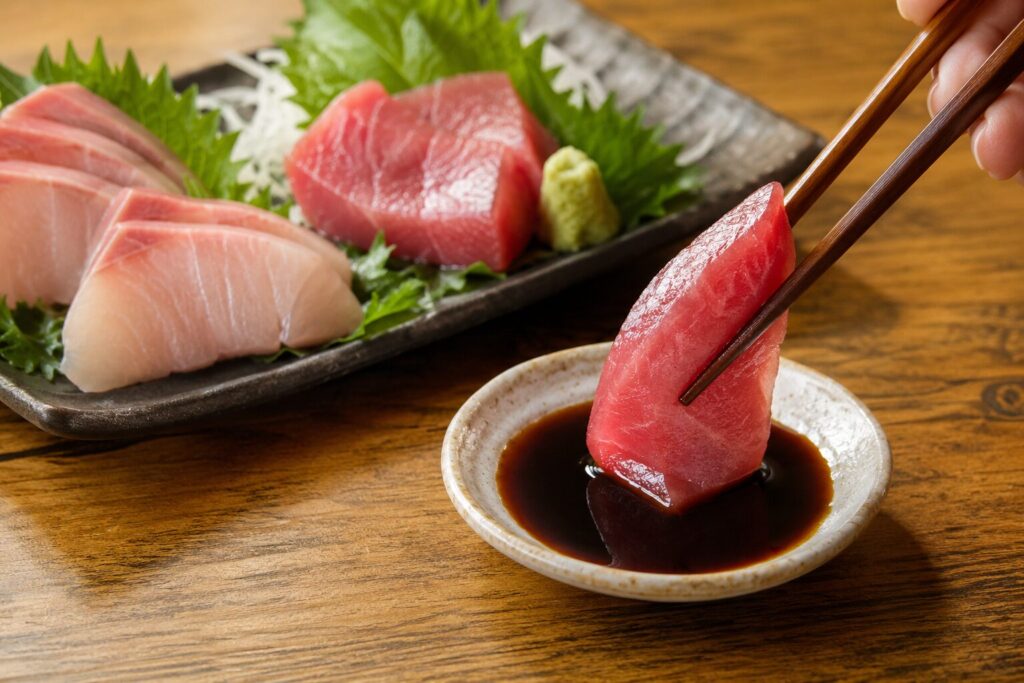
Nobu: “Sashimi is the typical dish for ‘dipping’ in soy sauce. You put soy sauce in a small dish and dip the sashimi slightly. Sometimes wasabi is added, but either way, dipping just a little is the secret to enjoying it.”
John: “True. That’s exactly how I ate it.”
Nobu: “If you dip it too deeply, it becomes too salty because soy sauce contains a lot of salt. Also, if too much wasabi sticks to the sashimi, you’ll have a hard time with the pungency.”
Sushi
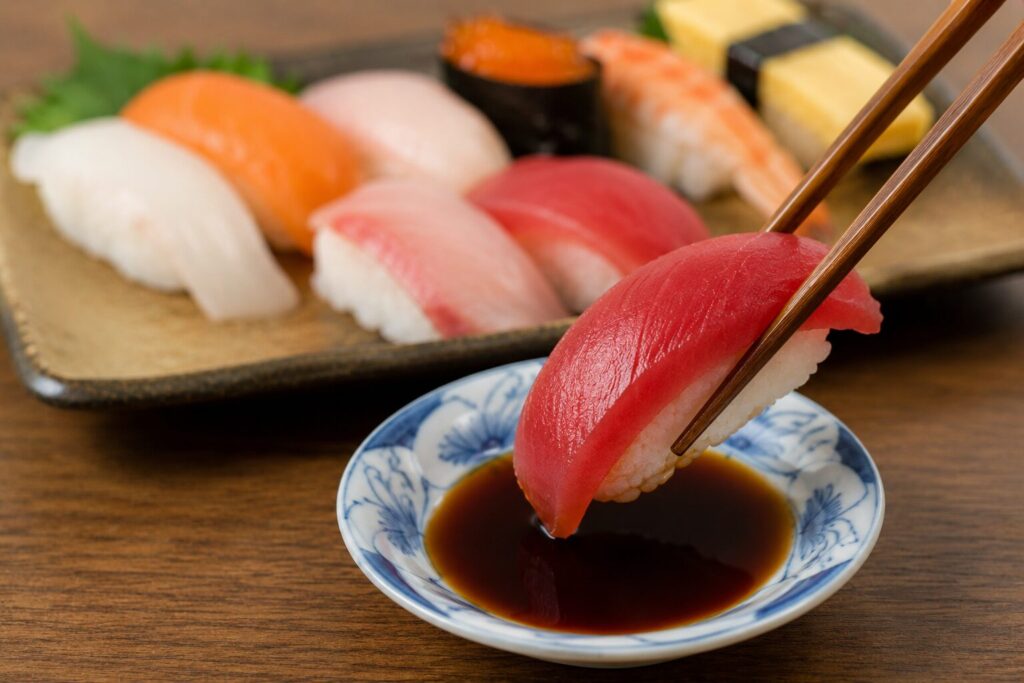
Nobu: “Sushi is also a representative dish for dipping. You should dip it lightly. It’s recommended to just touch the ‘neta’ (topping) side to the sauce. By the way, the rice part tends to absorb soy sauce between the grains, so it’s better to be careful with how you dip it.”
John: “I see. Dipping the rice in the soy sauce might cause it to fall apart too.”
Nobu: “However, you don’t use soy sauce for all sushi. For example, Anago (conger eel) is already seasoned, so you eat it without dipping.”
Kakeru (Pouring)
Nobu: “Next is ‘Kakeru’ (pouring). This is the image of drizzling the sauce over the food. Again, quantity is important. If you pour too much soy sauce, the whole dish becomes salty and the flavor is ruined.”
Fried Eggs (Medama-yaki)
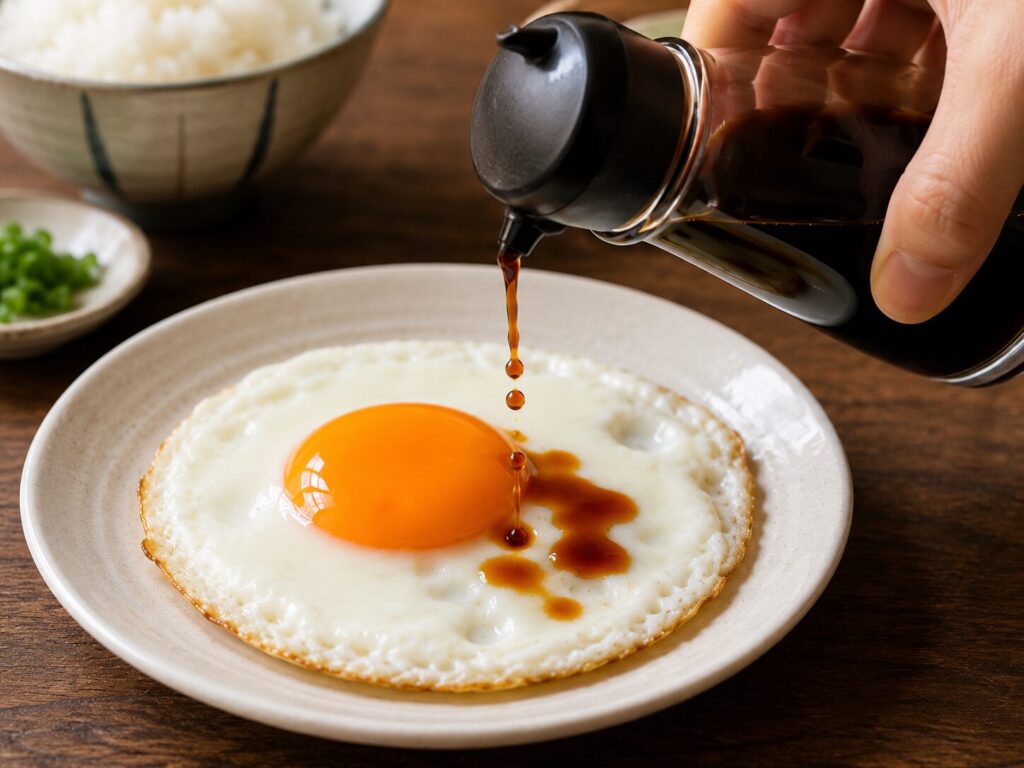
Nobu: “Fried eggs are popular worldwide, and I hear people often sprinkle salt and pepper on them.”
Kelly: “That’s right. We sprinkle it.”
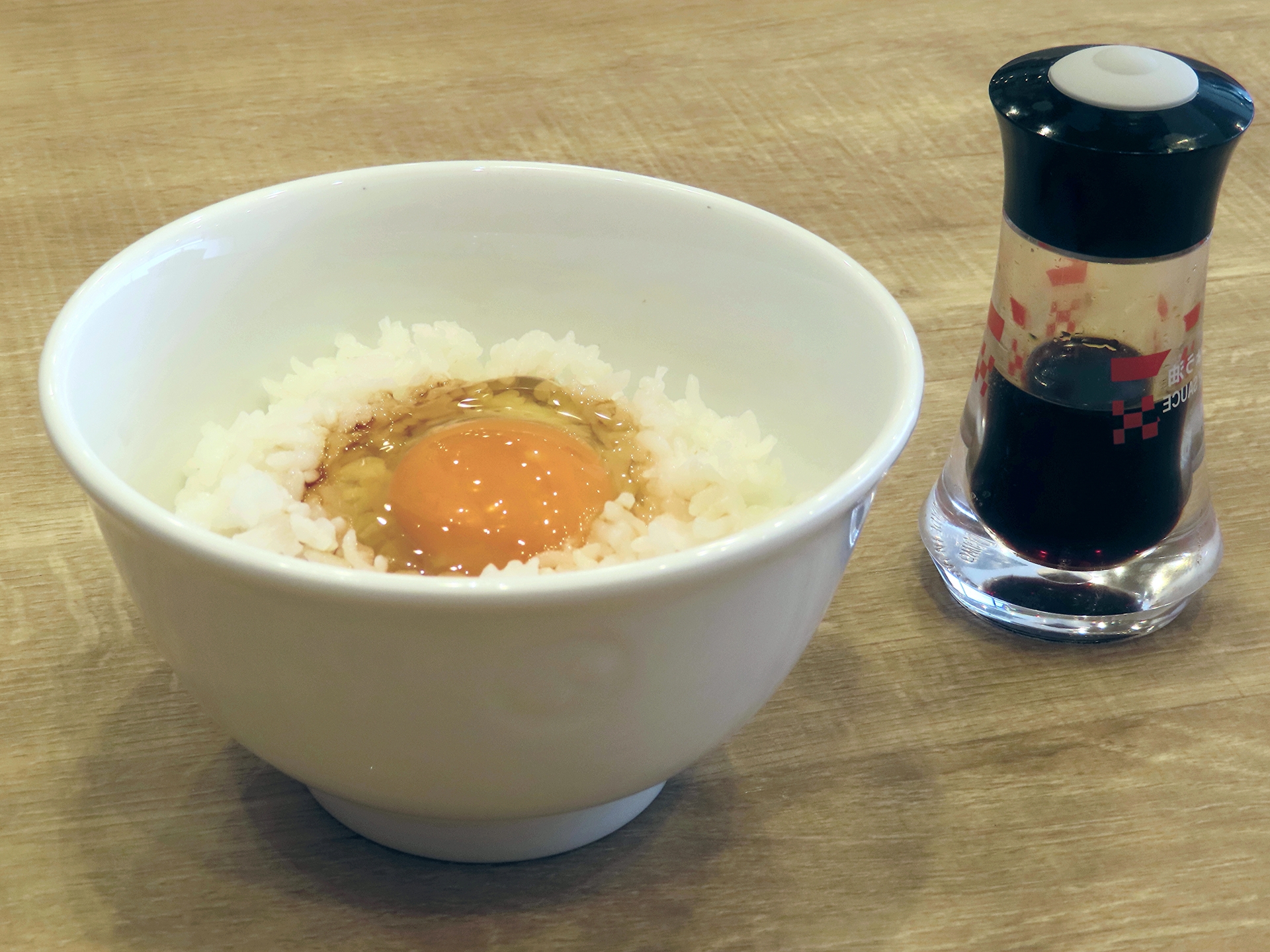
Nobu: “In Japan, many people also use salt and pepper, but many others ‘pour’ soy sauce or sauce. It’s the image of drizzling it on top before eating.”
Tonkatsu
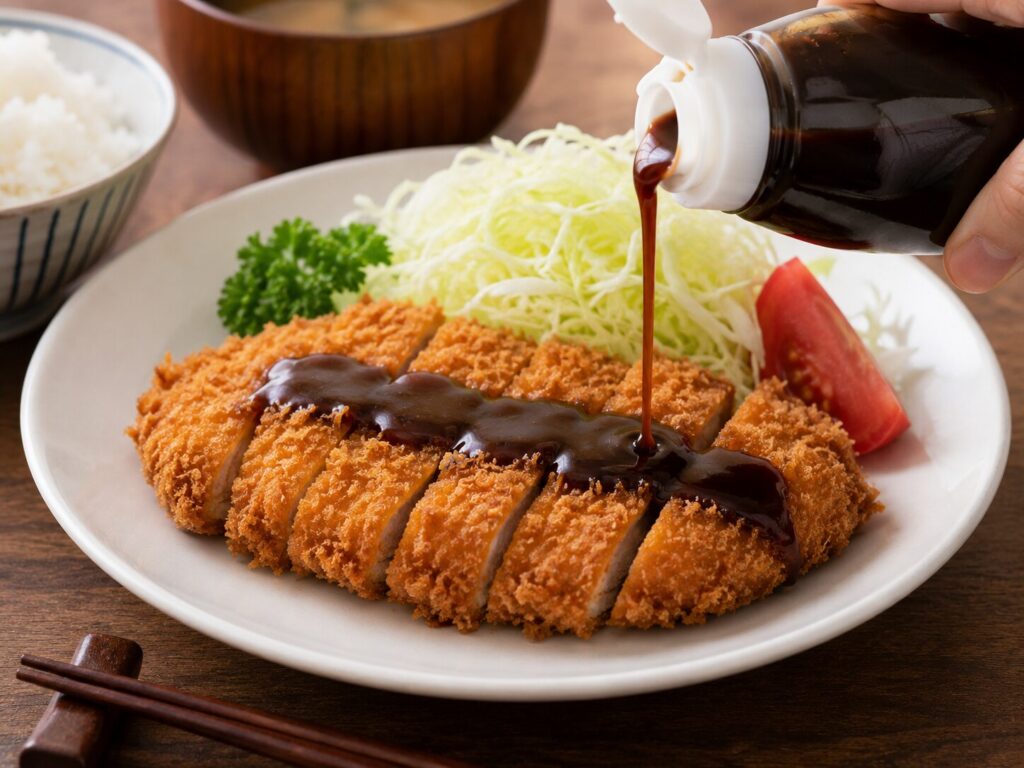
Nobu: “It is popular to eat Tonkatsu by pouring sauce over it. Freshly fried Tonkatsu with sauce is incredibly delicious.”
Nobu: “You drizzle it over the top, but you must be careful with the amount. If you pour too much, the taste of the sauce becomes too strong and destroys the flavor of the meat.”
Nuru (Spreading/Brushing)
Nobu: “Sometimes we ‘Nuru’ (spread) the condiment. This is done using a brush to apply it to the food.”
Mike: “Like painting with colors?”
Nobu: “A little different. Using a brush allows you to apply it evenly and prevents using too much.”
Okonomiyaki
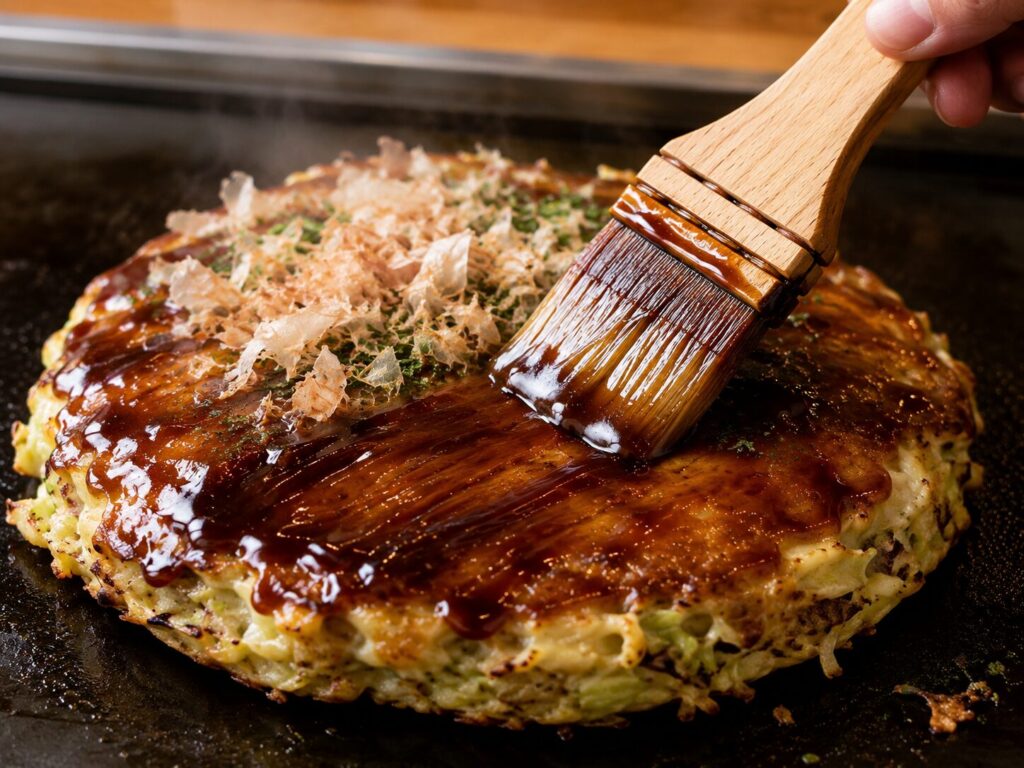
Nobu: “For Okonomiyaki, the sauce is spread after it’s cooked. When they cook it for you at a restaurant, they often use a brush.”
Teriyaki / Kabayaki
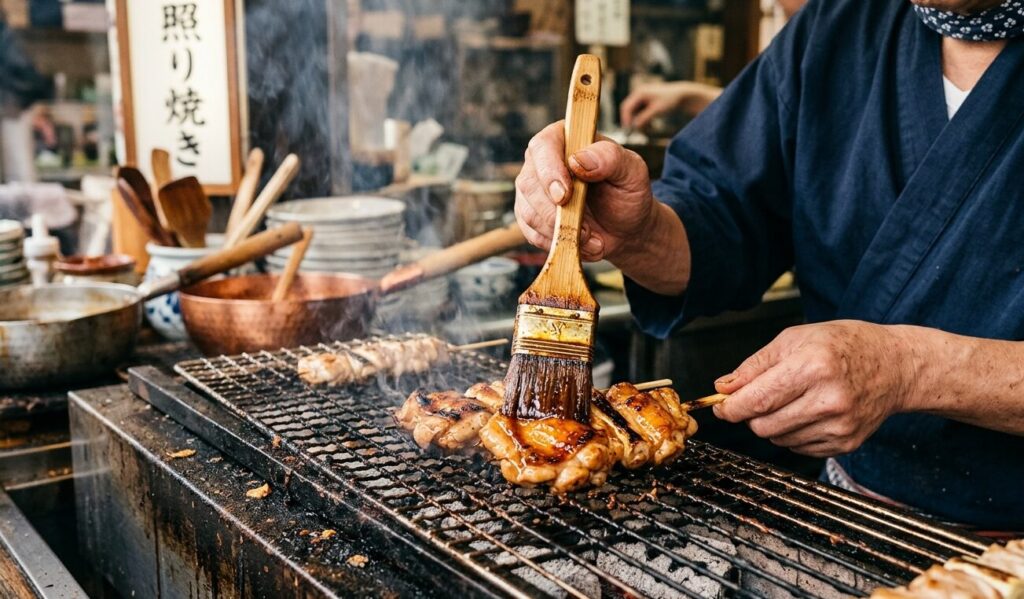
Nobu: “Teriyaki and Kabayaki are also great examples. Though in these cases, the spreading happens during the cooking process.”
Kelly: “Couldn’t you just soak it in the sauce and then grill it?”
Nobu: “If you soak it, the flavor can become too heavy or you might use too much. It seems brushing is better for controlling the subtle balance of taste.”
Hitasu (Soaking/Submerging)
Nobu: “Next is ‘Hitasu’ (soaking). This is like immersing the food in a sauce. However, the point is to only soak it ‘slightly.’ We rarely submerge it completely.”
Zaru-soba
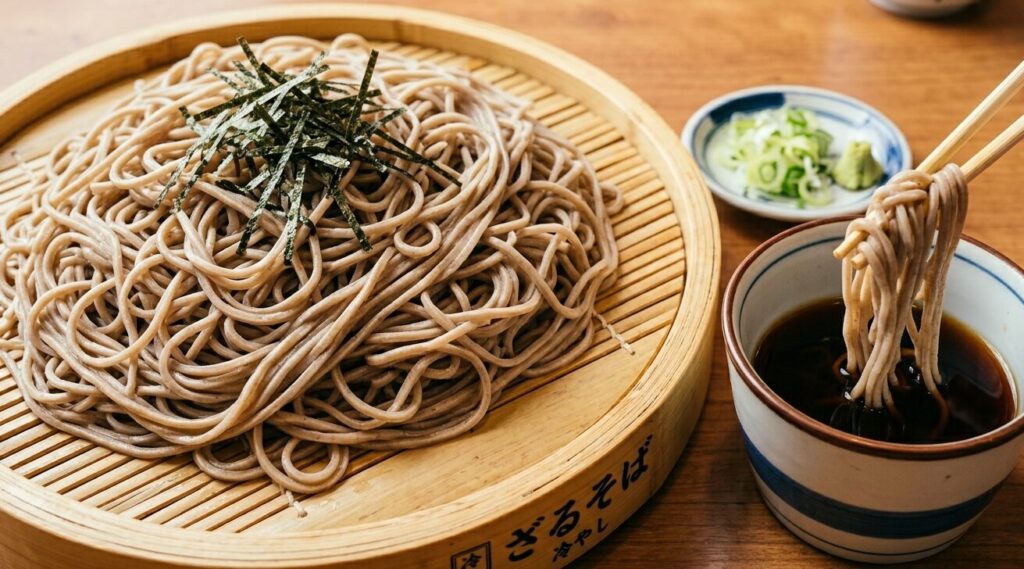
Nobu: “Zaru-soba is boiled buckwheat noodles served on a bamboo strainer with seaweed on top. You eat it by dipping it into a dipping broth (tsuyu).”
Kelly: “So, the image of ‘dipping’ in the broth is what you mean by ‘soaking’?”
Nobu: “Yes. If you soak the noodles too much, the aroma of the buckwheat is lost. So, you soak them lightly and pull them out quickly.”
Tempura
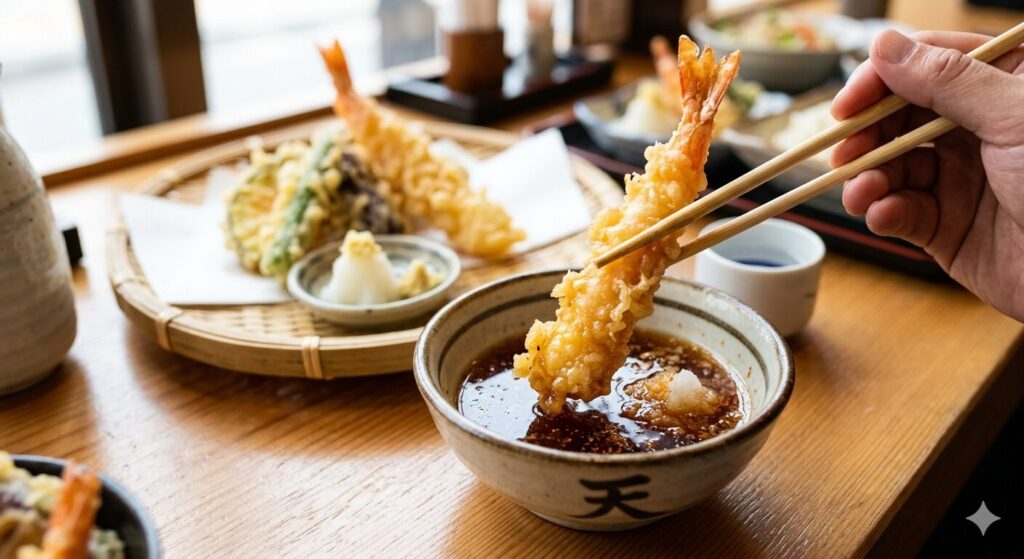
Nobu: “Depending on the household, Tempura is also eaten by soaking it in Tentsuyu (dipping sauce). You dip the tempura slightly into the sauce in a small bowl.”
Nobu: “The key is not to leave it in there. If you do, the batter will lose its crispness and fall apart, so the trick is to pull it out quickly.”
End
From My Personal Experience
I used to live in a coastal town. Because it was by the sea, fresh fish was always on the dinner table. Since sashimi was served so often, there were always small plates for soy sauce.
However, when I was a child, I didn’t know the proper way to use it. I literally “soaked” the sashimi in the soy sauce and ate it while struggling with the saltiness. Now that I am an adult, I regret that. I wasted delicious fish by making it too salty. What a waste!
By the way, you may be wondering what this looks like in an actual meal, so I’d like to share a photo.
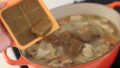
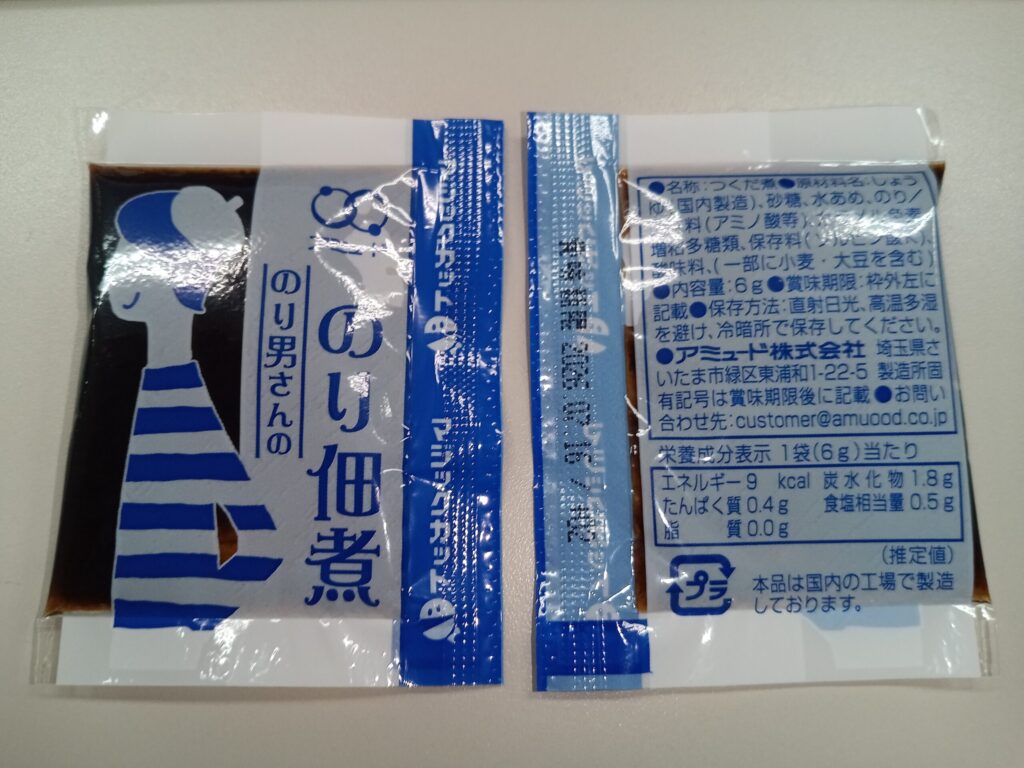
In Japan, many seasonings and side dishes are available in small, lunch-box-sized packages. The product shown here is nori tsukudani, a savory seaweed paste that is commonly eaten with rice.
When I ate this boxed lunch, I spread the nori tsukudani over the rice for convenience, as you can see in the photo.
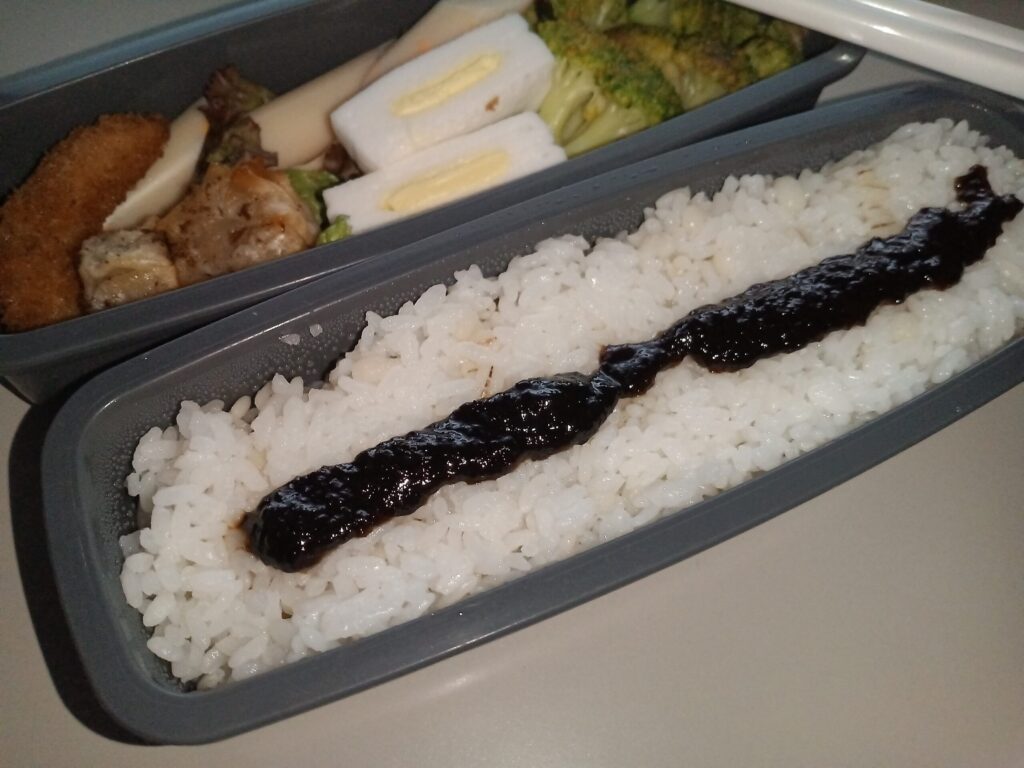
The photo on the left shows a lunch box with nori tsukudani spread over the rice.
The photo on the right shows the nori tsukudani that I used. It comes in a paste form and is packaged in a small 6-gram serving. The size is perfect for adding to a lunch box or a single serving of rice.
By the way, foods that are placed on top of rice are usually eaten in small amounts. This is because they tend to have a strong and concentrated flavor.
The 6-gram packet of nori tsukudani that I used turned out to be just the right amount for a serving of rice. If much larger packages were commonly used for a single meal, many people would end up eating rice with an overly salty flavor.
I imagine the manufacturer considered this when deciding on the package size. The small portion makes it easy to enjoy the rich taste of nori tsukudani without overpowering the rice.
Conclusion
We’ve focused on the different ways to apply condiments. Though the differences in language may be subtle, I hope I’ve conveyed how the taste changes depending on how you use them.
Ultimately, the method and the amount are what matter. Use them appropriately and enjoy your meal to the fullest!