There are surprisingly many terms for Japanese dishes that seem confusing. A perfect example is “Yakiniku” and “Yakitori.” While both are clearly “grilled” (yaki) dishes, why is one distinguished as “niku” (meat) and the other as “tori” (bird/chicken)?
Summary
- Yakiniku: A dish where meat is grilled on a griddle or stove before eating.
- Yakitori: A dish where chicken is skewered and grilled (though other meats like pork are sometimes used).
Characters
- Mike: A 12-year-old American boy interested in Japan.
- John: Mike’s father. He frequently visits Japan for business.
- Kelly: Mike’s mother. She is good at cooking.
- Nobu: A Japanese international student.
Prologue
Combining words can change their meaning, which is useful for conveying a simple image. However, for those who don’t know the language, it can be quite confusing.
The same applies to “Yakiniku” and “Yakitori.” Many people might wonder, “I know they are both grilled, but what exactly is the difference?”
In this article, we will introduce the differences between Yakiniku and Yakitori, along with some related knowledge, in a story format.
The Difference Between Yakiniku and Yakitori
Points
- Yakiniku vs. Yakitori: Although both names include the word yaki (meaning “grilled” or “cooked”), they are completely different dishes.
- Dining Style:
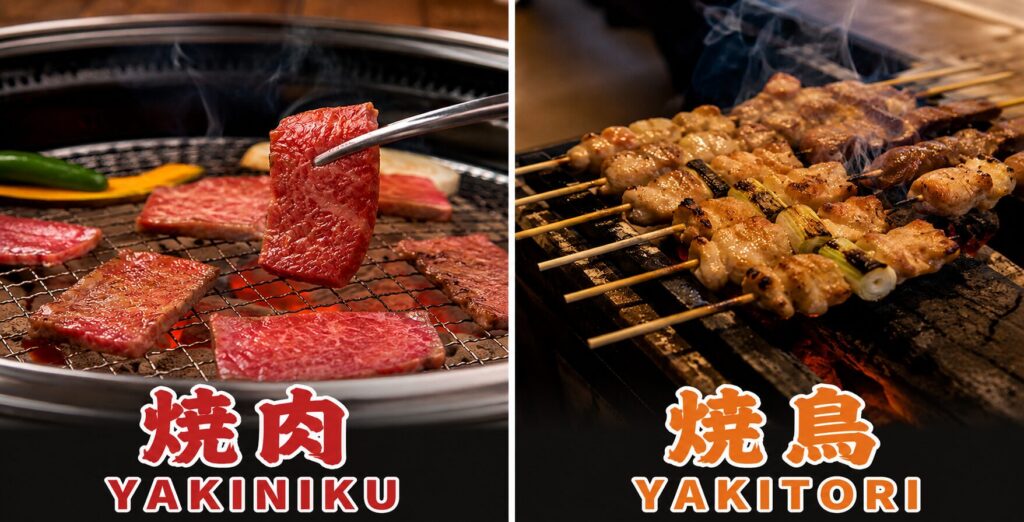
- Yakiniku is a style where you grill various cuts of meat yourself on a tabletop stove or grill while eating.
- Yakitori consists of bite-sized pieces of meat skewered on sticks and grilled (usually by a chef over charcoal).
- Menu Variety: Yakitori restaurants (Yakitori-ya) don’t just serve chicken; they offer a wide variety of other dishes as well.
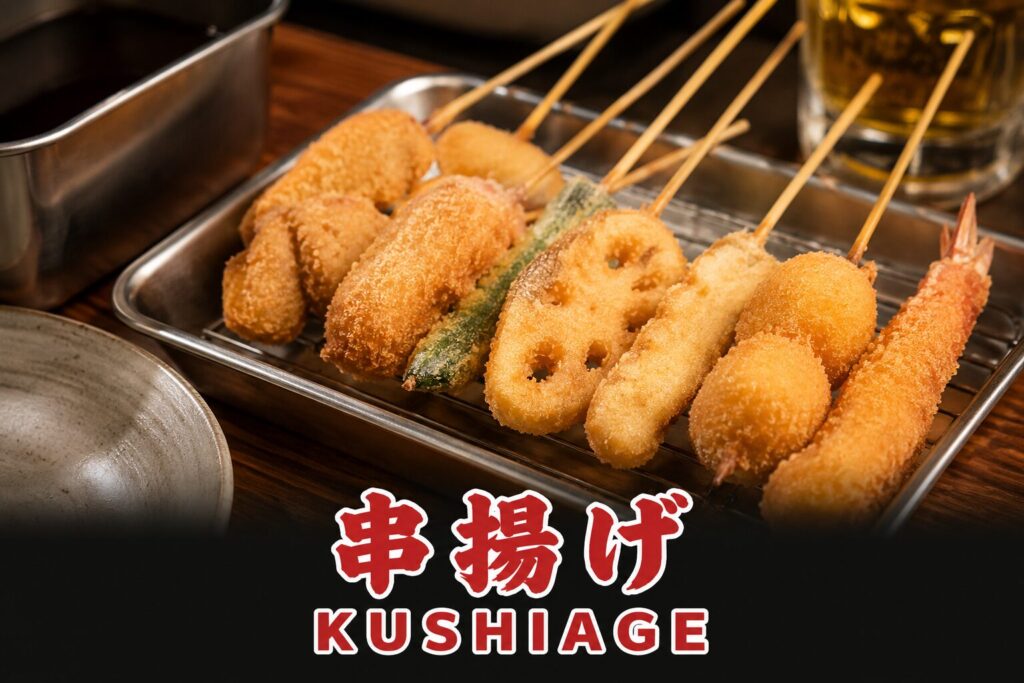
- Hidden Gems: Some yakitori restaurants even serve Kushiage (deep-fried skewered meat and vegetables).
Kelly: “Japanese food culture is wonderful, but sometimes the names are so difficult that it’s frustrating.”
John: “What do you mean by difficult?”
Kelly: “The names often include words like ‘yaku’ (grill) or ‘niru’ (simmer), so they seem easy to understand at first. But when you look closer, there are often subtle differences.”
John: “Do you have a specific example?”
Kelly: “Well, I don’t really get ‘Yakiniku’ and ‘Yakitori.’ Both have ‘yaki’ in them, so I know they are grilled dishes. But why is one ‘niku’ and the other ‘tori’? I can imagine Yakitori is grilled chicken, but I don’t understand why it’s treated as something separate from Yakiniku.”
Nobu: “Hello there!”
Kelly: “You’ve come at the perfect time. We were just talking about the difference between ‘Yakiniku’ and ‘Yakitori.’ Could you explain it in more detail?”
Nobu: “I see. The names can be a bit tricky, can’t they? Let me explain the differences.”
About the Names: Yakiniku vs. Yakitori
Nobu: “First, let’s look at the names. Both Yakiniku and Yakitori contain the word ‘yaki.’ They are both ‘grilled’ dishes. The nuance is basically ‘grilling meat’ and ‘grilling bird.'”
Kelly: “That’s exactly what I don’t get. Why isn’t grilling chicken just considered a type of Yakiniku?”
Nobu: “True, chicken is a type of meat. That’s where it gets confusing.”
Kelly: “Exactly.”
Nobu: “Well, here is the conclusion: Yakiniku and Yakitori actually differ in how they are cooked and how they are eaten.”
Kelly: “How so?”
The Cooking and Style
Nobu: “First, Yakiniku is a dish where you grill bite-sized pieces of meat over a stovetop or charcoal fire right at your table. It’s often enjoyed by groups surrounding a grill. In Yakiniku restaurants, you’ll see families chatting and laughing while they grill their own food.”
Kelly: “I see! Eating with the family sounds fun, especially when you’re grilling it yourselves.”
Nobu: “Exactly. In Yakiniku, you grill the meat yourself at the table. The restaurant doesn’t serve it pre-grilled.”
Kelly: “So, the grilling is self-service.”
Nobu: “By the way, when making Yakiniku at home, it’s common to use an electric griddle (hot plate). It’s easy to adjust the temperature from cooking to keeping food warm, and since there’s no open flame, it’s very safe.”
Kelly: “A hot plate, huh? That sounds convenient.”
Nobu: “Next is Yakitori. This consists of small pieces of chicken ‘skewered and grilled.’ In this case, the restaurant grills it for you and serves the finished skewers to your table.”
Kelly: “So there’s no ‘self-service’ Yakitori?”
Nobu: “That’s right. For Yakitori, the shop handles all the cooking.”
Yakitori Shops Serve More Than Just Chicken
Nobu: “By the way, you might think Yakitori is only about chicken, but it’s not.”
Kelly: “Meats other than chicken can be ‘Yakitori’?”
Nobu: “Yes. Pork is also skewered and grilled, as are pork organs (offal). Sometimes you’ll even find skewered grilled shrimp.”
Kelly: “So, basically anything on a skewer is fair game?”
Nobu: “Well, not quite everything… but a really wide variety of ingredients are used.”
Some Places Even Serve Kushiage
Nobu: “Also, some Yakitori shops serve fried foods.”
Kelly: “Fried food?”
Nobu: “Yes, it’s called ‘Kushiage’—ingredients are skewered and deep-fried. You can enjoy them with the same vibe as Yakitori. For example, fried quail eggs on a skewer are a big hit with kids.”
Kelly: “I bet kids would love that!”
End
Types and Prices of Yakiniku
Here, we will introduce the main types of meat used in yakiniku (Japanese BBQ).
Beef (牛肉)
- Karubi (カルビ): Beef short ribs / Flank.
- Tan (タン): Beef tongue.
- Rosu (ロース): Beef loin (shoulder to back meat).
- Harami (ハラミ): Beef hanging tender / Skirt steak.
Offal / Variety Meats (ホルモン)
- Mino (ミノ): Beef first stomach (rumen).
- Shimacho (シマチョウ): Beef large intestine.
- Reba (レバー): Beef liver.
In addition to beef, pork and chicken are also commonly available.
Prices vary depending on the restaurant, so it is a good idea to check in advance. As a rough guide, expect to pay around 3,000 to 5,000 yen at a budget-friendly shop, around 10,000 yen at a mid-range restaurant, and 30,000 yen or more at a high-end yakiniku dining spot.
Types of Yakitori
Here are some of the most popular types of yakitori you should try.
Chicken (鶏肉 / Yakitori)
- Negima (ねぎま): Chicken thighs and green onions grilled alternately on a skewer.
- Mune (むね): Grilled chicken breast.
- Sasami (ささみ): Tender chicken breast tenderloin.
- Teba / Tebasaki (手羽): Grilled chicken wings.
- Momo (もも): Juicy chicken thigh.
- Bonjiri (ぼんじり): Fatty and tender chicken tail meat.
- Tsukune (つくね): Grilled chicken meatballs made from minced chicken.
- Kawa (皮): Crispy grilled chicken skin.
- Hatsu (はつ): Chicken heart.
- Nankotsu (なんこつ): Crunchy chicken breast cartilage.
Pork (豚肉 / Kushiyaki)
- Butakushi (豚串): Pork skewers, typically using pork belly or loin.
- Reba (レバー): Pork liver.
- Tan (タン): Pork tongue.
- Hatsu (ハツ): Pork heart.
- Gatsu (ガツ): Pork stomach with a chewy texture.
- Shiro (シロ): Pork intestines.
- Tontoro (トントロ): Fatty pork jowl (neck to shoulder).
- Kashira (カシラ): Pork head/cheek meat.
By the way, you can usually choose between two flavors: “Shio” (salt) or “Tare” (sweet soy sauce). You’ll be asked for your preference when placing your order.
How Much Does Yakitori Cost?
Yakitori prices can vary quite a bit depending on where you eat. Generally, shops are divided into takeout spots, casual local pubs, and high-end specialty restaurants. Here is a quick breakdown of what you can expect to pay:
- Takeout Spots: Around ¥100 – ¥250 per skewer
- Casual Pubs (Izakaya): Around ¥150 – ¥300 per skewer
- High-End / Specialty Restaurants: Around ¥300 – ¥500+ per skewer
If you are looking for a budget option, you can also find yakitori at supermarkets or in the frozen food section. In fact, frozen yakitori can be as cheap as ¥500 for a pack of 5 skewers. Just remember, you’ll have to cook them at home!
Behind the Scenes of This Article
The inspiration for this article came from looking at search trends online. I noticed a high volume of searches for the keywords “YAKINIKU vs YAKITORI.” It seemed many people were asking, “What is the difference between Yakiniku and Yakitori?”
For Japanese people, the two are recognized as completely different things. However, for people from overseas, even if they know what “YAKI” means, the distinction between “NIKU” and “TORI” might be unclear, leading to confusion. I wrote this article to help clear up that misunderstanding.
On a side note, I once saw a snack called “Buffalo Chicken” in an English article. While I wasn’t confused about whether it was a buffalo or a chicken, I did wonder, “What is a Buffalo? Is it a wild ox?” I later learned it was a place name, which made sense. Language barriers regarding food can be surprisingly high!
From Personal Experience and photos
I personally go to Yakiniku restaurants quite often. The place I visit uses charcoal grills and is very affordable, so I can go frequently without hurting my wallet.
Since Yakiniku restaurants also have chicken on the menu, I sometimes order it. Because it’s Yakiniku, the chicken is served in bite-sized pieces for me to grill myself. Every time I eat it, I think, “It’s so much easier when you don’t have to pull it off a skewer!”
While skewers make Yakitori look easy to eat, they can get in the way if you’re trying to slide the meat off. In that sense, I sometimes prefer eating chicken at a Yakiniku restaurant. Of course, this is just my personal preference—some people enjoy eating right off the skewer.
By the way, are you curious about what these dishes actually look like?
As a matter of fact, I recently visited a restaurant and tried some of them myself. I took several photos during the visit, so I’d like to share them with you below.
Yakiniku
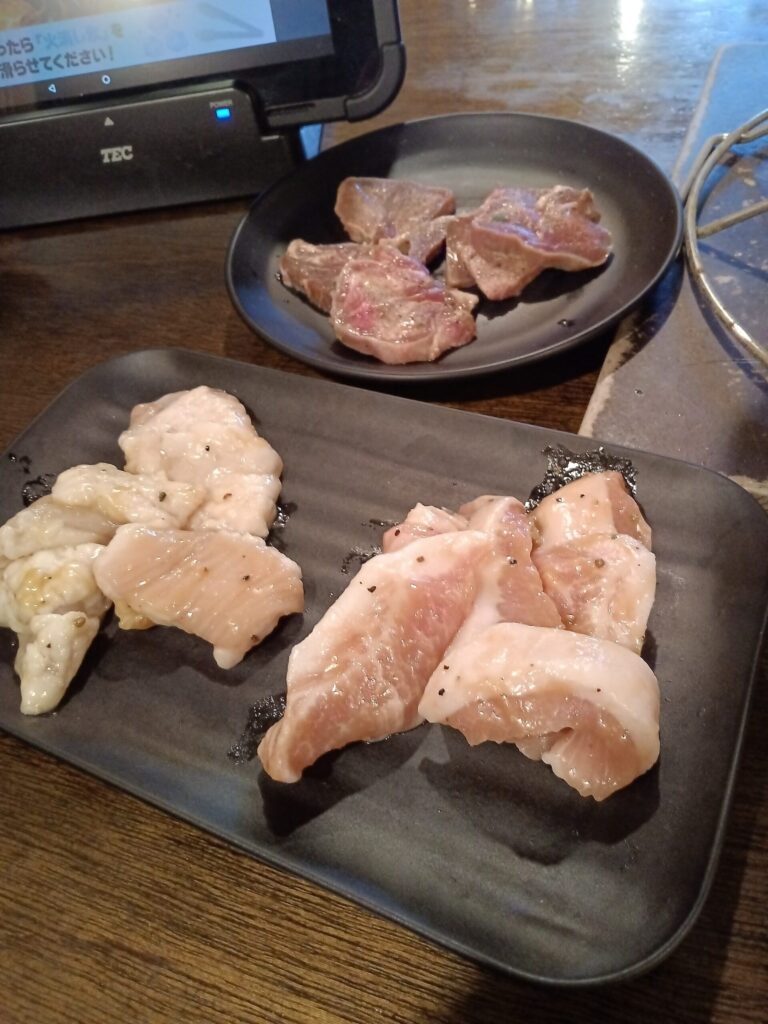
This restaurant specializes in charcoal-grilled yakiniku.
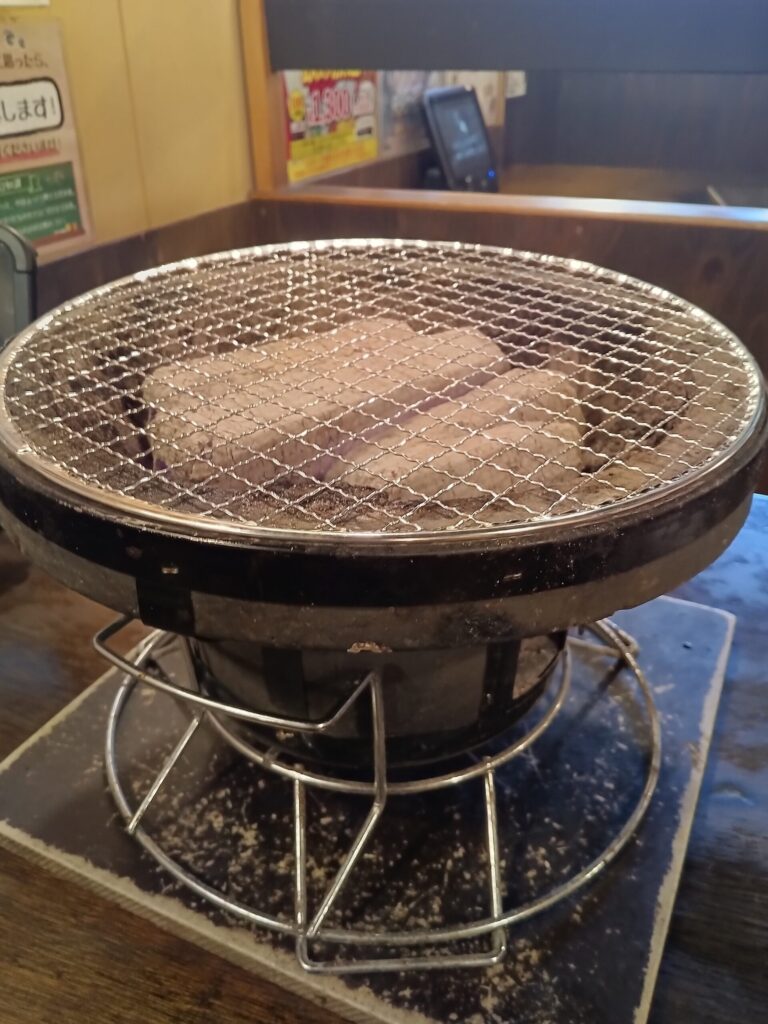
In the photo on the left, you can see a traditional Japanese grill called a shichirin. It is designed to safely hold and use charcoal while cooking.
The photo on the right shows the meat that was served. In a typical yakiniku restaurant, customers grill the meat themselves at the table and eat it fresh off the charcoal fire.
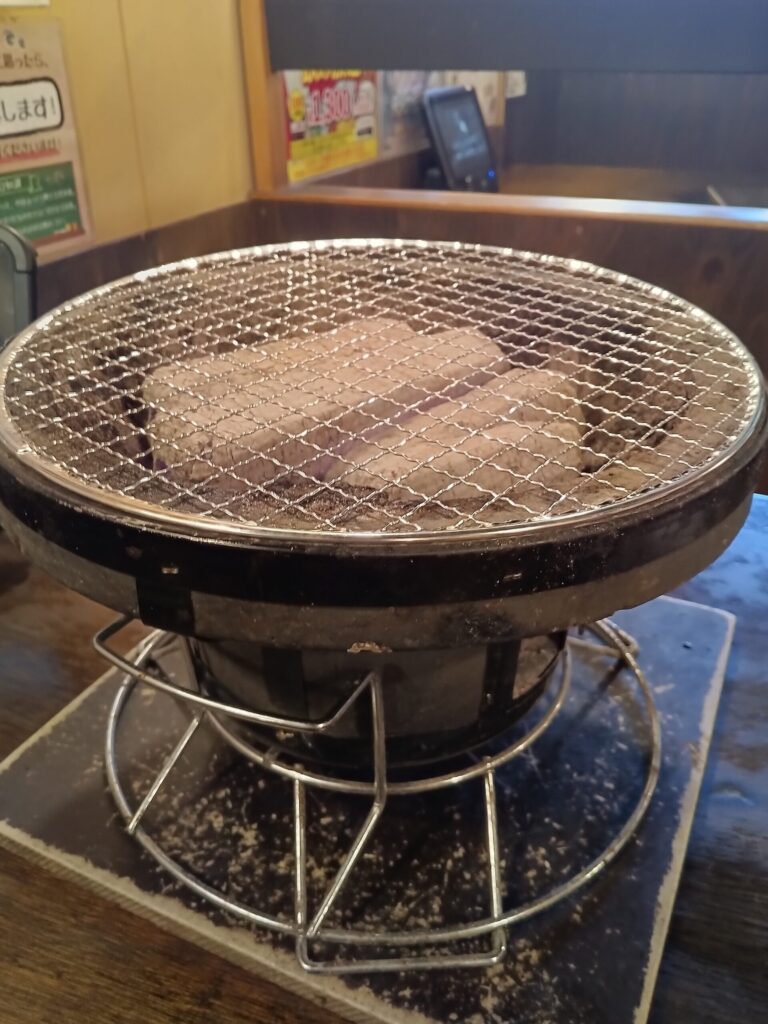
The shichirin before the meat was placed on the grill. You can see the glowing charcoal in the center, which provides the heat used for cooking.
Yakitori
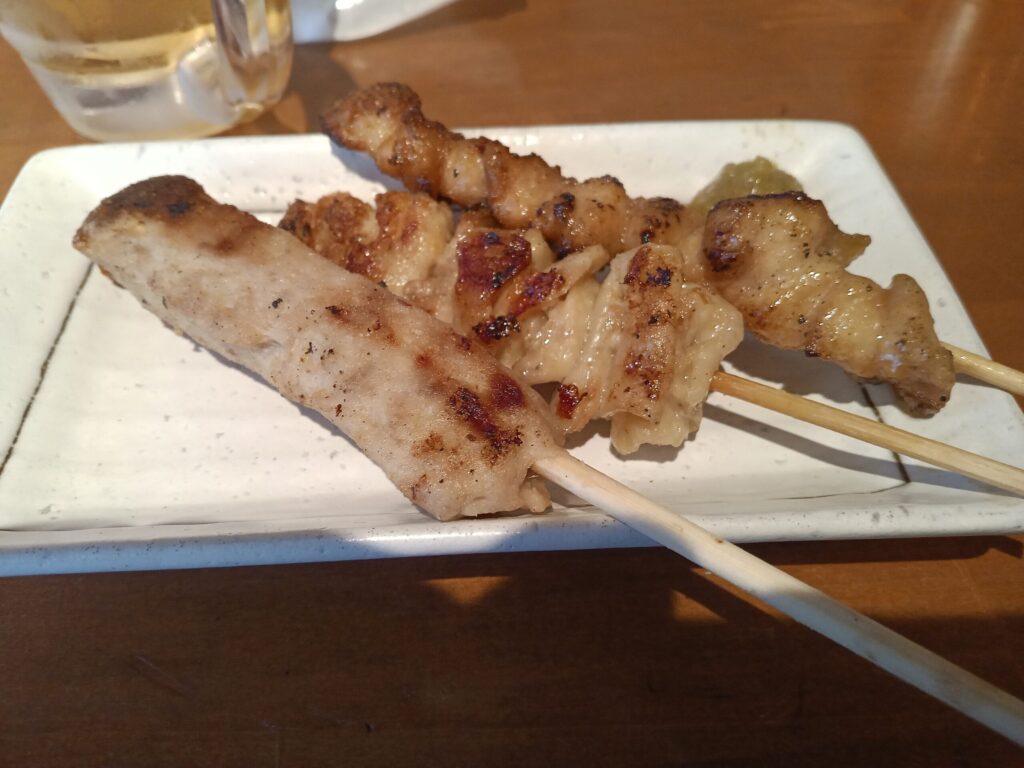
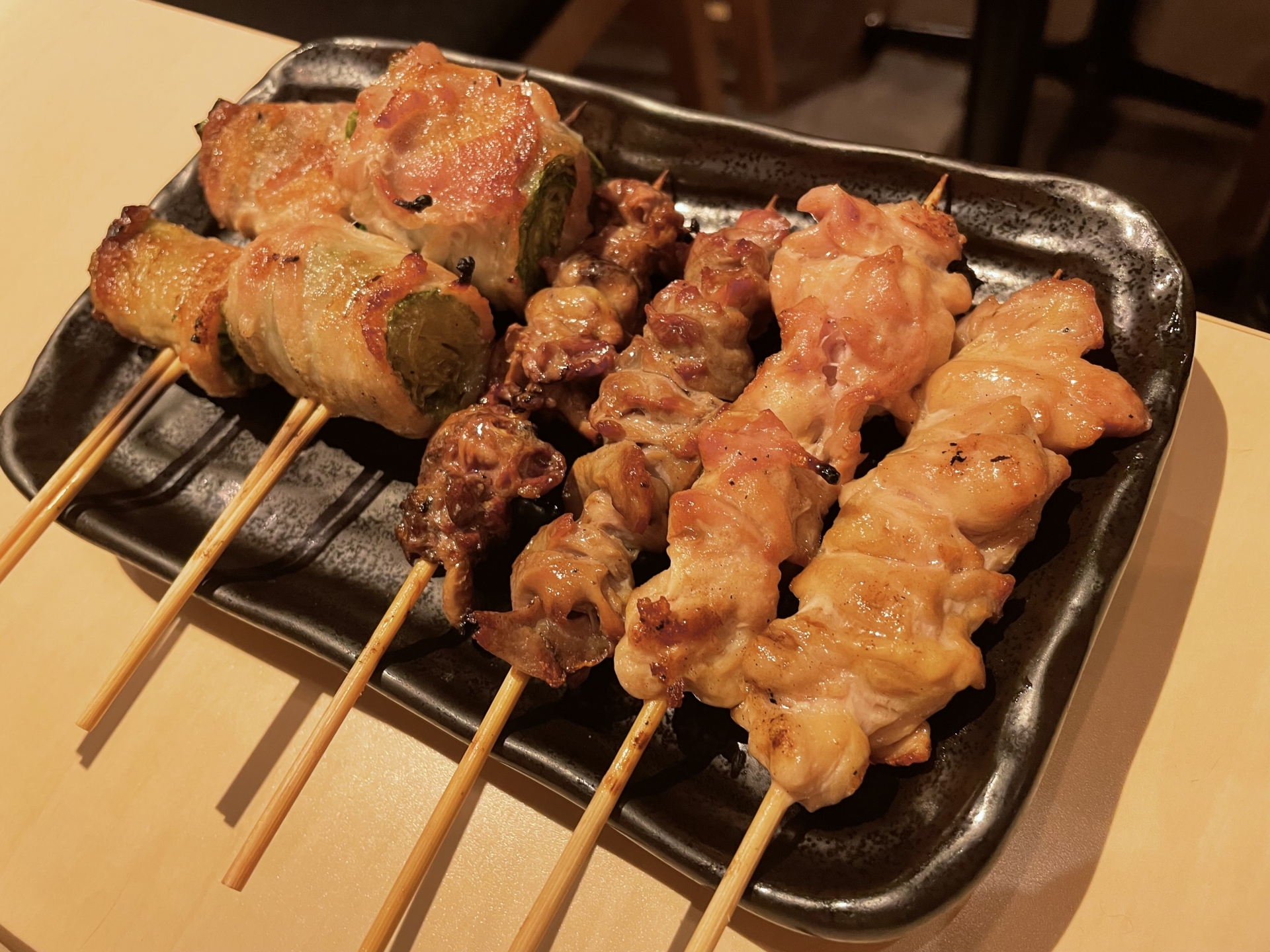
The photo on the left shows yakitori that was served at the restaurant. Unlike yakiniku, the skewers are grilled in the restaurant’s kitchen before being brought to the table.
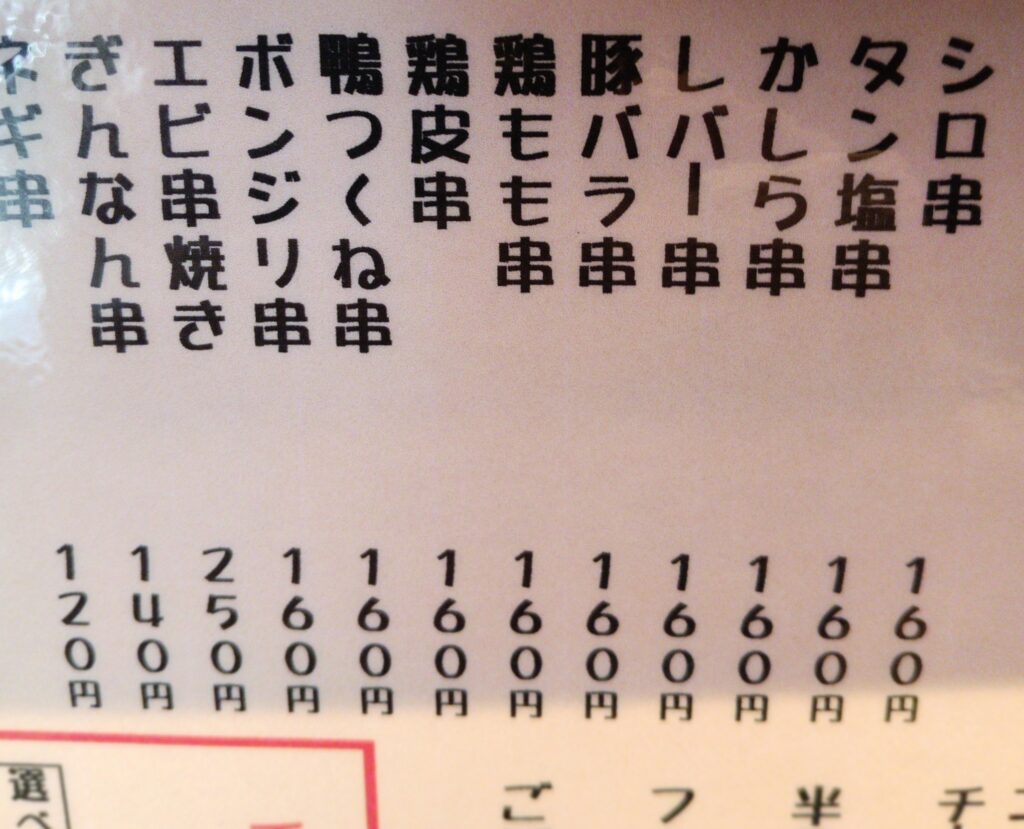
The photo on the right shows the restaurant’s yakitori menu. The numbers listed below each item indicate the price per skewer.
Conclusion
We’ve explored the differences between Yakiniku and Yakitori. I hope you now see that despite the similar names, they are completely different culinary experiences. You might also be surprised that “Yakitori” can include meats other than chicken.
Whether it’s Yakiniku or Yakitori, I personally recommend trying the charcoal-grilled versions, as they taste the best (though there is some debate on this!).
In any case, Yakiniku and Yakitori represent two distinct food cultures. When you visit Japan, please try both and taste the difference for yourself!
Recommended Article
In this article, we explored the differences between yakiniku (Japanese BBQ) and yakitori (grilled chicken). Interestingly, some Japanese people believe that the flavor of these dishes changes depending on the type of fire used to cook them. In the next article, we will delve into the reasons behind this Japanese obsession with fire.
Does the Type of Fire Change the Taste of Japanese Yakitori and Yakiniku?