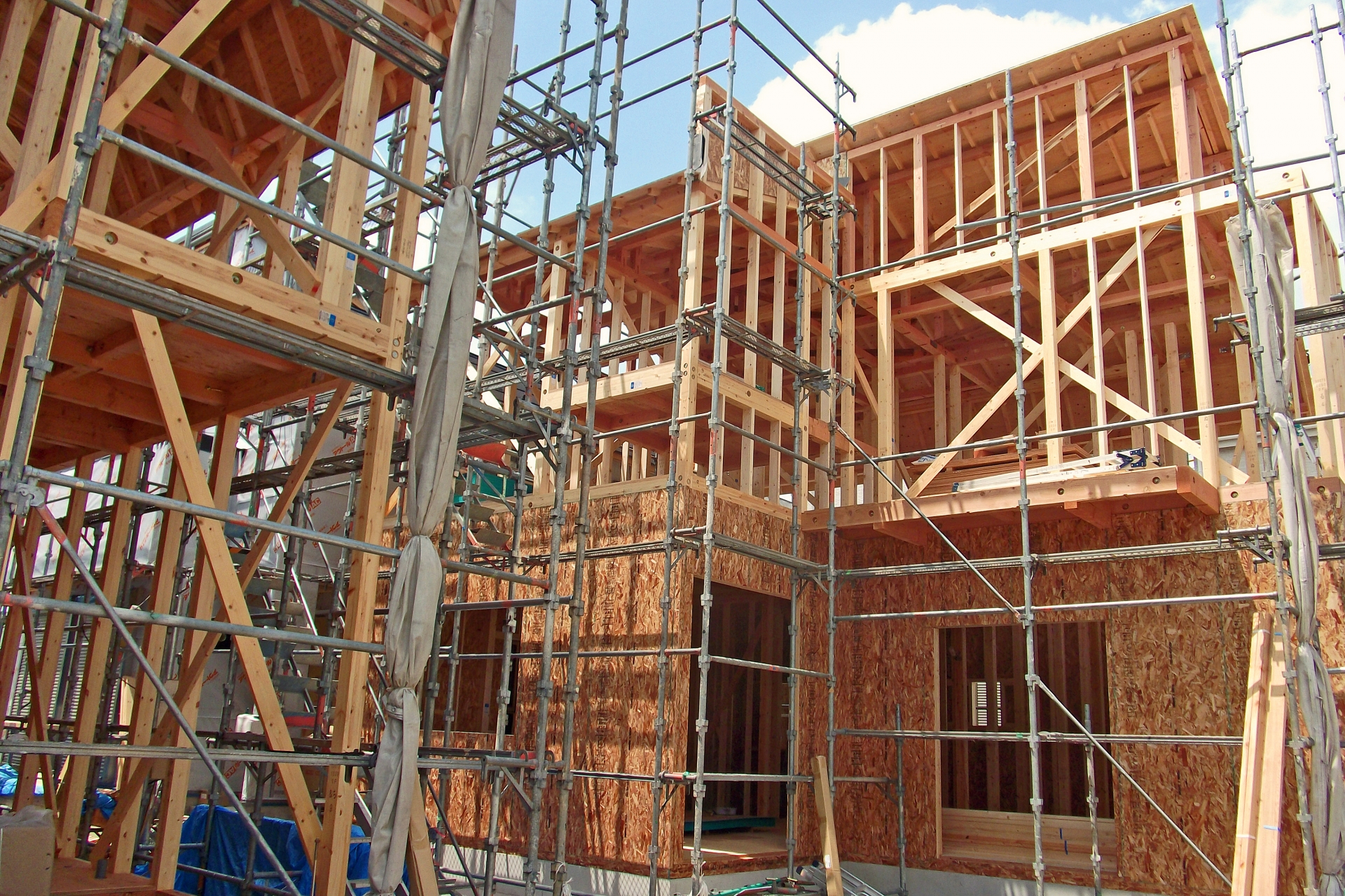
In the fairy tale The Three Little Pigs, the brick house is portrayed as the strongest, yet Japanese people still choose wood for their homes. Why is that?
Many Japanese houses are still made of wood today, but aren’t they weak against fire? If a fire breaks out, won’t they burn down and collapse immediately? Actually, Japanese houses are built to be very strong against fire. We will introduce the reasons why in a story format.
Summary
- Japanese houses change their building specifications depending on the area.
- Non-combustible materials are widely used for both interior and exterior materials.
- For three-story houses, evacuation routes are secured.
Characters
- Mike: A 12-year-old American boy interested in Japan.
- John: Mike’s father. He frequently visits Japan for business.
- Kelly: Mike’s mother. She is good at cooking.
- Nobu: A Japanese international student.
Prologue
One of the things people from overseas find mysterious when they see Japanese houses is, “What happens if a fire breaks out in a wooden house?” It is true that wood burns in flames. To people living in houses made of stone or brick in the West, it might seem like an extremely dangerous type of housing.
However, Japanese wooden houses utilize technology in various parts and are built to be strong against fire. So, from what elements are they built to be strong against fire?
About Fire Measures in Japanese Houses
Point:
Japanese houses are strong against fire
Mike: “I heard many houses in Japan are wooden. Is it okay if a fire starts? I feel like they would burn down instantly.”
Kelly: “That’s true. They might have IH (induction heating), but many homes still use gas stoves. Some people smoke, so a fire could definitely happen.”
Nobu: “Hello.”
Kelly: “You came at just the right time. I want you to tell us, what happens to Japanese wooden houses if a fire breaks out?”
Nobu: “I see. Wood certainly burns. If you only think about the material, it might seem like it would burn. But Japanese wooden houses are built to be strong against fire.”
Mike: “Even though it’s wood, it’s strong against fire?”
Nobu: “There’s a secret to why they are strong against fire. I’ll explain it one by one. By the way,Japanese homes are built in accordance with the Building Standards Act, and the materials used in their construction must also meet additional industry standards beyond the legal requirements. These materials undergo a wide range of tests, ensuring a high level of reliability. As a result, modern Japanese houses achieve both safety and comfort by combining strict regulations, certified materials, and proven construction methods.”
About the Area
Point:
Houses are categorized by area from a fire prevention perspective
Nobu: “First, the issue of the area. In a city, there are areas where houses are crowded and areas where they are not, right?”
Mike: “There are. Especially in areas near stations, I think houses are crowded. On the other hand, when you go to the suburbs, houses become sparse.”
Nobu: “That’s right. Whether it’s ‘crowded or not’ is actually a big point.”
Mike: “Why?”
Nobu: “The difference is whether the fire will spread. If houses are crowded, the distance to the neighboring house is short, so the risk of fire spreading is higher. Conversely, in sparse areas, that risk is lower.”
Kelly: “That’s certainly true.”
Nobu: “As a countermeasure, the specifications of the houses are changed depending on the area. In crowded areas, non-combustible materials are used heavily for the house’s components to make them strong against fire.”
Kelly: “I see. If the house is hard to burn, the risk of fire spreading becomes lower.”
Interior Materials
Point:
Interior materials are made of non-combustible materials like plaster
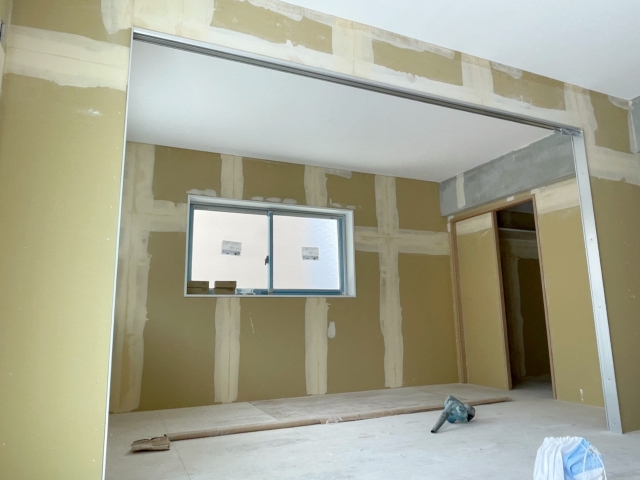
Nobu: “Next, interior materials. These are also made of non-combustible materials. Gypsum board is often used. Gypsum is an inorganic material, so it doesn’t burn. Therefore, even if a fire starts inside a room, it’s hard for it to spread.”
John: “I wonder how strong it is against fire.”
Nobu: “Yes, gypsum boards are actually tested for fire resistance using actual flames. Tests are conducted on the board alone, and also in a state where it’s incorporated into walls or ceilings. By the way, the testing methods have regulations that even define temperature conditions.”
John: “I see. So it’s not just ‘strong against fire,’ but it’s confirmed through strict testing.”
Exterior Materials
Point:
Exterior wall materials are made of non-combustible materials, including cement-based ones
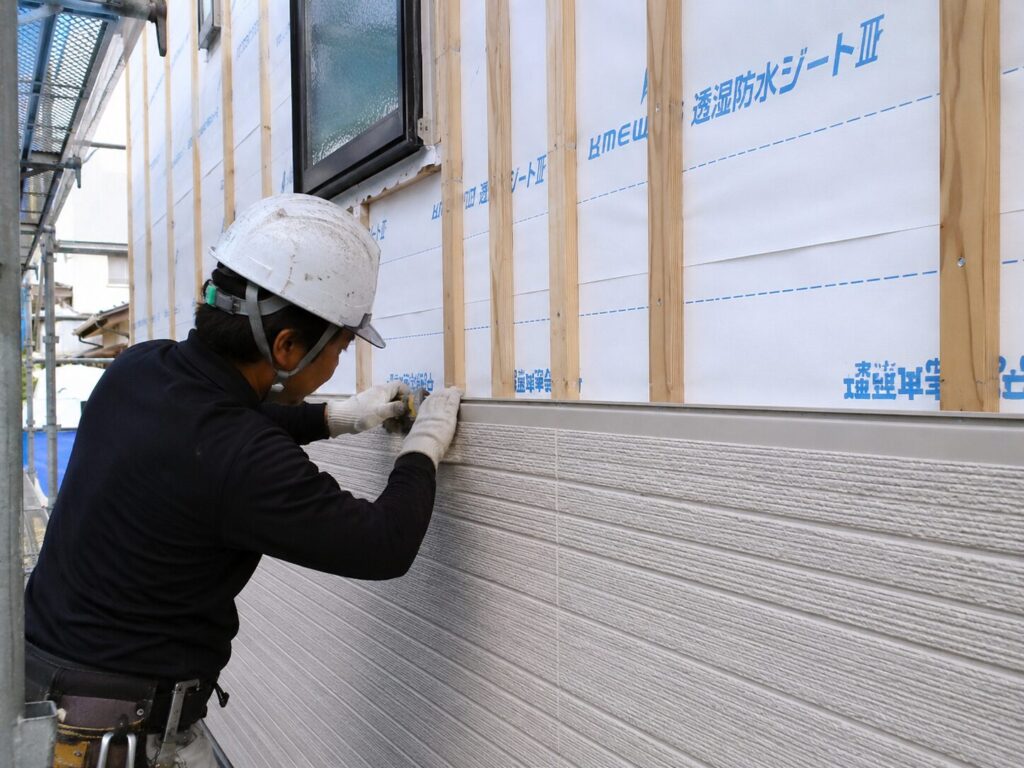
Nobu: “It’s not just the interior materials that are strong against flames. Exterior wall materials are also made of very fire-resistant materials.”
John: “What kind of material is that?”
Nobu: “Current Japanese housing often uses ‘ceramic siding’ (Yogyo-kei siding) for exterior materials. Since this is a cement-based material, it is inorganic. Like gypsum board, it doesn’t burn.”
John: “I see. So even if the neighbor’s house catches fire, it’s built so the fire won’t spread to your house.”
Nobu: “Exactly. Also, exterior materials have high strength. This is because Japan has many typhoons. Even if something flies at it in the wind, the exterior wall is made of high-strength material, so it won’t break unless something extreme happens.”
John: “I see, so it’s okay even if something flies from the neighbor’s house in the wind.”
Windows
Point:
Wired glass is used to reduce the risk of fire spreading
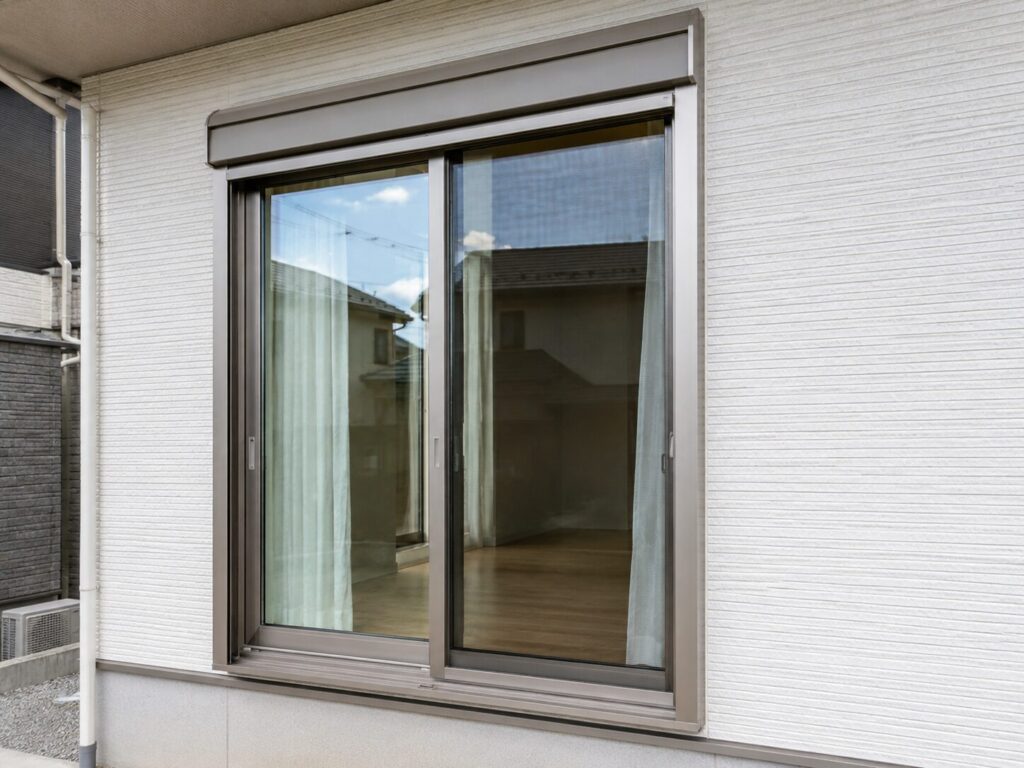
Nobu: “Next is the windows. Since windows use glass, they are weaker against flames than walls, but there are techniques to overcome that weakness.”
John: “Techniques for window glass sounds interesting. What kind of techniques?”
Nobu: “Wire mesh is embedded inside the window glass. The mesh itself is made of thin iron wire, which makes the glass strong against fire.”
John: “Certainly, glass seems weak against heat. Sometimes a glass breaks when you pour hot water into it.”
Nobu: “By the way, many houses now have shutters on their windows. Shutters are made of metal, so as long as they are closed, the risk of fire spreading decreases.”
Entrance
Point: Metal doors are used to reduce the risk of fire spreading
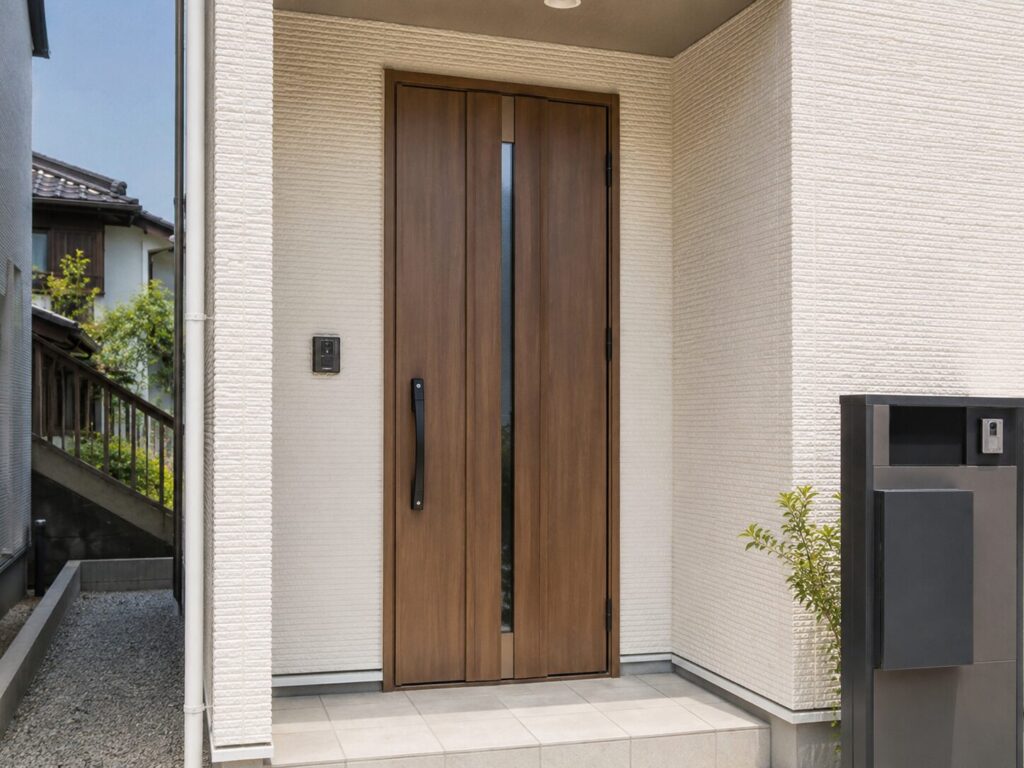
Nobu: “Fire countermeasures are also taken for the entrance. Since the entrance is also a part where fire might spread, it is built to be strong against fire. Metal or wired glass is often used.”
John: “I see. We must be careful about fire at the entrance too.”
Nobu: “By the way, there are detailed regulations for entrance doors as well. If it’s metal, there are regulations for the material and its thickness. Otherwise, there are actual testing methods… these are similar to the flame tests for gypsum board.”
John: “I see, it’s very well thought out.”
About Evacuation
Point:
Three-story wooden houses have evacuation ladders installed on the 3rd-floor balcony
John: “By the way, I think evacuation is also an issue in case of fire. It might be strong against fire, but even such strong materials must have limits.”
Nobu: “That’s true. Houses, not just wooden ones, are designed with consideration for evacuation.”
John: “For example?”
Nobu: “Places that are hard to escape from. For example, a three-story house where the kitchen is on the second floor. In such houses, the risk of a fire starting from the second floor is high. And if a fire were to start on the second floor, people on the third floor would be in an extremely dangerous situation.”
John: “Right. Jumping from the third floor would be too dangerous.”
Nobu: “Yes. That’s why three-story houses have evacuation ladders installed on the third-floor balcony.”
Mike: “Then, what about apartments (mansions)? I know they don’t burn because they are reinforced concrete, but it’s dangerous if you can’t escape.”
Nobu: “Apartments are built so you can escape from the balcony. Actually, the walls separating you from the next room are made so they can be broken through, allowing you to break them and escape in an emergency.”
Mike: “I see, that’s a relief then.”
End
From My Experience
I live in a three-story wooden house in Tokyo, and when I look at the house specifications in detail, I’m truly impressed, thinking, “This is a bundle of technology.”
For example, the exterior wall design is ceramic siding with a terracotta-like design reminiscent of European buildings. The roof is moss green to match that design. It might be just a little, but it’s a quite stylish exterior. However, if you look at the details, the impression changes. Looking closely at the exterior wall, it’s a heavy cement-based material. Also, although hidden by wallpaper, I can see that the interior is also made of fire-resistant materials.
And when you buy a new house, it comes with blueprints. In those blueprints, there is a list of materials used, and each one is a fire-resistant material. Anyway, my home is made of such materials. I can live there with peace of mind.
Conclusion
We have covered the fire countermeasures for Japanese houses. Has your impression of Japanese housing changed quite a bit? Some of you might be surprised that technology is applied in various places. In any case, Japanese wooden houses are built to be strong against fire. If you are looking for a house in Japan in the future, I want you to remember that you can live safely even if it is wooden.