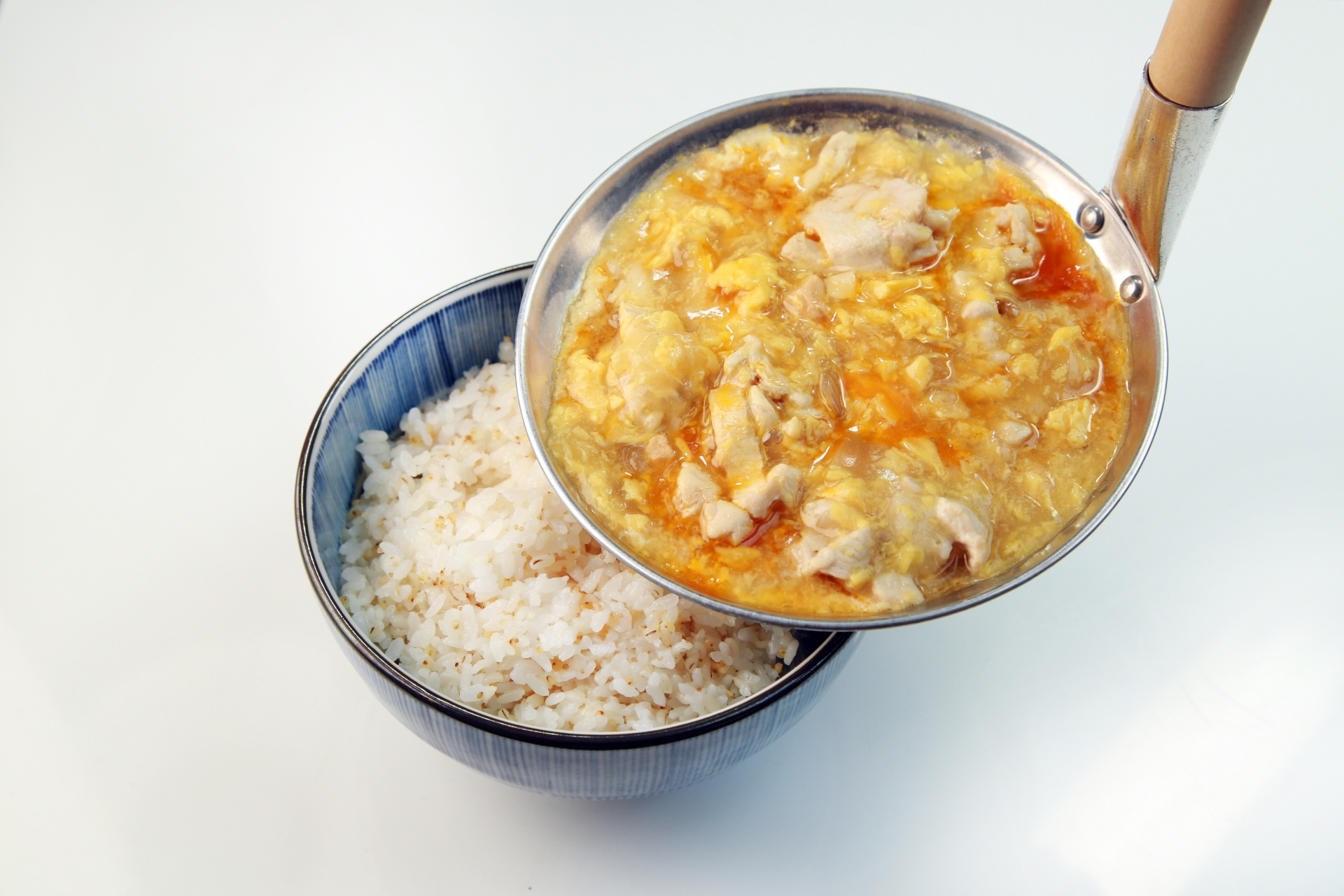
I believe dishes like “Katsudon” and “Oyakodon” are quite popular examples of Japanese cuisine. However, did you know that there are similar recipes called “Tanindon” or “Gyutoji-don”?
These names might seem difficult at first, but they can also be seen as a form of interesting Japanese wordplay. Therefore, I would like to introduce a bit of the fascination of the Japanese language through these dishes and their names in a story format.
Summary
Meaning of “Donburi”: Originally referred to the bowl itself. Over time, it came to mean the dish—specifically, toppings served over rice in that bowl.
Meaning of “Katsudon”: A pork cutlet (tonkatsu) on top of rice—hence the name “Katsudon.”
Meaning of “Oyakodon”: A chicken and egg rice bowl. Since chicken is the “parent” (oya) and egg is the “child” (ko), it’s called “Oyakodon” (parent-and-child bowl).
Meaning of “Tanindon”: A pork or beef and egg rice bowl. Since these meats and chicken eggs aren’t related, they are “strangers” (tanin)—hence “Tanindon” (stranger bowl).
Meaning of “Gyu Toji-don”: A beef and egg rice bowl. It’s named after the cooking method, where beef is simmered and covered (tojiru) with beaten egg.
Characters
- Mike: A 12-year-old American boy interested in Japan.
- John: Mike’s father. A businessman who occasionally travels to Japan.
- Kelly: Mike’s mother. A skilled cook.
- Nobu: A Japanese international student.
Prologue
In Japan, there is a category of food culture known as donburi. This refers to dishes where rice is served in a bowl called a “donburi,” topped with various cooked ingredients. Typical examples include katsudon and oyakodon.
These donburi dishes are also enjoyed as home-cooked meals, but they can just as easily be eaten like fast food. They are generally affordable, making them an easy and recommended option to try.
About “Katsudon,” “Oyakodon,” “Tanindon,” and “Gyutoji-don” …… Japanese Donburi Culture
Kelly: “Japanese food is delicious and fun, but the language is so difficult it’s frustrating. Recipes use terms like tanzaku-giri (strips), and I didn’t even know what a tanzaku (paper strip) was. It’s really tough.”
Mike: “By the way, could you research some Japanese dishes for me if you have the chance? “
Kelly: “Sure. What kind of food? “
Mike: “Well, these bowl dishes called Katsudon, Oyakodon, Tanindon, and Gyutoji-don. I’ve been interested in Japanese donburi (rice bowls) lately and want to see what they’re like.”
Kelly: “I can’t do them all. Pick one.”
Mike: “Then Katsudon, please. I’m curious about the Tonkatsu (pork cutlet).”
Kelly: “Alright. I’ll check the recipe. But since I’m at it, I’ll look up all of them. I think they sound interesting too.”
The Katsudon Recipe
Kelly: “The Katsudon recipe… seems surprisingly simple. Frying the cutlet takes some effort, but after that, you simmer it in a broth seasoned with soy sauce. Finally, you pour in beaten eggs and turn off the heat after a moment. The key is to stop the heat before the eggs fully harden. That way, the eggs stay fluffy and delicious.”
John: “As expected, you’ve already mastered it. Yes, it’s best eaten while the eggs are still soft.”
Kelly: “Then you just place it over a bowl of rice, and it’s done.”
The Oyakodon Recipe
Kelly: “For Oyakodon… you simmer bite-sized chicken and thinly sliced onions in seasoned broth, pour over the eggs, and turn off the heat after a bit. It seems the point here is also to stop the heat before the eggs harden.”
Mike: “That’s a funny name. Even though it has chicken, it’s called Oyakodon (Parent-and-Child Bowl).”
Kelly: “That’s true.”
The Tanindon and Gyutoji-don
Kelly: “Next are the recipes for Tanindon and Gyutoji-don. They seem similar to Oyakodon. You simmer pork or beef with onions in broth, just like Oyakodon, and turn off the heat after a while.”
Mike: “The names are strange too. Tanin (Stranger) and Gyutoji (Beef-closed/bound).”
The Meaning of the names
Nobu: “Hello! “
John: “Ah, you’ve come at a good time. We were having some food prepared, but we’re a bit stumped by the names.”
What exactly is a “Donburi”?
John: “By the way, what does ‘Donburi’ actually mean?”
Nobu: “Originally, ‘Donburi’ just referred to the ceramic bowl used for serving rice. Over time, it also came to mean the dish itself—specifically, a meal where various toppings are served over a bed of rice in that bowl. For example, Oyako-don is basically chicken and egg served over rice, all inside a donburi bowl… if that makes sense.”
John: “Ah, I see! So it originally meant the actual dishware. By the way, I was wondering—I get the name Katsudon because it has Tonkatsu, but what do Oyakodon and Tanindon mean? And even more confusing is Gyutoji-don. I understand ‘Gyu’ is beef, but I don’t get the toji part.”
Mike: “Maybe toji simply means ‘to close,’ like ‘closing a door’ (to o tojiru).”
John: “Maybe. But Japanese uses Hiragana, Katakana, and Kanji, so it’s hard to tell if it’s the same word.”
Mike: “True. It’s not a language built by lining up the alphabet like English. It’s difficult.”
About “Katsudon”
Nobu: “By the way, we started with Katsudon, which was fine… Katsudon is basically a pork cutlet on top of rice. That’s why it’s called Katsudon!”
About “Oyakodon”
Kelly: “But we’re stuck on Oyakodon. Why ‘Parent and Child’ (Oyako)? “
Nobu: “It’s simple. Chicken is the chicken—the ‘parent’ (oya) of the egg. And the egg is the ‘child’ (ko) of the chicken. Since both are placed on top of the bowl, it’s called Oyakodon.”
Kelly: “Ah, the chicken is the parent and the egg is the child. That makes perfect sense! “
About “Tanindon”
Kelly: “Then what about the other names? “
Nobu: “First is Tanindon. You can understand this by comparing it to Oyakodon. In Oyakodon, the chicken and egg are parent and child. But a pig and a chicken egg are not related. They are, so to speak, ‘strangers’ (tanin). Since you’re eating ‘strangers’ together, it’s a Tanindon.”
John: “It’s like they’re playing with words.”
Nobu: “Japanese cuisine actually has many wordplays. Sometimes names are chosen for good luck, too. A good example is the Katsu in Tonkatsu. In Japanese, Katsu also means ‘victory’. So, they say people used to eat Tonkatsu before a big match or challenge.”
John: “That’s interesting.”
Nobu: “It’s just one theory, but there’s also a dish called ‘Katsu Curry’—Tonkatsu on top of curry. It’s said an athlete had it made to bring good luck for a victory.”
About “Tamago-toji”
Kelly: “Wait, what about Gyutoji-don? Why is it called that? “
Nobu: “I think the toji part is the key. Toji comes from tojiru, meaning to close a door or a lid.”
Kelly: “But why is pouring beaten egg over simmered ingredients called ‘closing’? “
Nobu: “It might be because the action is similar to ‘closing’ or ‘sealing’ the ingredients with egg. It’s like the egg becomes a lid that covers the ingredients.”
Kelly: “I see. The egg becomes the lid.”
Image of “Tamago-toji”
In dishes like oyakodon, the ingredients are gently simmered and then combined with beaten eggs, which are poured in and lightly cooked until just set.
This method creates a soft, slightly runny texture that binds everything together, rather than simply placing an egg on top.

The Origins of Katsudon
Mike: “So, how long have these dishes been around? “
Nobu: “The culture of binding with egg is very old, but there’s a famous legend about Katsudon. Long ago, Japan wasn’t as wealthy, and Tonkatsu was an expensive dish. But sometimes, those cutlets would be left over.”
Mike: “That would be a waste.”
Nobu: “Supposedly, a university student suggested, ‘Why don’t we bind that Tonkatsu with egg?’ It became a huge hit and evolved into what it is today.”
More Japanese Wordplay Menus
Nobu: “There are other dishes in Japan that play with words. For example, ‘Seafood Oyakodon’ made with salmon and ikura (salmon roe). The salmon is the parent and the ikura is the child.”
Mike: “I’ve never really had ikura. I’d like to try it if I get the chance.”
Nobu: “You can find it at sushi restaurants. Also, at conveyor-belt sushi, ikura and sea urchin are served as Gunkan-maki (Battleship roll). It’s not actually rolling a battleship—the way the rice is wrapped in seaweed and topped with ikura just looks like a ship. The black seaweed even gives off a steel-like image.”
END
A Little More on Wordplay and Puns
Sometimes, one might think that the Japanese culture of wordplay is quite unique. A common example that comes to mind is the culture of dajare (puns). While they are often dismissed as “dad jokes” (oyaji gyagu) these days, they used to be used in many different situations in the past. Moreover, a well-timed pun could make people laugh and relax the atmosphere of the occasion.
It is possible that this kind of wordplay led to the development of Japanese performing arts, such as the culture of Rakugo (traditional comedic storytelling). It may be a culture that has been passed down continuously from our ancestors. While it is wonderful to feel a craftsman’s skill and passion in a single bowl of ramen, how about trying a donburi dish that plays with language? The more you “chew” on the meaning, the more flavorful it may become.
Conclusion
There are significant differences in food culture between the Kanto (East) and Kansai (West) regions of Japan. In Kansai, the word “meat” historically often referred specifically to beef. On the other hand, in the East, there isn’t such a strong preference, and a pork-and-egg bowl might be served as Tanindon as well.
I hope people from overseas enjoy not just the taste, but also the stories and wordplay behind the names. When you taste Japanese ingredients abroad, please take a moment to think about the origins of their names.
Recommended Article
While this article focuses on katsudon and oyakodon, the next one examines the price differences for gyudon, oyakodon, and katsudon across major cities worldwide, including New York, Los Angeles, London, Paris, Berlin, and Sydney.
How Much is a Beef Bowl (Gyudon)?Comparing Japan and Other countries