There are accommodation facilities in Japan that have been operating for more than 100 years.
What makes them even more remarkable is that they are far from ordinary. Surprisingly, there are places where you can actually stay at a UNESCO World Heritage site.
In this article, I will share the experience of staying at one of these heritage sites in the form of a travel story.There are accommodation facilities in Japan that have been operating for more than 100 years.
What makes them even more remarkable is that they are far from ordinary. Surprisingly, there are places where you can actually stay at a UNESCO World Heritage site.
In this article, I will share the experience of staying at one of these heritage sites in the form of a travel story.
- Characters
- Act 1: John Discovers How Old Japan Really Is
- Act 2: Ancient Architecture and the Japanese Sense of Time
- Act 3: Nobu Introduces a Journey to the Past
- Act 4: Beyond Shirakawa-go — Discovering Rural Japan
- Japan’s Transportation: What Travelers Should Know
- The Seasons of Japan and When to Visit
- Food and Rural Culture
- Final Thoughts
Characters
Mike was a twelve-year-old boy from America who had recently developed a deep fascination with Japanese history. He enjoyed watching Japanese dramas, especially those filled with ancient battles and mysterious landscapes.
His father, John, was a busy corporate worker who had traveled to Japan for business several times, but he had never explored the country beyond big cities. He liked Japan but realized he actually knew very little about its past.
One quiet afternoon, the story began when John stumbled upon something unexpected while watching TV.
Act 1: John Discovers How Old Japan Really Is
“Hmm… Japan really is an old country,” John muttered to himself as he paused the show he had been watching.
Mike looked up. “What’s wrong, Dad?”
“Well,” John said, leaning back in his chair, “I was watching an old Japanese historical drama. It took place during the Sengoku period. When I looked it up afterward, I learned that the Sengoku period was almost 600 years ago. That’s nearly two centuries before the French Revolution and long before the United States even existed.”
Mike’s jaw dropped. “Seriously? That’s so far back!”
John nodded. “And what amazes me even more is that many artifacts from that time—things crafted hundreds of years ago—are still preserved today. Take Japanese swords, for example. Some of them were forged 700 or even 800 years ago. They’re considered masterpieces of craftsmanship.”
Mike leaned forward with interest. “But what happened to the swords that didn’t survive?”
“Well,” John said slowly, “I’m not entirely sure. Historical records aren’t always clear. Some were lost in battles, some were broken, others may have simply disappeared over time. I remember seeing something in a drama about defeated samurai losing their weapons during chaotic times. But real history is usually more complicated than what appears in shows.”
“That makes sense,” Mike said. “Still, Japan has some intense stories.”
John laughed. “It certainly does. A long history of conflict and creativity.”
Act 2: Ancient Architecture and the Japanese Sense of Time
Just then, the door opened and Nobu, a Japanese college student who lived nearby, walked in.
“Hello!” he said cheerfully.
“Oh, perfect timing, Nobu,” John said. “We were just talking about Japan’s long history.”
Nobu smiled. “It’s a huge topic. Easy to fall into that rabbit hole.”
“Samurai, ninja, swords…” John said. “And buildings, too! Japan’s old temples really impress me. The five-story pagodas, for example, look like something out of a fantasy movie.”
“They really do,” Nobu agreed. “And what’s even more impressive is that Japan has so many earthquakes. Yet those pagodas have survived for centuries.”
“Is that really true?” Mike asked.
“Yes,” Nobu replied. “Japan sits on major tectonic plates. Earthquakes are common. But traditional Japanese architecture, especially structures like pagodas, has a unique design that absorbs shaking. It’s one reason they have lasted so long.”
John nodded slowly. “I’ve heard stories about big earthquakes in the past. Modern buildings collapsed, but ancient temples remained standing.”
“It happens,” Nobu said. “Traditional designs sometimes perform better than you’d expect. Japanese carpentry is full of wisdom.”
Mike’s eyes sparkled. “I want to see all of this someday.”
Act 3: Nobu Introduces a Journey to the Past
“Actually,” Nobu said suddenly, “I have a suggestion that might interest you both.”
“A suggestion?” John asked.
“Yes,” Nobu replied. “About traveling in Japan.”
Mike immediately jumped up. “Really? We’re going, right Dad??”
“Well,” John laughed, “I’ll try to make time. But I do want to see more of Japan.”
“In Tokyo,” Nobu said, “you can eat great sushi and experience modern Japan. But if you want something truly special, you should visit a place that feels like stepping back in time. A village that preserves the lifestyle and architecture from over a hundred years ago.”
“Kyoto?” John guessed.
“Good guess,” Nobu said, “but the place I’m thinking of is very different—smaller, more rural, and designated as a world heritage site by UNESCO.”
Mike leaned in. “Where is it?”
“It’s called Shirakawa-go,” Nobu said proudly.
“Shirakawa-go?” they both repeated.
“Yes,” Nobu said. “It’s one of Japan’s UNESCO cultural heritage villages. The entire village is recognized as a heritage site, thanks to its unique architectural style and traditional lifestyle.”
John frowned. “Wait, you can’t stay inside a world heritage site. That sounds impossible.”
Nobu grinned. “Actually, you can. Search for it.”
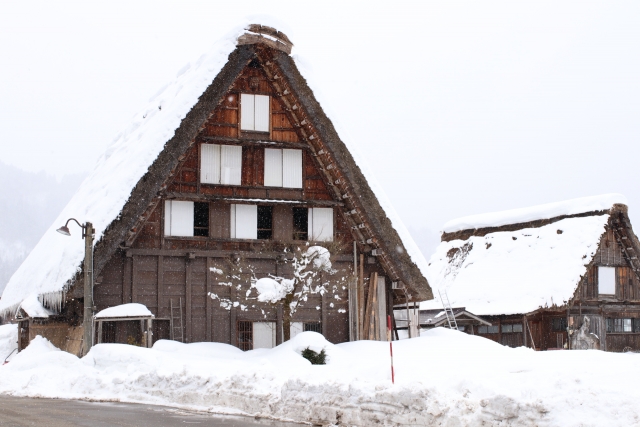
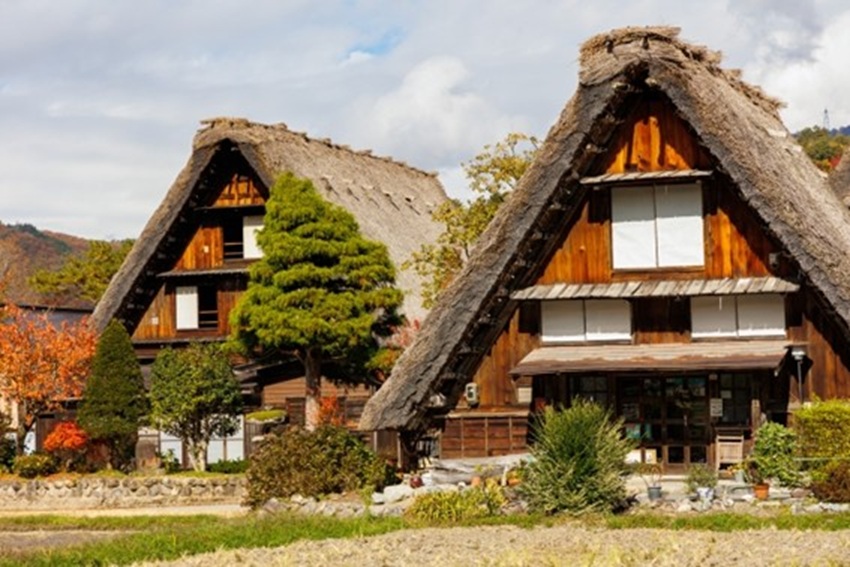
John pulled out his phone, tapped a few times, and his eyes widened. “These houses… with those huge steep roofs! I’ve seen photos of them before. A lot of tourists go there?”
“Yes,” Nobu said. “The village is the heritage site—not every single house individually. And some of these historic houses operate as guesthouses. They still function as living homes, run by families who maintain the tradition.”
“That’s incredible,” John said softly.
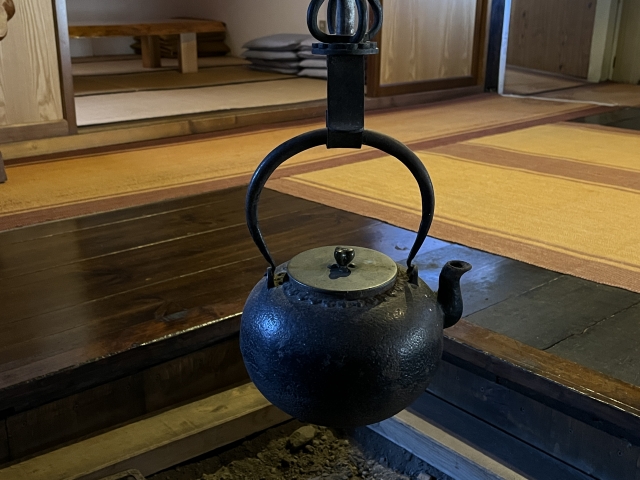
“It’s a rare experience,” Nobu continued. “You can sleep on tatami mats, warm yourself by an irori hearth, and feel what life used to be like in Japan’s snowy mountains.”
Mike bounced with excitement. “We HAVE to go!”
Act 4: Beyond Shirakawa-go — Discovering Rural Japan
Later, Nobu added more ideas.
“So, did you like the idea of staying in a heritage village?”
“I absolutely loved it,” John said. “It feels like a dream. Staying in such a historic environment… it’s something you can’t do in many countries.”
“It’s not like a luxury hotel,” Nobu said, “but it’s perfect for experiencing traditional Japan.”
“And you said you had another idea?” John asked.
“Yes,” Nobu nodded. “You know sushi and sashimi. But Japan’s coastal regions have a very different food culture. If you’ve never tried hamayaki, you’re missing out.”
“What’s that?” Mike asked.
“It’s seafood roasted over charcoal—especially shellfish. Simple, rustic, and incredibly flavorful.”
“That sounds amazing,” John said. “Can we try it in Shirakawa-go?”
“No,” Nobu laughed. “Shirakawa-go is deep in the mountains. If you want hamayaki, you need to go to the seaside.”
“So—mountains AND ocean?” John asked.
“Exactly,” Nobu said. “Japan looks small on the map, but its landscapes are diverse. Visiting both rural mountains and small fishing towns will show you two very different sides of the country.”
“That sounds like the perfect trip,” John said.
Japan’s Transportation: What Travelers Should Know
You might be surprised that you can stay inside a historic village, but before planning such a trip, it’s important to understand Japan’s transportation system.
Many first-time visitors think, “I’ll just take the Shinkansen everywhere!”
But rural Japan often requires a mix of trains and buses.
Local Trains
Japan’s bullet train network is fantastic—but it connects only major cities. Rural landscapes are reached by small local lines. These trains move slowly through rice fields, mountains, and quiet countryside.
On such trains, travelers can:
- Enjoy peaceful scenery
- Feel the rhythm of old-style travel
- Try an ekiben—a regional lunch box sold at stations
These experiences capture a side of Japan that tourists often miss.
Reaching Shirakawa-go
The most common route is:
Tokyo → Kanazawa (Shinkansen)
Kanazawa → Shirakawa-go (express bus, around 75 minutes)
Buses can be booked online, and signs at stations usually include English. As long as you check schedules in advance, it’s an easy journey.
The Seasons of Japan and When to Visit
Japan’s four seasons transform the scenery dramatically.
- Spring brings cherry blossoms.
- Summer is lush and green.
- Autumn offers fiery colors.
- Winter creates white, silent landscapes.
Shirakawa-go is especially beautiful in winter. The steep thatched roofs—built to handle heavy snow—look magical under the snowfall.
Reasons to visit in winter:
- Experience the reality of Japan’s snowy regions
Some areas get over a meter of snow. It’s intense but fascinating. - Snow-covered houses are breathtaking
The contrast between warm lights inside and the cold white world outside feels almost storybook-like.
Food and Rural Culture
Of course, travel is not complete without local food.
While wagyu beef and sushi are popular, rural Japan offers dishes that reflect its history.
Mountain villages like Shirakawa-go traditionally lived modestly. Their food is simple—fermented vegetables, river fish, hearty soups—but rich in character.
Trying these dishes offers insight into:
- How people survived winter
- How they preserved food
- How traditions shaped regional cuisine
It’s a taste of Japan that modern restaurants rarely show.
Final Thoughts
This expanded story introduced a journey into Japan’s past:
a village frozen in time, beautiful snowy landscapes, traditional houses, and the quiet charm of rural life. The regions around Shirakawa-go also offer delicious local dishes and warm hospitality.
If you visit Japan, don’t stop at the big cities.
Step into its mountains, its fishing towns, and its heritage villages.
There, you’ll find a living history that continues even today.