Have you ever ordered chawanmushi and wondered if “mushi” means insect? If so, you’re not alone. In this article, we unpack Japanese homophones using the dish chawanmushi as a fun and tasty example.
Summary
Japanese has many homophones—words that sound the same but have different meanings.
Characters
Mike: A 12-year-old American boy interested in Japan.
John: Mike’s father. He frequently visits Japan for business.
Kelly: Mike’s mother. She is good at cooking.
Nobu: A Japanese international student.
Prologue
Have you ever heard of a Japanese dish called Chawanmushi? To those learning the language, the name might sound a bit suspicious. In Japanese, the word mushi often refers to “insects” or “bugs.” So, is this some kind of exotic delicacy involving creepy-crawlies?
In this short play, we follow Mike, a curious American boy, and his father as they navigate the confusing but fascinating world of Japanese homophones with the help of their friend Nobu.
Japanese Insects
Mike: “Hey Dad, Japan has so many different kinds of insects, doesn’t it? There’s the Kabutomushi (rhinoceros beetle), the Tentoumushi (ladybug), and even the Mamushi (a pit viper). I bet there are tons of bugs there that we’ve never seen in the States.”
John: “I’m sure there are, son. Japan is a world away. When the food, the culture, and the animals are all different, it’s only natural that the insects would be unique too.”
Mike: “But Japanese is so tricky! Some bugs have the word mushi in their names, and some don’t. It’s confusing.”
John: “Like what?”
Mike: “Well, take the Kamakiri (praying mantis), the Kuwagata (stag beetle), or the Ageha-cho (swallowtail butterfly). None of them have mushi at the end of their names.”
John: “That’s true. But look at it this way—if you do hear the word mushi, you know for sure they’re talking about a bug. That might actually make it easier to remember, right?”
Mike: “Yeah, I guess you’re right.”
Insects Across the Ocean
Nobu: “Hello, everyone!”
John: “Ah, Nobu! Perfect timing. Mike here is fascinated by Japanese insects. Could you tell him a bit more about them?”
Nobu: “I’d be happy to. Let’s start with something kids love… how about the Kabutomushi? They’re quite different from the ones you might see in America.”
Mike: “I noticed that! The Japanese rhinoceros beetle has one long horn and one short horn. Even if the number of horns is the same as some foreign species, the shape and length are totally different.”
Nobu: “Exactly. They live on the other side of the planet, so it’s only natural they’ve evolved differently. Even the trees they live on and the food they eat are different. It’s just like how American snacks taste different from Japanese snacks—insects have their local preferences too!”
Mike: “That makes sense. Life on the other side of the world really is different.”
What Exactly is “Chawanmushi”?
John: “Speaking of which, Nobu, I saw something on a Japanese TV program about nature recently that puzzled me. I think they mentioned another kind of mushi… something like Cha-something-mushi.”
Nobu: “Oh, I think I know what you mean. This is a classic trap for English speakers! Want to take a guess at what it is?”
John: “A quiz? Oh boy, you’ve got me on the spot.”
Mike: “Wait, I know! Is it a Chatatemushi?”
John: “Hey, did you just look that up on your phone?”
Mike: “Maybe… but Nobu, is that it? Is it a Chatatemushi?”
Nobu: “Actually, that’s a total miss! It’s definitely not a Chatatemushi.”
Mike: “What? But the name fits!”
Nobu: “Go ahead and look up what a Chatatemushi actually is.”
Mike: “Okay, let’s see… Chatatemushi (Booklice)… description: ‘Pest’???”
Nobu: “Exactly. They’re pests. Read a bit more.”
Mike: “It says they live in display cases in museums, on bookshelves, and in pantries. They eat paper and food, and if they multiply too much, they can cause serious damage. Gross… they’re definitely pests.”
Nobu: “Right. So, what John heard wasn’t a pest—it was Chawanmushi.”
John: “Wait, so Chatatemushi and Chawanmushi are different? Aren’t they both bugs?”
Nobu: “Not at all! Chawanmushi is a delicious Japanese dish. The mushi in this case comes from the verb musu, which means ‘to steam.’ It’s a steamed savory custard.”
John: “Aha! So the word mushi can mean ‘insect’ or ‘steamed.’ Japanese really is a challenge!”
Nobu: “It is, but English does the same thing. For us Japanese speakers, using the word ‘book’ as something you read versus ‘to book’ a reservation is just as confusing!”
John: “Fair point. I guess we’re all in the same boat.”
Nobu: “Tell you what, why don’t we go eat some Chawanmushi? I know a great Japanese restaurant nearby.”
John: “That sounds like a plan! Let’s go this weekend.”
Mike: “Wait, Dad—I thought you were going to eat the Chatatemushi (booklice)!”
John: “Give me a break! I’m not eating any pests!”
(Everyone laughs)
End
A Mini-Lesson in Japanese Homophones
As you can see from the story, Japanese is full of words that sound identical but have completely different meanings. While this happens in English too, the complexity in Japanese is heightened by the use of three writing systems: Hiragana, Katakana, and Kanji.
Here are some common examples of identical sounds with different meanings:
| Sound (Romaji) | Meaning A | Meaning B |
| Ame | Rain (雨) | Candy (飴) |
| Kau | To buy (買う) | To keep/raise a pet (飼う) |
| Hashi | Bridge (橋) | Chopsticks (箸) / Edge (端) |
| Kami | Paper (紙) | Hair (髪) / God (神) |
| Ishi | Stone (石) | Doctor (医師) |
| Umi | Sea (海) | Birth/Giving birth (生み) |
| Miru | To see (見る) | To examine – medical (診る) |
| Kiru | To cut (切る) | To wear (着る) |
Often, the only way to tell them apart in speech is through pitch accent (intonation) or context. It takes time to get used to, but don’t give up on your studies!
Exploring the World of Japanese Steamed Dishes (Mushi-ryori)
While sushi and ramen get all the spotlight, Japanese cuisine features a wide variety of “steamed dishes” (mushi-ryori). Chawanmushi is perhaps the most famous ambassador of this cooking style.
1. Chawanmushi (Savory Egg Custard)
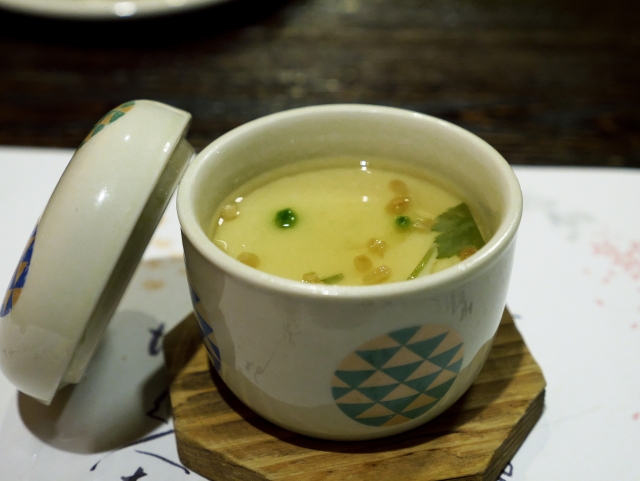
This dish is made by steaming a mixture of beaten eggs and dashi (Japanese soup stock). Common ingredients hidden inside include shiitake mushrooms, gingko nuts, kamaboko (fish cake), and chicken.
The secret to a perfect Chawanmushi lies in the ratio of egg to stock and the precise control of the heat. If the temperature is too high, the texture becomes grainy; if it’s too low, it won’t set. It’s a dish that truly tests a chef’s skill.
In Japan, you can even buy pre-made versions in plastic cups at supermarkets. You can heat them up in hot water or—pro tip—eat them cold! It’s a refreshing way to enjoy Japanese flavors.
2. Shumai (Steamed Dumplings)
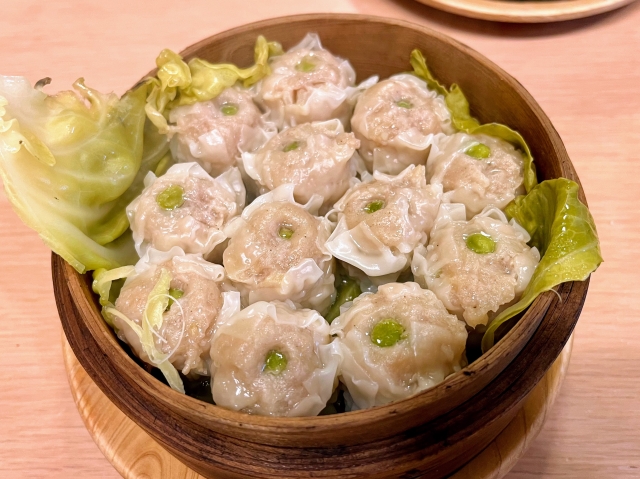
Originally from China, Shumai has become a staple in Japanese households. These are dumplings made of minced pork wrapped in a thin wheat skin and steamed to perfection. Interestingly, they are also delicious when pan-fried or deep-fried.
If you visit Yokohama, you’ll find that Shumai is the city’s pride. The “Shumai Bento” is a legendary meal for travelers. If you’re visiting Japan and staying near Tokyo, a trip to Yokohama for these dumplings is a must!Originally from China, Shumai has become a staple in Japanese households. These are dumplings made of minced pork wrapped in a thin wheat skin and steamed to perfection. Interestingly, they are also delicious when pan-fried or deep-fried.
If you visit Yokohama, you’ll find that Shumai is the city’s pride. The “Shumai Bento” is a legendary meal for travelers. If you’re visiting Japan and staying near Tokyo, a trip to Yokohama for these dumplings is a must!
3. Dobinmushi (Steamed Broth in a Teapot)
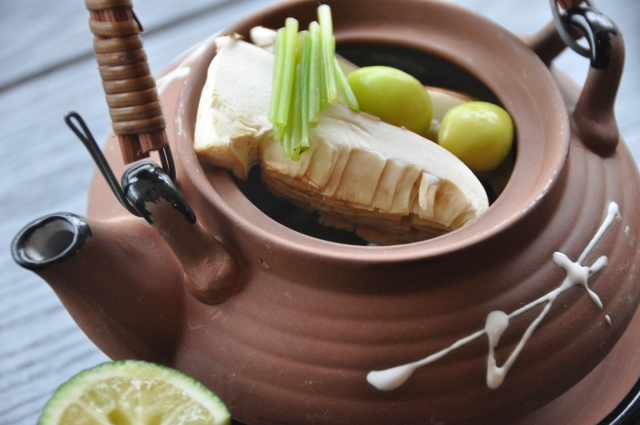
Dobinmushi is cooked in a traditional ceramic teapot called a dobin.
The most prestigious version of this dish features Matsutake mushrooms—a luxury ingredient that can cost thousands of yen. Because Matsutake is so rare, this dish is a special treat even for Japanese people.
Be aware that Matsutake Dobinmushi is usually served in high-end traditional restaurants. These places often have strict dining etiquette, so it’s a good idea to brush up on your manners before diving in!
From My Experience
As I mentioned earlier, “homophones” (words that sound the same but have different meanings) can be one of the trickiest parts of learning Japanese. But honestly, it’s surprisingly hard even for Japanese children to master! In fact, I used to get confused and struggled with them a lot when I was a kid.
For example, take the sentence: “Sore igai ni hanasareta noha igai datta.” (It was surprising that they talked about anything other than that.) In Romanized Japanese, the word “igai” appears twice. Just hearing it spoken, it’s really hard to tell which “igai” means what, right?
When I was a little kid, I could only read and write in Hiragana (the phonetic Japanese alphabet). So, I would write the whole sentence out as: “それいがいにはなされたのはいがいだった”. Because the word “いがい (igai)” is written exactly the same way in both places, I used to mix up the first one and the second one all the time.
Eventually, I learned Kanji (Chinese characters), and the confusion completely went away—all thanks to the visual clarity that Kanji brings! Looking back, I can really see why Japanese can be so challenging for beginners who are just starting out.
Conclusion
Understanding the nuances of the Japanese language and its cuisine is a journey. Whether it’s distinguishing an insect from a custard or learning the proper way to pour soup from a teapot, there is always something new to discover.
Studying from a textbook is great, but the best way to learn a culture is to taste it. So, why not head to your local Japanese restaurant and order a Chawanmushi? Just make sure you don’t accidentally ask for the Chatatemushi!