Mike was a twelve-year-old boy from America who had recently developed a deep fascination with Japanese society. He enjoyed watching Japanese documentaries and travel shows, especially those featuring everyday life, local communities, and unique cultural traditions.
His mother, Kelly, who prided herself on being well-informed, often discussed news and social topics with him, though she admitted Japan’s social structure was more complex than she expected.
His father, John, was a busy corporate worker who had traveled to Japan many times but rarely experienced life outside business districts in big cities.
They also knew Nobu, a Japanese college exchange student who often visited their home and shared stories about school life, customs, and regional differences.
Mike liked Japan, and he realized there was still so much more to learn about the country’s diverse and evolving society.
Prologue
Kelly has developed an interest in ramen, but she’s still a bit foggy on the different types and flavors. While Shio (salt) ramen is straightforward enough, Shoyu (soy sauce) and Miso ramen leave her scratching her head.
Kelly has used miso and soy sauce in her own cooking before, but how they translate into a complex ramen broth remains a mystery. This led her to a singular obsession: “The Secret of the Shoyu Ramen Soup”.
Act 1: Kelly Learns the Basics
Kelly: “The more I think about ramen, the more complicated it gets. The noodles aren’t like pasta, and the broth isn’t like a sauce. I don’t even know where to start!”
John: “Well, it’s hard to reverse-engineer it just by looking at the instant packs from the supermarket. Even professional chefs struggle to guess the exact ingredients of a finished product”.
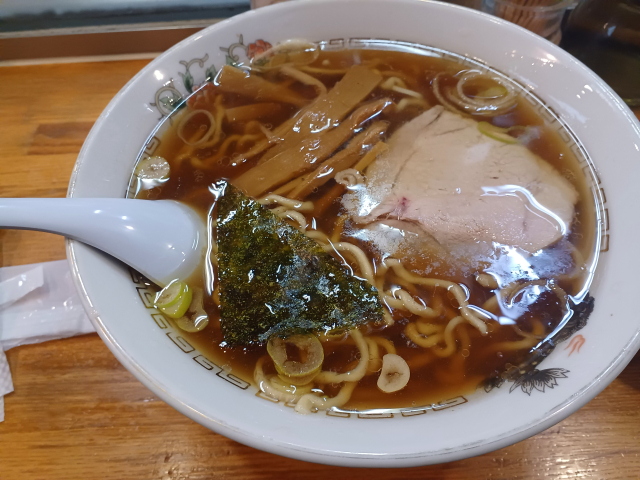
Kelly: “Exactly. I’ve been overthinking the bowl of shoyu ramen I bought yesterday, and I’m getting nowhere”.
John: “Didn’t you find anything online?”
Kelly: “I found some answers, but they’re full of technical jargon that makes my head spin”.
John: “Professional culinary terms can be tougher than everyday Japanese, for sure”.
Kelly: “From what I gathered, you take a base stock made from chicken bones or pork bones and add something called ‘Kaeshi’… but I have no idea what that is”.
John: “Just think of ‘Kaeshi’ as the flavor concentrate. Try looking up how to make the Kaeshi itself”.
Kelly: “Oh, I see! It’s basically a soy sauce-based seasoning liquid for the soup. I think I can manage that”.
Mike: “Wow! Homemade ramen? You really are the best, Mom!”
Kelly: “Still… something about it just doesn’t feel right”
Act 2: Nobu Explains the Varieties
Nobu: “Hello, everyone”.
Kelly: “Hi, Nobu! You’re just the person I wanted to see”.
Nobu: “Is something wrong?”
Kelly: “I’m trying to make shoyu ramen, but the flavor lacks ‘punch.’ I can’t figure out why”.
Nobu: “Are you following the recipe correctly?”
Kelly: “The technique is fine… but it lacks character. Do I need to do something more with the broth?”
Nobu: “Since it’s shoyu ramen, have you tried changing the soy sauce itself?”
Kelly: “Change the soy sauce? But soy sauce is just soy sauce, isn’t it? Surely there aren’t that many kinds”.
Nobu: “Actually, there are quite a lot. The big-name brands are so dominant that the others don’t stand out as much”.
Kelly: “What do you mean?”
Nobu: “Soy sauce is a fermented food made from soybeans. Because fermentation is a living process, the flavor and aroma change depending on the environment. Ingredients and regional differences create a surprising amount of variety”.
Kelly: “Then what about those big brands? They always taste exactly the same”.
Nobu: “That’s the incredible thing about major corporations. They focus on ‘standardization’—ensuring that ‘reliable taste’ every time. They use meticulously selected ingredients and high-tech, computer-controlled brewing facilities”. “However, smaller, traditional companies still brew soy sauce the old-fashioned way”.
Kelly: “And what happens at those small places?”
Nobu: “The quality is stable, but it relies on ‘artisanal skill'”.
Kelly: “In what way?”
Nobu: “While big companies use giant tanks, traditional brewers often use wooden barrels. The microbes responsible for fermentation actually live in the wood of the barrels. Naturally, this means the fermentation conditions can vary. The artisans use their skills to blend and adjust those subtle differences”.
John: “So, there’s an incredible amount of craft and passion poured into making soy sauce?”
Nobu: “Think of it like fine brandy. High-end brandy requires a master blender’s touch, right?”
John: “That makes sense”.
Nobu: “In Japan, these traditional soy sauce companies are essentially delivering that level of master craftsmanship right to your kitchen”.
John: “Wait a minute. Brandy is expensive, but soy sauce is quite affordable”.
Nobu: “True enough”.
John: “It’s amazing that the Japanese offer such high-level craftsmanship at such a low price…
Act 3: John Marvels at the Fascination of Shoyu Ramen
Nobu: “Anyway, back to your ramen soup. Does the difference in soy sauce make sense now?”
Kelly: “Yeah, I think I get it now. I’m just blown away by how deep the world of soy sauce really is”.
Nobu: “So, why not try a different soy sauce? You’ll get a soup that’s completely different from the stuff in the supermarket—a flavor with real personality”.
Kelly: “How should I put it? If I were to compare it to music…”
Nobu: “I’m a jazz fan myself, and I see big-brand soy sauce like a studio-recorded CD. You get the same perfect sound every time. But traditional soy sauce is more like a live performance—it has that element of improvisation”.
John: “I see. The ‘reliable classic’ versus ‘the thrill of the live show'”.
Nobu: “Exactly. It doesn’t mean the taste is inconsistent; it means that if you appreciate the nuances, you can see the artisan’s skill at work”.
John: “So… shoyu ramen can have its own sense of ‘improvisation’? That’s a fascinating culture”.
Nobu: “Isn’t it?”
Thoughts on Soy Sauce
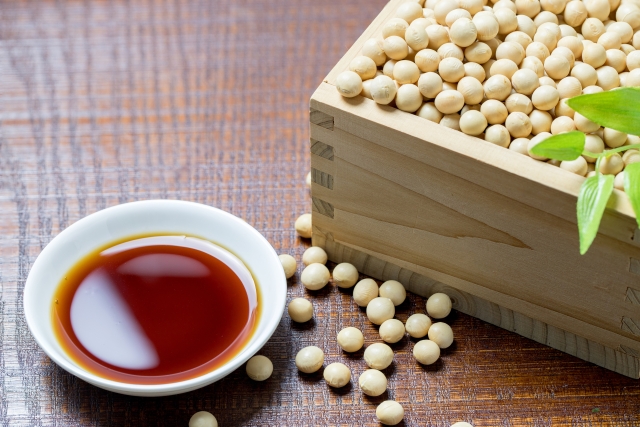
Let’s look at how soy sauce is made.
The primary ingredients are soybeans, wheat, and salt, which are fermented using microorganisms.
Why are major manufacturers able to achieve such perfect standardization? As mentioned, it’s through rigorous management of ingredients and production. However, the real secret lies in the management of microorganisms.
Since soy sauce is a fermented product, it relies on the activity of microbes. If these microbes were inconsistent, the flavor would be uneven or the quality might drop. Professional management ensures this doesn’t happen.
I often think about something here. Pet owners know that every dog has its own “personality”—some love to play, while others love to sleep. I can’t help but feel that microbes have personalities, too. Some might ferment faster than others.
While major manufacturers use systems to manage these individual traits, small companies likely rely on the intuition and skill of their artisans to guide them.
The music metaphor fits perfectly: the “high-quality studio CD” versus the “excitement of a live performance”.
One thing must be made clear : this isn’t about which one is ‘better’. Some people want that “same old reliable shoyu ramen,” while others enjoy the “subtle variations” of a craft brew. In our story, Kelly simply wanted more personality, so she looked toward smaller, traditional brewers.
The Relationship with the Noodles
While the broth is the soul of ramen, we must never forget the chemistry between the soup and the noodles. If they don’t harmonize, the entire flavor profile collapses. Returning to our music metaphor: no matter how exciting an improvisation is, if the band isn’t perfectly in sync, the performance is ruined.
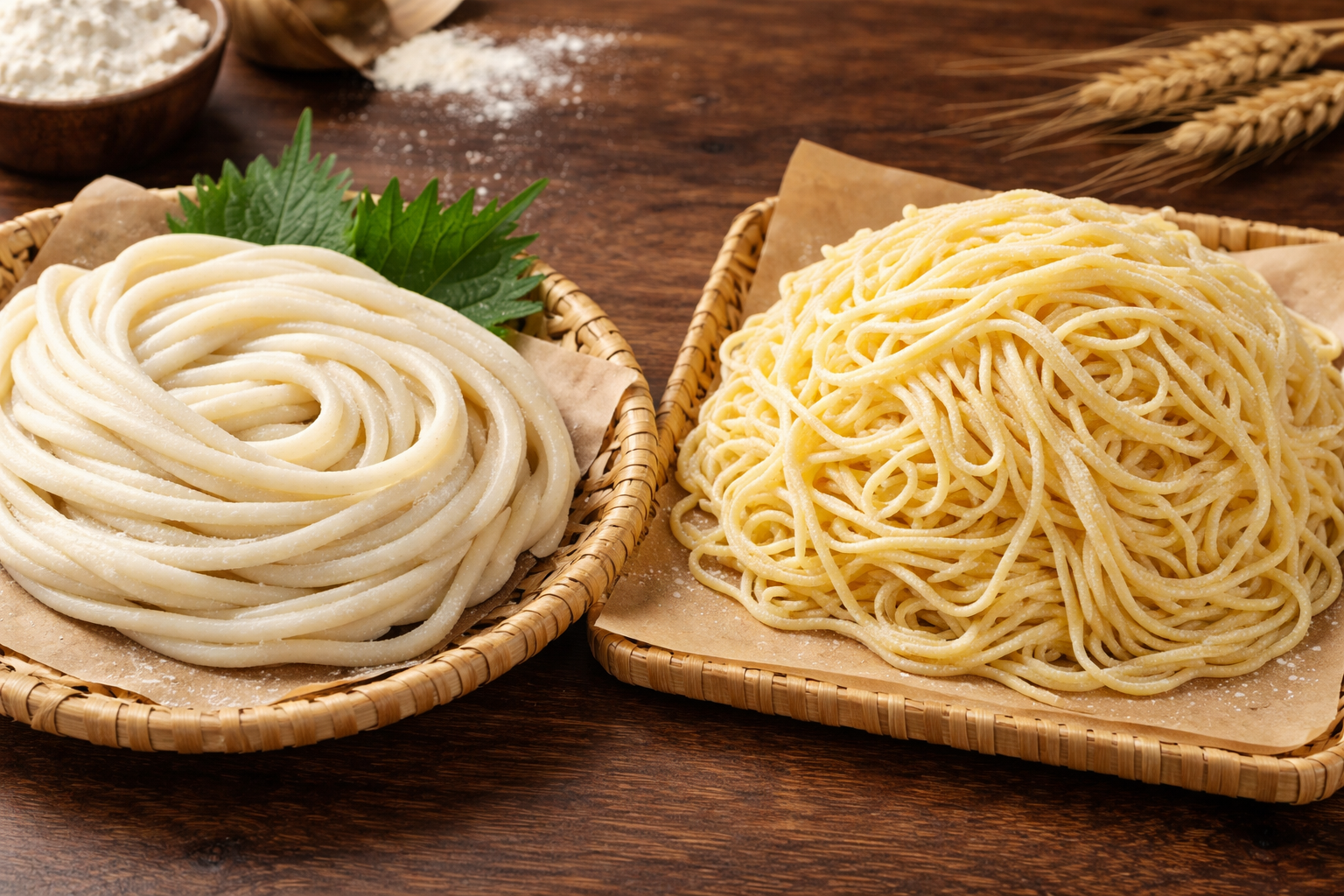
But just how many types of noodles are out there? How many variations in thickness exist? And on top of that, how many ways can you adjust the boiling time to achieve the perfect texture? When you start to consider all these variables, the sheer scale of it is enough to make your head spin.
And then, of course, there are the toppings. Take the “Ajitama” (seasoned soft-boiled egg), for example—do you really think there’s no craftsmanship involved in its seasoning? Every single element is calculated.
Thinking about the sheer scale of this culinary world makes me marvel at its depth all over again. If Kelly were to hear the full extent of it, she might just faint on the spot!
In any case, this is just a glimpse into how profound Japanese ramen culture truly is. I suspect there are still endless stories to tell about ramen… but let’s save those for another article.
Conclusion
We started with shoyu ramen and ended up diving deep into the world of soy sauce. If you thought all soy sauce was the same, I hope this sparked your curiosity.
Soy sauce is an essential part of ramen, and its depth is truly profound. If you ever visit Japan, I highly recommend visiting a local soy sauce brewery. You’re sure to discover a side of Japan you never knew existed.