Are you familiar with Teppanyaki or Nabe (hot pot) dishes? Interestingly, these aren’t typically prepared in the kitchen. So, where exactly are they cooked?
In this article, we’ll use a story-based format to introduce where these dishes are made and the unique appliances used to bring them to life.
- The Culture of “Tabletop Cooking”: Nabe and Hot Plates
- Characters
- Prologue
- What is Teppanyaki & Nabe Culture (Japanese Tabletop Cooking)
- Okonomiyaki — Grilling on the Teppan
- Nabe — Simmering Together
- Shabu-shabu — The “Swish-Swish” Style
- The Tools — Hot Plates and Portable Stoves
- What are “Hot Plates” and “Cassette Stoves”?
- Why hot plates and Cassette Konro are popular in Japan
- Conclusion
The Culture of “Tabletop Cooking”: Nabe and Hot Plates
When asked, “Where is Japanese food prepared?”, most people would likely answer, “In the kitchen.” However, that is only half the story. In Japanese homes, cooking often happens right at the dining table. But how?
Typical examples are Nabe (hot pot) and Okonomiyaki. The culture of preparing these dishes right in front of your eyes is quite unique to Japan. Let’s explore this fascinating world through the story of Mike and his family.
Characters
- Mike: A 12-year-old American boy fascinated by Japan, dreaming of his first trip there.
- John: Mike’s father, a businessman who occasionally visits Japan for work.
- Kelly: Mike’s mother, a talented cook with a deep interest in Japanese cuisine.
- Nobu: A Japanese international student.
Prologue
In most cuisines around the world, food is prepared in the kitchen and then brought to the table. Whether it’s a steak or a bowl of soup, it’s plated and served ready-to-eat.
But can you imagine “cooking while eating” at the same table? While not very common globally, it is a staple of Japanese life. Specific appliances are set up right on the dining table, allowing families to cook Nabe or Okonomiyaki as they dine.
Our characters are eager to learn more about this interactive way of eating.
What is Teppanyaki & Nabe Culture (Japanese Tabletop Cooking)
John: “I heard that in Japan, there’s a style of ‘party food’ where you cook while you eat.”
Nobu: “That’s right! The most common examples are Nabe (hot pot) and Teppanyaki (grilling on an iron plate).”
John: “How exactly does it work?”
Nobu: “We place a pot or a griddle in the center of the table and keep it heated. Since you eat it the moment it’s cooked, it stays delicious and piping hot. Plus, everyone can cook it exactly how they like it.”
Kelly: “What do you mean by ‘how they like it’?”
Nobu: “For example, boiling time. Some ingredients taste better depending on how long they’re heated. You can adjust the texture to your preference—some people like their veggies crunchy, others prefer them soft.”
Kelly: “It’s a bit like choosing how you want your steak done!”
Nobu: “Exactly. If you’re using sashimi-grade fish in a hot pot, you might only want to sear the surface. The same goes for Teppanyaki. With Yakisoba (fried noodles), some people love to let them sit on the heat a bit longer to get that perfect crispy texture.”
Kelly: “Can you change the flavor too?”
Nobu: “Yes. You usually dip the food into a sauce just before eating, so you can switch sauces to enjoy different flavors.”
John: “I see. It sounds like the perfect style for a party.”
Okonomiyaki — Grilling on the Teppan
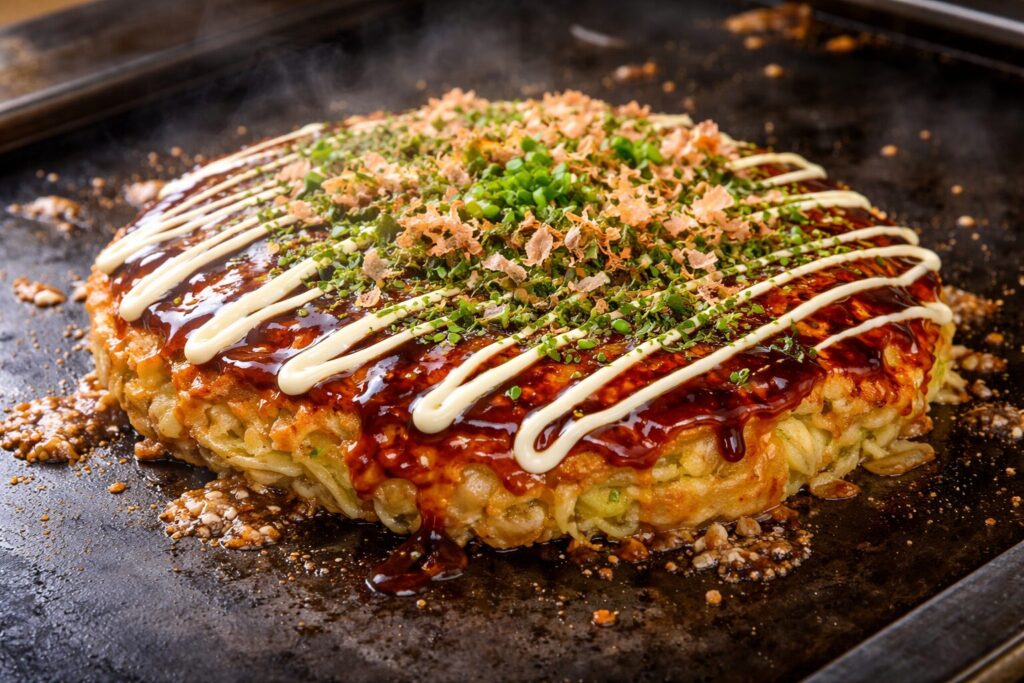
Kelly: “I was surprised to hear that at Okonomiyaki restaurants, you sometimes cook it yourself.”
Mike: “Wait, cook it yourself? Like, do you have to chop things at the table?”
Kelly: “No, usually the prep is done for you. They bring out a bowl with the flour batter and all the toppings mixed in.”
Nobu: “Yes. Many Okonomiyaki shops have tables with a built-in iron griddle (Teppan). You grill the pancakes, noodles, and other items right there.”
Mike: “What if you don’t know how to flip it?”
Nobu: “Don’t worry! If you’re unsure, the staff will happily grill it for you. One thing to watch out for, though, is the heat. The staff will turn the grill on, but you often have to manage the temperature yourself so it doesn’t burn.”
Kelly: “It sounds like it requires a bit of skill!”
Nabe — Simmering Together
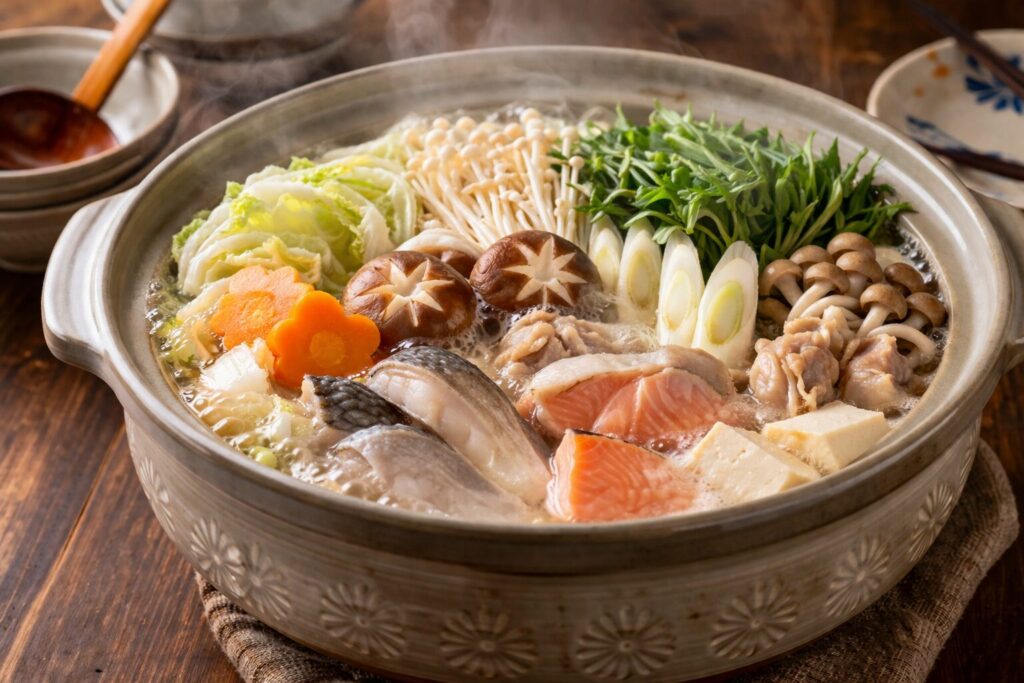
Kelly: “Tell us more about Nabe.”
Nobu: “In a Nabe setting, the family sits around the pot, adds their favorite ingredients, and picks them out once they’re simmered. Every family has its own style. Some boil a big batch first, then keep adding more ingredients as they eat.”
Kelly: “So it’s a continuous process?”
Nobu: “Exactly. And there’s a ‘grand finale.’ After everyone has finished the main ingredients, we add rice to the remaining soup, which is packed with flavor from the meat and veggies.”
Kelly: “Like a savory rice porridge?”
Nobu: “Yes, we call it Zosui. It’s incredibly warming. Some families prefer adding Udon or Ramen noodles instead. It’s the ultimate ‘taste of home.'”
Shabu-shabu — The “Swish-Swish” Style
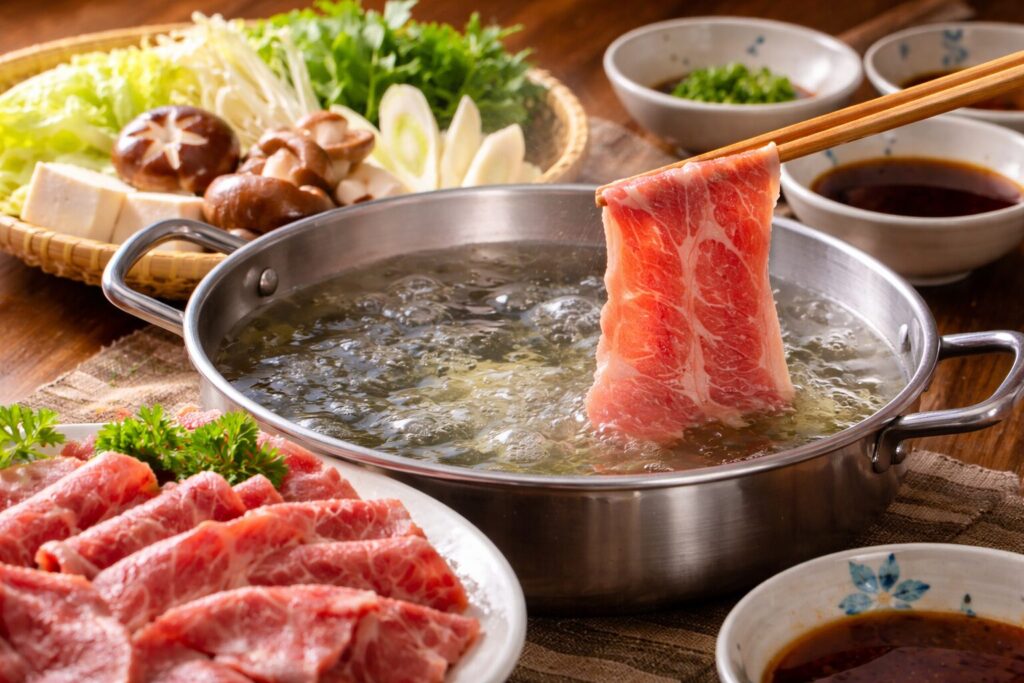
Nobu: “There’s also a special kind of hot pot called Shabu-shabu. Unlike other Nabe, you don’t really ‘stew’ the ingredients.”
Kelly: “Then how do you cook it?”
Nobu: “You take a very thin slice of beef and ‘swish’ it back and forth in the boiling broth for just a few seconds. The name ‘Shabu-shabu’ actually comes from the sound of the meat lightly splashing in the water. It’s a very light and delicate way to enjoy high-quality meat.”
The Tools — Hot Plates and Portable Stoves
John: “I’m curious—what kind of appliances do people use for this at home? I can’t imagine every Japanese house having a professional iron griddle built into their dining table.”
Nobu: “You’re right! We use portable tools. For Teppanyaki or Okonomiyaki, we use a ‘Hot Plate’ (electric griddle). It’s very convenient because you can adjust the temperature precisely.”
John: “So you just plug it into the wall? That sounds easy.”
Kelly: “And what about the hot pot?”
Nobu: “For Nabe, we use a ‘Cassette Konro’—a portable gas stove that uses small fuel canisters. It’s very lightweight and easy to set up.”
Mike: “Are there any other cool gadgets?”
Nobu: “There’s the home Takoyaki maker! It has round molds to make octopus balls. Friends often gather for ‘Takoyaki parties’ to cook them together.”
John: “That sounds fun!”
Nobu: “It is, but be careful! Every family has its own ‘secret technique’ for the perfect Takoyaki. Sometimes people get a bit too competitive about who makes them best, and it can turn into a friendly argument!”
John: “Haha, I guess passion for food is the same everywhere!”
What are “Hot Plates” and “Cassette Stoves”?
Let’s take a closer look at these two essential Japanese household appliances mentioned in the story.
The Hot Plate (Electric Griddle)
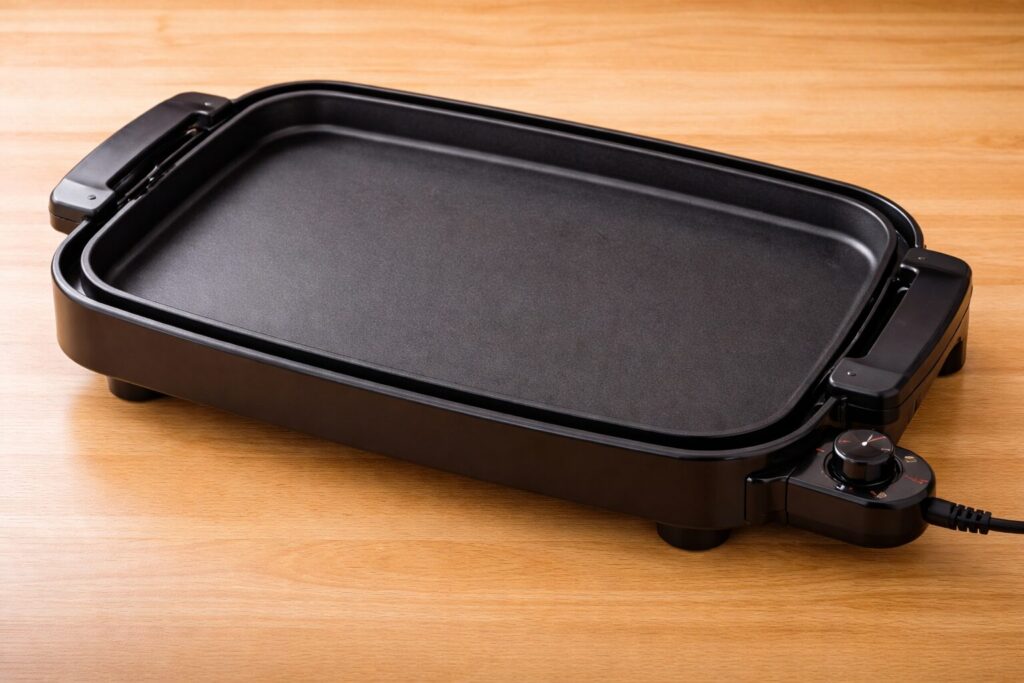
A Hot Plate is an electric appliance with a flat heating surface. It’s used for anything that requires a griddle—Okonomiyaki, Yakisoba, or even hamburgers.
- Precision: You can easily switch between high heat for cooking and low heat for “warming” (keeping food hot while you eat).
- Safety: Since it’s electric, there’s no open flame, making it very safe for family use.
The Cassette Konro (Portable Gas Stove)
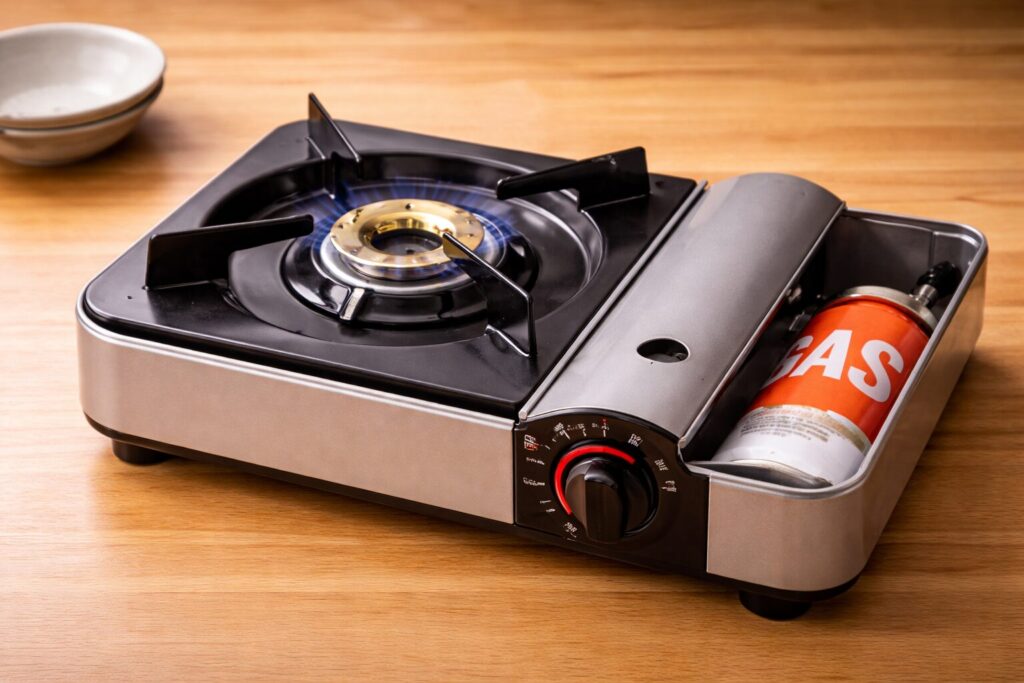
While most cooking happens on the kitchen stove, Nabe culture requires a heat source at the table.
- Portability: These stoves are incredibly light (often under 2kg) and powered by a small, replaceable gas canister (cassette).
- History: Before these were common, people had to use heavy propane tanks or charcoal, which were much harder to manage. The Cassette Konro revolutionized the Japanese dining room by making hot pot nights easy and accessible for everyone.
Why hot plates and Cassette Konro are popular in Japan
The popularity of hot plates and cassette stoves isn’t just about enjoying a meal with family or friends. It is also closely tied to the reality of Japanese housing.
In Japan, floor plans are often compact. Room sizes are traditionally determined by the number of tatami mats (roughly 1.8m x 0.9m per mat). The most common rooms are the “six-mat room” (rokujoma) and the “eight-mat room” (hachijoma), which average between 10 to 13 square meters.
Because families gather in these cozy spaces, cooking appliances need to be compact. They must also be lightweight and highly safe. This is exactly where the hot plate and cassette stove become so convenient.
Furthermore, these appliances are not particularly expensive. A hot plate typically costs between 3,000 to 10,000 yen, while a cassette stove ranges from 3,000 to 6,000 yen. This affordability is another key reason why they have become such a staple in Japanese homes.
Conclusion
The Japanese culture of “cooking at the table” is about more than just food—it’s about Danran (family harmony and gathering). Whether it’s a regional seafood Nabe or a meat-heavy hot pot from the mountains, these dishes are best enjoyed together.
If you travel to Japan, you don’t have to go to someone’s home to experience this. Many restaurants and traditional Ryokan (inns) specialize in these dishes. Sharing a hot pot with your travel companions might just be the highlight of your cultural journey. Enjoy the warm, delicious culture of Japan!