【The Background of This Story】
Mike is a 12-year-old boy from the United States who recently became interested in Japan and its culture. He enjoys watching TV shows about Japan, especially those that introduce everyday life and food.
His mother, Kelly, is a great cook and became curious about Japanese supermarkets and the kinds of products sold there.
His father, John, is a busy office worker who has visited Japan many times, but he mostly knows life in business hotels in big cities.
The family also met a Japanese exchange student named Nobu, who often visited their home and talked about Japanese society and daily life in Japan.
Mike fell in love with Japan and realized there was still a lot he wanted to learn about Japanese culture.
By the way, do you know what kinds of items are sold in Japanese supermarkets? Let’s begin the story!
Prologue
There are many differences between Japan and other countries, and it’s common for people to experience a cultural gap.
Food is one of the areas where this gap is felt most strongly, but you’ll probably notice many differences in everyday life as well. This is especially true for international students and anyone planning to live in Japan for a longer period.
Today, I’d like to focus on a simple but very popular question:
“How can you eat sushi cheaply?”
In other words, how can you enjoy good sushi in Japan without spending too much?
Nobu Talks About What Is Sold in Japanese Supermarkets
Kelly: “Phew, I’m exhausted. Grocery shopping takes quite a bit of energy, doesn’t it? I always end up buying too much and my bags get so heavy.”
Nobu: “Hello.”
Kelly: “Oh, hi. Listen to this, going to the supermarket was fine, but my bags were so heavy that I’m completely worn out.”
Nobu: “First of all, good job. Supermarkets have a lot of large items, so you definitely need stamina.”
Kelly: “By the way, what are Japanese supermarkets like? I’ve been curious about them for a while.”
Nobu: “Let’s see. Japanese supermarkets also sell food and daily necessities, but they might be different from those in the West. Let me introduce a little bit about Japanese supermarkets.”
Kelly: “Sounds good. For now, I’m interested in the food. Tell me how they differ from the supermarkets back home.”
Nobu: “Understood.”
Bento (Boxed Lunches)
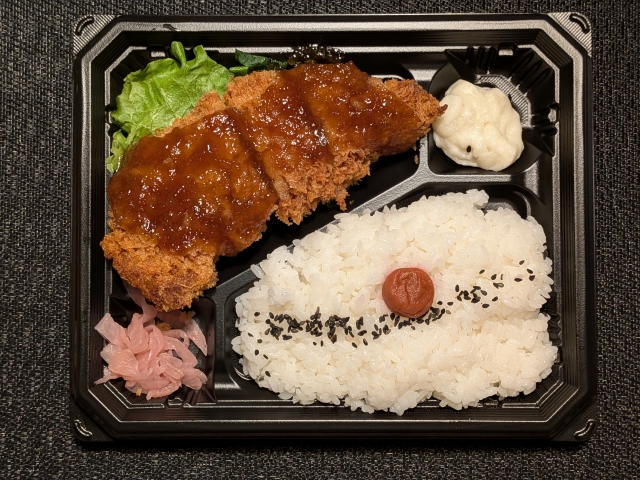
Nobu: “The first point I can mention is that they sell bento. It depends on the supermarket, but they are convenient because you can buy them easily. In particular, many supermarkets are open from the morning nowadays, so I think many people buy them in the morning.”
Kelly: “I see, bento. That’s very Japanese. What kind of bento do they sell?”
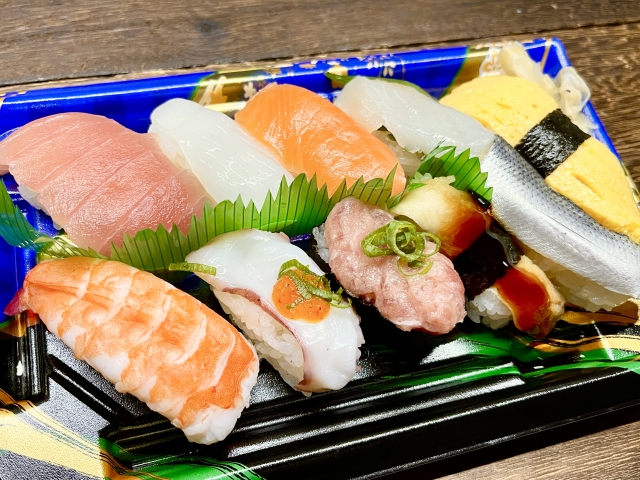
Nobu: “Various kinds. Not only bento packed with rice and side dishes, but they also have things like pasta, and even sushi.”
Kelly: “They even sell sushi?”
Nobu: “Yes, they sell sushi too. Moreover, it is cheaper than eating at a sushi restaurant.”
Kelly: “That’s a surprise.”
Nobu: “They have nigiri sushi, but also cheaper options like norimaki (sushi rolls) and inari sushi.”
Kelly: “I see. Just out of curiosity, what kind of people buy bento in the morning?”
Nobu: “There are office workers as well as students. I think it’s mostly bought by people who are busy in the morning. By the way, commuting situations in Japan are quite tough, and it’s not uncommon for office workers in the Tokyo metropolitan area to have a one-hour commute.”
Kelly: “I see, I understand a bit why bento are necessary.”
Sozai (Delicatessen / Side Dishes)
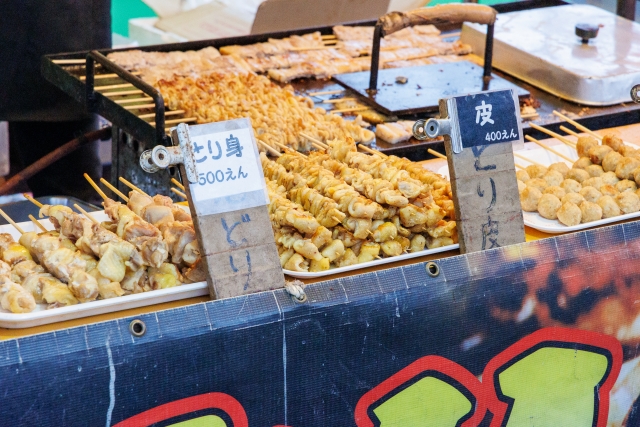
Nobu: “Another feature might be the abundant variety of sozai (side dishes) sold. They handle fried foods like tonkatsu, as well as salads.”
Kelly: “Wow, that’s convenient.”
Nobu: “Yes. I often used to have leftover rice and put it in the fridge quite a lot. So, I would often go buy sozai at the supermarket.”
Kelly: “I see, it’s also convenient when you just want one more dish.”
Nobu: “That’s right. Because it’s possible to buy them as single items.”
Fresh Fish
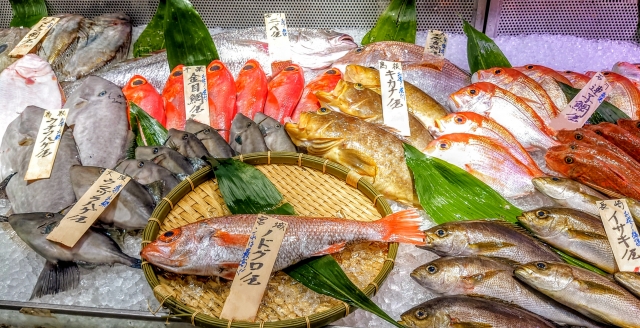
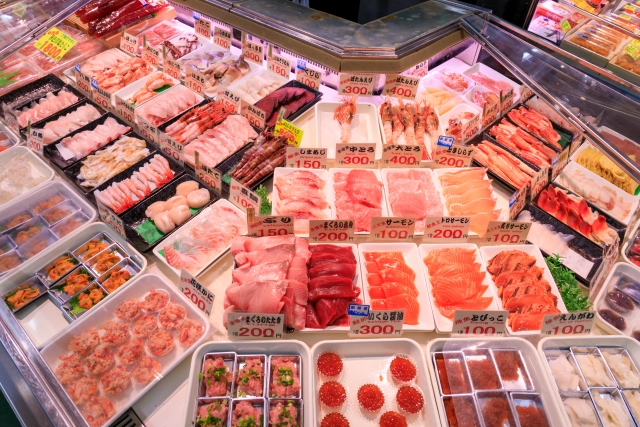
Nobu: “The large amount of fish is also a defining characteristic. They sell a lot of fish cut into fillets. Also fish cut specifically for sashimi.”
Kelly: “That’s right. You can just buy it, take it home, and make sashimi.”
Nobu: “Also, supermarkets even sell things like octopus and squid.”
Kelly: “It’s amazing that they stock so much octopus. By the way, how do you eat the octopus?”
Nobu: “Sometimes we eat it as sashimi, and other times we put it in takoyaki.”
Kelly: “It’s also amazing that you can make takoyaki at home.”
Seasonal Foods
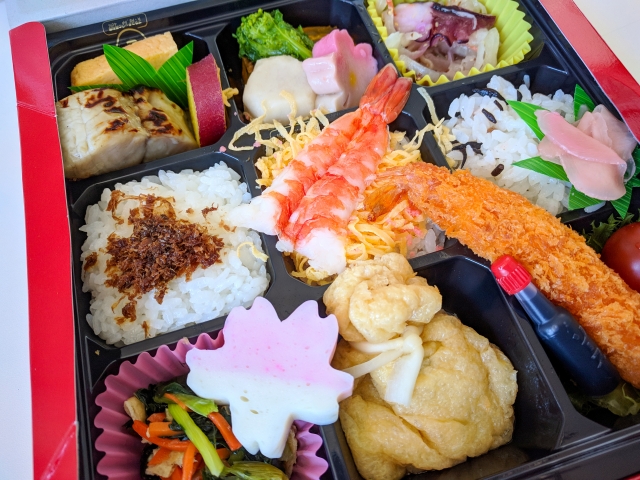
Nobu: “Besides those, they also sell ingredients for specific seasons and events.”
Kelly: “What do you mean by seasons?”
Nobu: “For example, during the spring cherry blossom viewing (hanami) season, they have packs of hors d’oeuvres that are easy to eat at hanami, and during the Christmas season, some stores handle chicken.”
Kelly: “It’s surprising that supermarkets even think about such events.”
Nobu Talks About Smart Supermarket Shopping
Nobu: “When introducing Japanese supermarkets, I should probably introduce the ‘systems for getting a good deal’.”
Kelly: “What’s that? A system for getting a good deal?”
Nobu: “They have discounts and things like that.”
Kelly: “That sounds appealing. I want you to tell me about it.”
Nobu: “Understood.”
Time Service
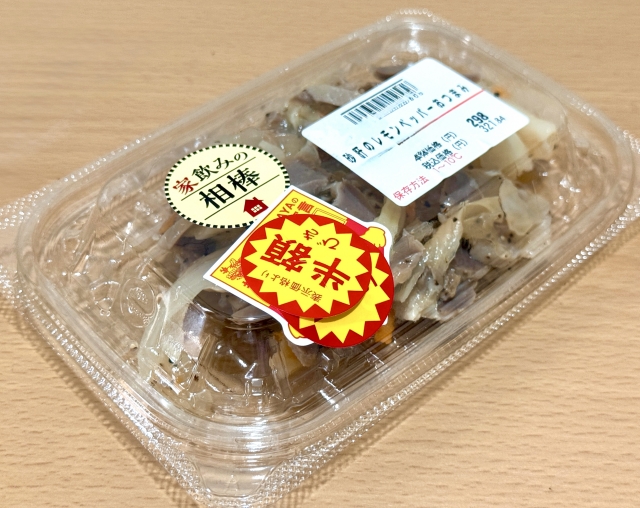
Nobu: “The first thing I want to introduce is the time service.”
Kelly: “Time service?”
Nobu: “That’s right. They sell items at a discount for a limited time. For example, ‘20% off for the next 30 minutes’.”
Kelly: “That’s nice.”
Before Closing
Nobu: “Next would be just before closing.”
Kelly: “What happens before closing?”
Nobu: “Discount sales start for many food items. What’s especially amazing is the fresh fish. It is not uncommon for things like sashimi to be half price.”
Kelly: “Half price is amazing.”
Point Systems
Nobu: “Also, I think you should know about points.”
Kelly: “Are points the things you can use at that store?”
Nobu: “Yes. However, in the case of Japanese supermarkets, some stores change the point reward rate depending on the day of the week. For example, making points double on Wednesdays.”
Kelly: “Double means the discount rate effectively increases, right.”
Nobu: “Yes. Points are practically a discount, so you could say the discount rate varies by the day of the week.”
John Is Surprised by Supermarket Price Differences
John: “The more I hear, the more interesting Japanese supermarkets sound.”
Nobu: “Yes, I think so. I believe there are services unique to Japan.”
John: “By the way, it seems there are high-end residential areas in Japan too, but are there supermarkets in those places?”
Nobu: “Yes, there are. But the prices are quite often on the higher side.”
John: “Meaning, the prices are expensive?”
Nobu: “That’s right. The prices are higher than regular supermarkets. However, the items they handle are mostly high-end.”
John: “On the other hand, are there cheap supermarkets?”
Nobu: “Yes. There are cheap supermarkets too. You won’t see luxury goods, but you can buy things at reasonable prices.”
John Feels Dissatisfied With How to Use Electronic Money
John: “By the way, I heard that electronic money is popular in Japan, but isn’t there any confusion?”
Nobu: “It might not be a major topic of conversation, but you can see a fair amount of confusion. That’s because there are stores where you can use certain types of e-money and stores where you cannot.”
John: “That sounds troublesome.”
Nobu: “Also, it can be hard to remember how to use it. Young people get used to it quickly, but you sometimes see elderly people struggling. Like scenes where they are tilting their heads in confusion while looking at their smartphone screens.”
John: “I see. So there are disadvantages like that too.”
Mike Is Surprised That Some Things Are Cheaper Than 100-Yen Shops
Mike: “By the way, Japan has 100-yen shops, right? Which is better, a supermarket or a 100-yen shop?”
Nobu: “That’s actually a pretty difficult question.”
Mike: “Why? I think the 100-yen shop would be cheaper.”
Nobu: “Well, the weakness of 100-yen shops is that ‘everything starts at 100 yen’. On that note, at a supermarket, they also sell items that cost less than 100 yen… for example, 60 or 70 yen items. Thinking about that, the supermarket might be better. Plus, there are point rewards.”
Mike: “It’s quite complicated, isn’t it?”
Nobu: “It is. Shopping is quite a hassle.”
Conclusion
We have covered Japanese supermarkets.
While some people might feel drawn to the fact that they even sell bento and sozai, others might have felt frustrated by the issues with electronic money.
Also, some of you might have been surprised to learn that there are times when supermarkets are more advantageous than 100-yen shops. In any case, a supermarket is a store that handles everything from food to daily necessities.
You have to use them smartly. To do that, you need not only look at the products they stock but also find ways to buy things cheaply.
By the way, things like point rewards vary depending on the supermarket. Either way, utilizing them will require some research.
Recommended Article
While this article focused on supermarkets, the one below covers 100-yen shops as well.
Feel free to take a look if you’re interested.

In this article, I explained that you can buy sushi and other ready-to-eat meals at supermarkets.
The article below focuses specifically on affordable sushi in Japan.
It will be helpful if you’re looking for the cheapest ways to enjoy sushi in Japan.