Mike was a twelve-year-old boy from America who had recently developed a deep fascination with Japanese society. He enjoyed watching Japanese documentaries and travel shows, especially those featuring everyday life, local communities, and unique cultural traditions.
His mother, Kelly, who prided herself on being well-informed, often discussed news and social topics with him, though she admitted Japan’s social structure was more complex than she expected.
His father, John, was a busy corporate worker who had traveled to Japan many times but rarely experienced life outside business districts in big cities.
They also knew Nobu, a Japanese college exchange student who often visited their home and shared stories about school life, customs, and regional differences.
Mike liked Japan, and he realized there was still so much more to learn about the country’s diverse and evolving society.
- Prologue
- Why “Pork Bones” Aren’t All the Same in Tonkotsu Ramen
- The Different Types of Pork Bones Used in Tonkotsu Ramen
- How Tonkotsu Ramen Becomes a “Signature Flavor”: Bone Selection, Heat Control, and the Chef’s Skill
- A Light-Hearted Finale: From Homemade Tonkotsu to the Mystery of Toppings
- The Hidden Craft Behind Tonkotsu Ramen
- Conclusion
Prologue
Kelly is a talented cook who is always thinking about making Japanese food. However, Japanese cuisine is deep and not easily mastered.
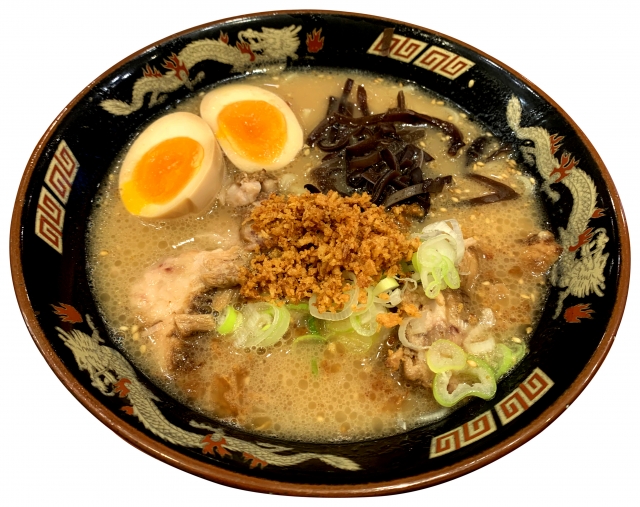
Today, we find Kelly attempting to make Tonkotsu (pork bone) ramen. She’s researching online as she goes, but will she be able to create a delicious bowl?
Why “Pork Bones” Aren’t All the Same in Tonkotsu Ramen
Kelly: “Okay, for Tonkotsu ramen, the soup is the key. Let’s see… Wow, you have to simmer the pork bones for this long? I wonder if this is enough bone… well, I’ll just order extra to be safe.”
John: “Hey Kelly, what are you up to?”
Kelly: “I’m researching Tonkotsu ramen. According to the internet, it takes a lot of effort, but I think I can make something delicious.”
John: “That’s true. There’s a massive amount of information online these days. I’m sure there’s plenty on ramen.”
Kelly: “Alright, I think I have most of the ingredients. The tricky part is the ‘pork bone’ itself. The internet gives a general amount, but I wonder if it’s really that simple.”
John: “Why not just order plenty?”
Kelly: “Good idea. I’ll order a lot.”
(Kelly calls the butcher.)
Kelly: “I see… I see. So I have to choose the specific part? Okay, let me think about it.”
John: “How did the call go?”
Kelly: “It’s harder than I thought! When I said, ‘I’d like some pork bones,’ they asked, ‘Which part?’ But the recipes online just say ‘pork bones.’ I didn’t know what to choose.”
John: “Oh, I see. I didn’t realize there were different types of pork bones either.”
The Different Types of Pork Bones Used in Tonkotsu Ramen
Nobu: “Hello there!”
John: “Oh, hi Nobu. You love Tonkotsu ramen, right?”
Nobu: “I sure do! That creamy soup is irresistible.”
John: “Do you happen to know how that soup is actually made?”
Nobu: “Hmm, I might not know the full details, but…”
Kelly: “It’s a nightmare. I’m totally lost on the bones.”
Nobu: “What happened?”
Kelly: “The butcher asked me which part of the bone I wanted, and I had no clue.”
Nobu: “Ah, the specific cuts. I actually know a little about that.”
John: “That’s a huge help! Tell us more.”
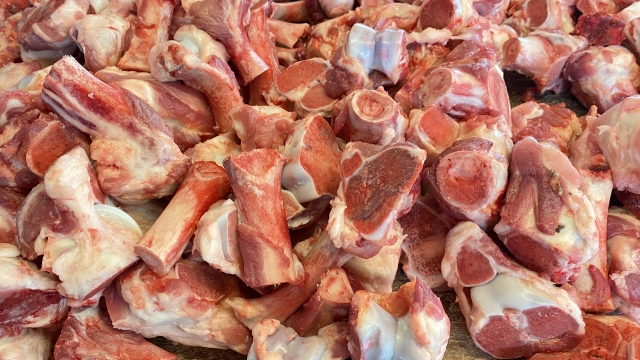
Nobu: “First of all, pork bones are divided into several parts. Here are the main types and their characteristics:
- Genkotsu (Leg Bones/Knuckles): These are the knee joints. They are called ‘Genkotsu’ because they look like a human fist. They produce a rich, fatty soup from the marrow.
- Ribs and Spine: These release flavor quickly, but the flavor doesn’t last as long in the pot.
- Pork Trotters (Feet): These add incredible depth and thickness, but they are a bit of a hassle to clean.
- Head: This produces a very flavorful soup, but… well, it’s a whole pig’s head. It looks quite Intimidating.
By the way, chicken stock (Toridashi) isn’t just any chicken bones either. We often use the feet, which are called ‘Momiji’ (maple) because of their shape.”
Kelly: “What? There are that many kinds? The online articles only said ‘pork bones’!”
Nobu: “I think that’s inevitable. Understanding a deep food culture is hard. You might have just stumbled upon a secret that isn’t even on the basic websites!”
Kelly: “I guess you’re right.”
How Tonkotsu Ramen Becomes a “Signature Flavor”: Bone Selection, Heat Control, and the Chef’s Skill
Nobu: “So, because each part produces a different kind of soup, we face a new challenge.”
Kelly: “Right—the challenge of ‘which bones to use’.”
Nobu: “Exactly. You can’t just pick at random. If you want to create a ‘signature taste,’ you have to carefully select and combine them. For example, using a 1:1 ratio of Genkotsu and spine.”
Kelly: “I see, so that’s how the recipe changes.”
Nobu: “And there’s more: the heat. For creamy Tonkotsu, you boil it on high heat to emulsify the fat. For a clearer, lighter soup, you simmer it gently on low heat.”
Kelly: “Wow, even the temperature matters.”
John: “Wait a minute. If there are multiple bone types, endless combinations, and then you add the heat levels… doesn’t that mean there are hundreds of possible soup flavors?”
Nobu: “Exactly! Then add the variations of soy sauce or miso, and the different types of noodles that change how the soup clings to them… the possibilities are literally infinite.”
John: “This is getting intense. So, Japanese ramen shops are constantly experimenting to find their own ‘perfect bowl’?”
Nobu: “Precisely. A chef works to create their ultimate masterpiece. And the hardest part is serving that same ‘perfect’ flavor every single day without fail.”
Kelly: “What do you mean by ‘consistency’?”
Nobu: “If the taste varies, some customers get a ‘great’ bowl while others get an ‘okay’ bowl. That’s a huge risk, especially with social media. If someone posts ‘this place isn’t as good as it used to be,’ it’s a disaster.”
John: “The perfect bowl, every single day… The skill of Japanese ramen chefs is truly incredible.”
A Light-Hearted Finale: From Homemade Tonkotsu to the Mystery of Toppings
Kelly: “Alright, today’s meal is my special Tonkotsu ramen! It might not be perfectly ‘consistent’ yet, so think of it as a limited edition improvisation.”
Mike: “Wow! I’m so excited to eat Tonkotsu ramen at home!”
John: “Me too. Usually, you have to go out to a restaurant, and you never know if it’s going to be good or not.”
Mike: “By the way, I have one question.”
Kelly: “What is it, Mike?”
Mike: “The toppings. I know Chashu is pork, but what are Menma (bamboo shoots) and Nori (seaweed)?”
John: “Well, that’s… Kelly, you know, right?”
Kelly: “……”
Nobu: “Haha, sounds like it’s time to talk about toppings. But let’s save that for next time. Ramen noodles get soggy if they sit too long. Let’s eat!”
The End
The Hidden Craft Behind Tonkotsu Ramen
I am not a cook myself, but I’ve looked at many Tonkotsu ramen recipes. Some make it sound surprisingly easy. It seems many English-language sites say the same, which made me wonder if the information was incomplete.
In writing this article, I discovered the true depth of the craft: the “combination of bones.” With several types of bones available, the flavor can be adjusted freely. Combined with the variations of soy sauce and miso, you theoretically arrive at an “infinite” number of flavor profiles.
And the technique required to maintain that “perfect bowl” every day is incredibly high-level. Perhaps this dedication to providing the best quality without fail is the true essence of the “Artisan Soul” (Shokunin-damashii).
Conclusion
We’ve taken a closer look at Tonkotsu ramen. I hope you now see that a single bowl is a condensation of a chef’s technical mastery.
Of course, ramen culture goes even deeper. There are cryptic ordering phrases like “Barikata” (very hard noodles), “Abura-oome” (extra oil), or “Yasai-mashimashi” (extra-extra veggies), and the chef’s classic line: “Ninniku iremasu ka?” (Would you like garlic?). There is still so much more to explore… but I’ll save those for another article!