When traveling to Japan, isn’t “eating delicious food” one of your top priorities? While many people think of Ramen or Sushi, there is so much more to explore: a “Seafood Foodie Tour.” Japan is a country with highly developed transportation. Depending on your mode of travel, you can move quickly from north to south. Here, we will introduce recommended seafood by region and the best ways to get there. Please read until the end!
Summary
If you want to experience the true depth of Japanese cuisine, a “Seafood Foodie Tour” is a must. Japan’s unique ocean currents and varied coastline offer a diverse range of seafood in every region. By utilizing the convenient Japan Rail Pass, you can easily travel from the tuna hubs of Tohoku to the oyster beds of Hiroshima, discovering local flavors that you won’t find in big cities like Tokyo.
Characters
- Mike: A 12-year-old American boy interested in Japan.
- John: Mike’s father, who frequently visits Japan for work.
- Kelly: Mike’s mother, an excellent cook.
- Nobu: A Japanese international student.
Prologue
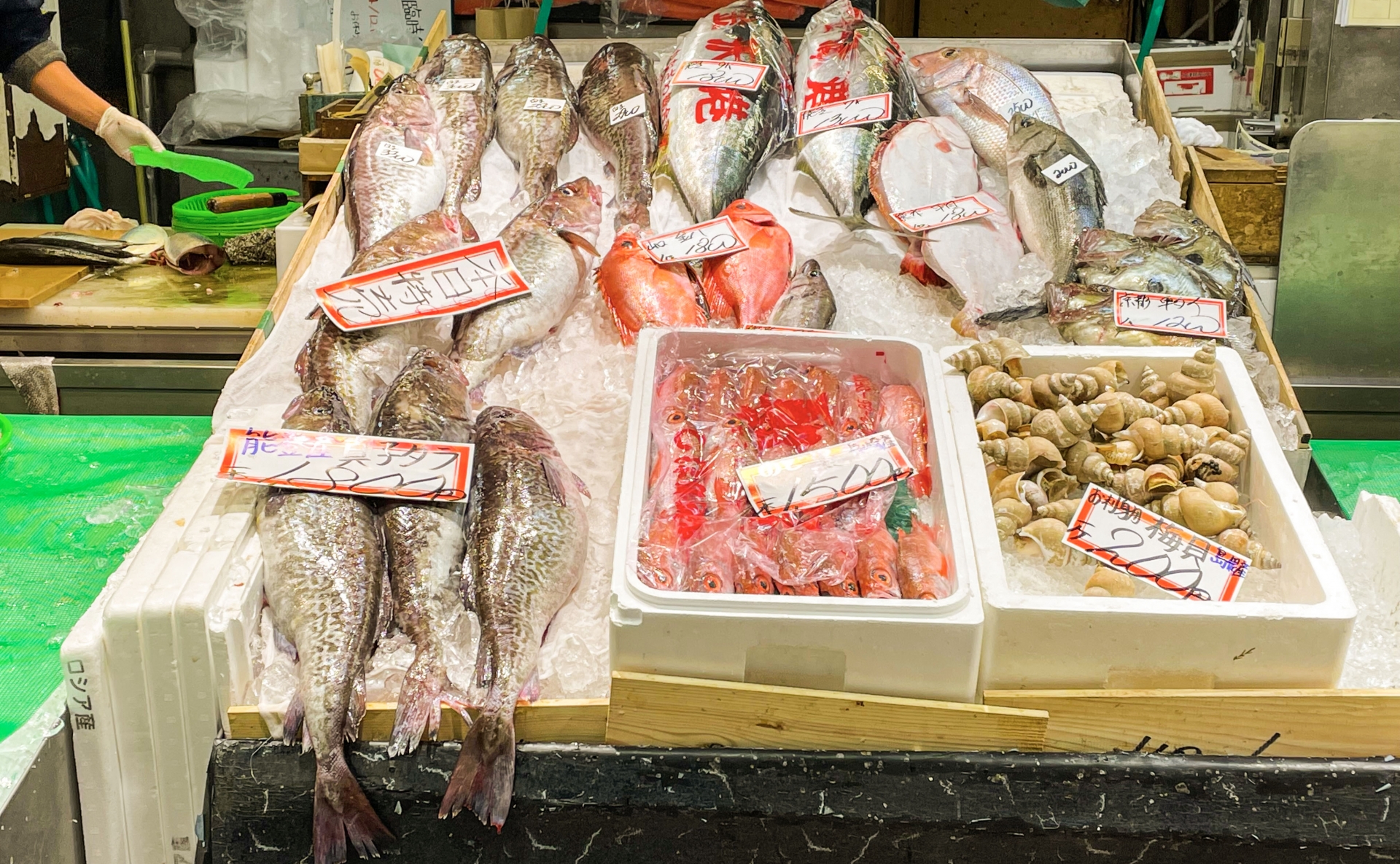
Japan is an island nation surrounded by the sea on all sides. Because of this, Japanese people eat a vast variety of seafood. Our diet extends beyond just fish and shellfish to include seaweed and even creatures living on rocky shores. Foreign visitors might be surprised, thinking, “They eat that?” So, what kind of seafood do Japanese people eat, and how can you reach the regions where they are caught?
Japan: Land Surrounded by the Sea
Mike: “Looking at the map of Japan again, the surrounding sea is quite unique.”
John: “Oh? In what way?”
Mike: “The ocean currents are special. There are currents from the south and others from the north. I think that’s unusual.”
John: “Ocean currents… I see.”
Mike: “It seems different fish are caught depending on the current. So, I thought maybe the seafood across Japan changes too.”
John: “Good observation, Mike.”
Mike: “Also, the shape of the coastline. Some areas are straight, and others are very rugged. I wondered if the shape of the coast changes the waves.”
John: “I see, the coastline. Now that you mention it, you’re right.”
Nobu: “Hello everyone!”
John: “Ah, Nobu, perfect timing. We were just talking about Japan’s sea and seafood—ocean currents and coastlines.”
Nobu: “That’s a fascinating topic. Indeed, seafood varies greatly depending on the currents and the shape of the coast.”
Mike: “See! Just like I said.”
Nobu: “For example, regarding currents, there’s a spot in the Tohoku region where the warm southern current and the cold northern current collide. It’s a very famous fishing ground.”
John: “The collision point of currents… interesting.”
Nobu: “Then there is the terrain. Rugged coastlines often have many inlets and rocky areas. Because of this, some towns have built fishing ports, while others are famous for ‘Iso-ryori’ (rocky shore cuisine).”
Kelly: “What is Iso-ryori?”
Nobu: “Good examples are shellfish like oysters and scallops. In some places, they are also famous for sea urchins.”
Mike: “I get it now.”
A Wide Variety of Seafood
Kelly: “So, what specific kinds of seafood are there?”
Nobu: “Let me give you a brief overview. You might think some of them are ‘unidentified objects’ at first!”
John: “That sounds fun. Tell us more.”
Fish
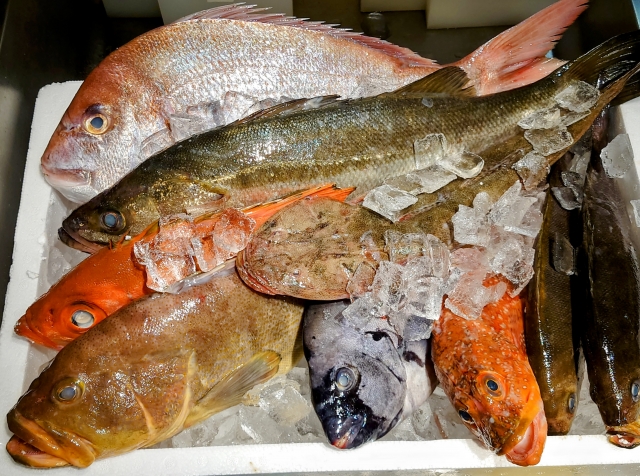
Nobu: “While Tuna is famous, it’s not the only fish. First, we categorize them differently.”
John: “How so?”
Nobu: “Simply put, we divide them into ‘Freshwater fish’ and ‘Saltwater fish’.”
John: “That makes sense.”
Nobu: “They come from different areas and are used in different dishes, so you can enjoy various flavors.”
Kelly: “What are some freshwater fish?”
Nobu: “Char (Iwana) and Yamame trout. These are caught in upstream rivers and enjoyed in inland regions. They are usually grilled with salt.”
Kelly: “And saltwater fish?”
Nobu: “Tuna and Bonito (Katsuo) are classic examples. I also recommend Pacific Saury (Sanma) and Sardines.”
Kelly: “Are they mostly served as Sashimi?”
Nobu: “That depends on the region. For instance, Sanma is usually grilled in southern areas, but in the north, people eat it as Sashimi. The condition of the fish varies by where it’s caught, so the best way to cook it changes too.”
Kelly: “It’s quite deep, isn’t it?”
Nobu: “By the way, there’s a surprising dish called ‘Kabuto-wari,’ where you eat the fish’s head.”
Kelly: “You can eat a fish head?”
Nobu: “There’s surprisingly much to eat there! You use chopsticks to pick the meat. You can even find Sea Bream heads sold at supermarkets as ‘Tai no Ara’ (leftover parts).”
Kelly: “I can’t imagine it.”
Nobu: “Cooking with fish scraps could be a big topic on its own. Let’s talk about it another time.”
Shrimp and Crab
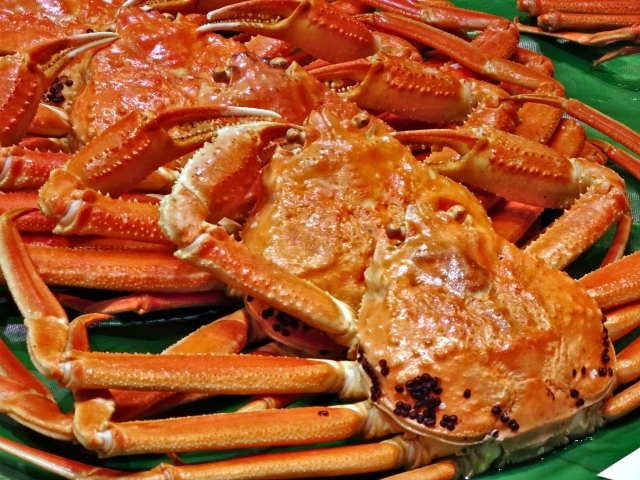
Nobu: “Shrimp and Crab are also highly recommended. Most Japanese people love crab.”
Kelly: “But people eat shrimp and crab in other countries too, right?”
Nobu: “True, but I’ve heard the culture of eating boiled crab as it is (without heavy sauces) is somewhat unique to Japan.”
Kelly: “Maybe so.”
Nobu: “If you go to the source regions, you can eat huge, delicious crabs. Highly recommended.”
Kelly: “That sounds yummy.”
Nobu: “However, crab has one ‘downside’.”
John: “A downside? What is it?”
Nobu: “When people start eating crab, they get so focused on cracking the shells that everyone goes silent. A lively dinner party suddenly turns into a room of silent people intensely eating crab. It’s not great for communication!”
John: “Haha, that’s a problem.”
Shellfish
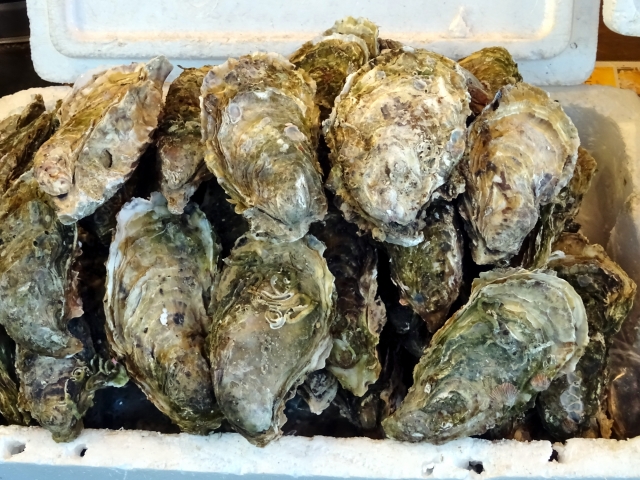
Nobu: “Shellfish are also distinctive. Scallops and Oysters are famous.”
Kelly: “I know those. We eat them here too.”
Nobu: “But for shellfish, I want you to be picky about where and how you eat them.”
Kelly: “What do you mean?”
Nobu: “I want you to go to the production area to eat them whenever possible.”
John: “That sounds tough. The source regions must be far away.”
Nobu: “Yes, but it’s worth it. Shellfish lose their flavor quickly after being caught. Even with modern freezing technology, nothing beats the source.”
John: “But doesn’t Tokyo get fresh deliveries from those areas?”
Nobu: “Yes, they arrive in Tokyo the next day. But that ‘next day’ means 24 hours have passed. That 24-hour difference is crucial.”
John: “Is time really that important?”
Nobu: “Yes. Some people say ‘Shellfish is no good after three days.’ The fresher, the better.”
John: “I see. It’s a matter of timing.”
Seaweed
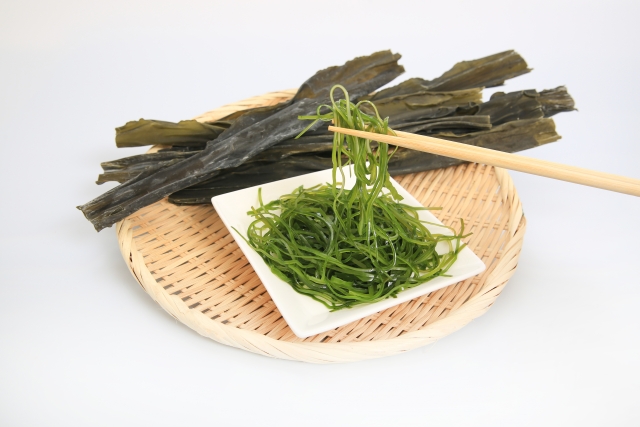
Nobu: “Seaweed is also interesting. How it’s eaten varies by region.”
Kelly: “I can’t really imagine eating seaweed.”
Nobu: “The interesting part is that different seaweeds have different roles.”
Kelly: “Roles?”
Nobu: “The main ones in Japan are Kombu (kelp), Wakame, and Nori. For example, while you can eat Kombu, it is most often used to make ‘Dashi’ (broth), especially in Western Japan.”
Kelly: “What about Wakame and Nori?”
Nobu: “Wakame is used in miso soup or vinegared dishes (Sunomono). It’s more of a direct ingredient than a broth base. It’s even used in salads.”
Kelly: “And Nori?”
Nobu: “Nori is most commonly used for Sushi and Onigiri (rice balls). Sometimes it’s even a topping for Ramen.”
Kelly: “Even in Ramen… that’s surprising.”
Others
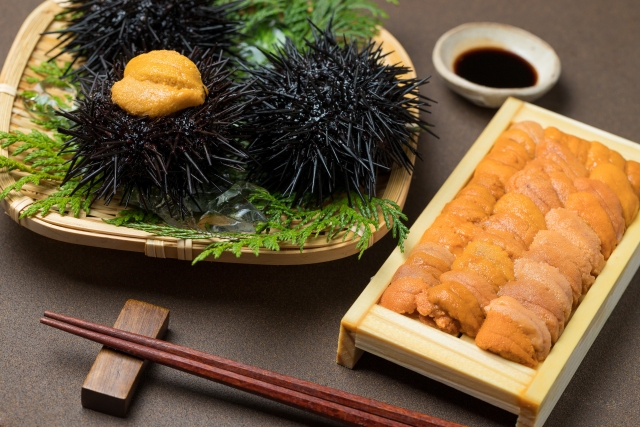
Nobu: “There are others like Sea Urchin (Uni) and Sea Cucumber (Namako).”
John: “What are those? Are they edible?”
Nobu: “Biologically, they are invertebrates. It’s hard to explain in words, but Uni is a high-end sushi topping, and Namako is used in vinegared dishes.”
Kelly: “Are there even more?”
Nobu: “Probably… but at that level, they become so local that even I don’t know them all. Sorry!”
Kelly: “In short, the seafood food culture is incredibly broad.”
Nobu: “Exactly.”
Recommended Seafood by Region
Nobu: “Let me introduce some regional highlights. Keep in mind these are just ‘recommendations.’ Exploring unique local dishes on your own is part of the fun.”
John: “What do you mean by ‘exploring’?”
Nobu: “There are dishes unique to a specific city or even a specific shop. Take ‘Mentaiko’ (spicy cod roe) for example. Some shops might serve Mentaiko pasta or pizza. It becomes about the shop’s personality.”
John: “I see. It would take forever to visit them all!”
Nobu: “Here is a quick overview:”
- Hokkaido: Abundant Squid and Crab. Recently, due to warming waters, Pacific Saury is also being caught here.
- Tohoku:
- Miyagi: Pelagic fish like Tuna.
- Iwate to Miyagi Coast: Incredibly rich in Scallops, Oysters, and Sea Urchin. Highly recommended for ‘Iso-ryori’.
- Kanto:
- Tokyo: Everything from across Japan gathers here—perfect if you want a bit of everything.
- Ibaraki: Monkfish (Anko).
- Chubu:
- Shizuoka: Pelagic fish like Tuna.
- Yamanashi & Nagano: Freshwater fish like Char (Iwana) are recommended.
- Kinki:
- Hyogo: Octopus.
- Mie: Spiny Lobster (Ise-ebi), Sea Urchin.
- Kyoto: Crab.
- Chugoku:
- Yamaguchi: Blowfish (Fugu).
- Tottori: Crab.
- Hiroshima: Oysters.
- Shikoku:
- Kochi: Bonito, Eel.
- Tokushima: Sea Bream, Pike Conger (Hamo).
- Kyushu:
- Oita: Horse Mackerel (Aji), Mackerel (Saba).
- Kumamoto: Shrimp.
Transportation to Rural Areas
John: “By the way, what’s the best way to get to these regions?”
Nobu: “You have the Shinkansen (bullet train) and planes. Planes are fast, but the Shinkansen allows for ‘stopovers’.”
John: “What do you mean by stopovers?”
Nobu: “Japanese railway companies sell special tickets for foreign tourists. Since you can use the Shinkansen, you can hop around the country. For example, you can hop off in Hiroshima for Oysters on your way to Yamaguchi for Fugu.”
John: “What is that ticket called?”
Nobu: “It’s the ‘Japan Rail Pass’ by JR. It covers most Shinkansen, local lines, and even some buses and ferries. You should check the details, but it’s very convenient.”
John: “Which is better, plane or train?”
Nobu: “Both have pros and cons. Planes are fast and staff usually speak English, but they can be expensive and airports are often far from city centers.”
John: “And JR?”
Nobu: “It takes you from station to station, so it’s easy to go from one city center to another. You can also try ‘Ekiben’ (station bento boxes) while traveling. It’s like a foodie tour on rails.”
John: “Any downsides to the train?”
Nobu: “It takes time. Tokyo to Kyushu is 2-3 hours by plane but over half a day by train. Also, station staff might not always speak English, so communication can be a bit of a challenge.”
END
From My Experience
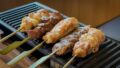
I love seafood and have eaten a lot of it over the years. When I visit port towns, I love buying grilled shellfish from street stalls—pouring a little soy sauce into the hot shell. The aroma of burning soy sauce mixed with the scent of the ocean is indescribably delicious. I also love ‘Takikomi-gohan’ (rice cooked with seafood). This kind of dish is truly a product of a culture that cherishes both rice and the sea.
In my experience, the “truly delicious” seafood I’ve had was often in small coastal towns rather than Tokyo. So, if you’re coming to Japan, why not venture out to the countryside? You’ll find a side of Japan you never knew existed. You might even find unique accommodations like “Minshuku” or “Ryokan” that offer a very local atmosphere. They are becoming rarer, so be sure to check and book in advance.
By the way, traveling to Japan’s regional areas allows you to encounter many different facets of our culture. For instance, if you head up to Hokkaido, you can indulge in authentic Sapporo ramen, and a trip to Osaka will give you a taste of a culture quite distinct from Tokyo’s. If you go as far as Hiroshima, you’ll find a memorial museum that documents the somber history of the atomic bombing.
Regardless, based on my own experience, I highly recommend exploring Japan to visitors from abroad. When you come to Japan, please make sure to venture out beyond the main cities.
Conclusion
Japan may not be large in area, but its seafood culture is incredibly wide and deep. Even for Japanese people, it’s common to discover a completely new food culture when visiting a distant part of the country. To truly understand Japanese seafood, you have to come here. Japanese restaurants abroad are great, but the thrill of eating something caught that very morning at a local market is an experience I want you to have. It takes time to travel, but it will surely become a wonderful memory. We look forward to seeing you!